“Gold Digger,” My Father-In-Law Mocked—Until The Terrified Co-Pilot Bowed In Submission.
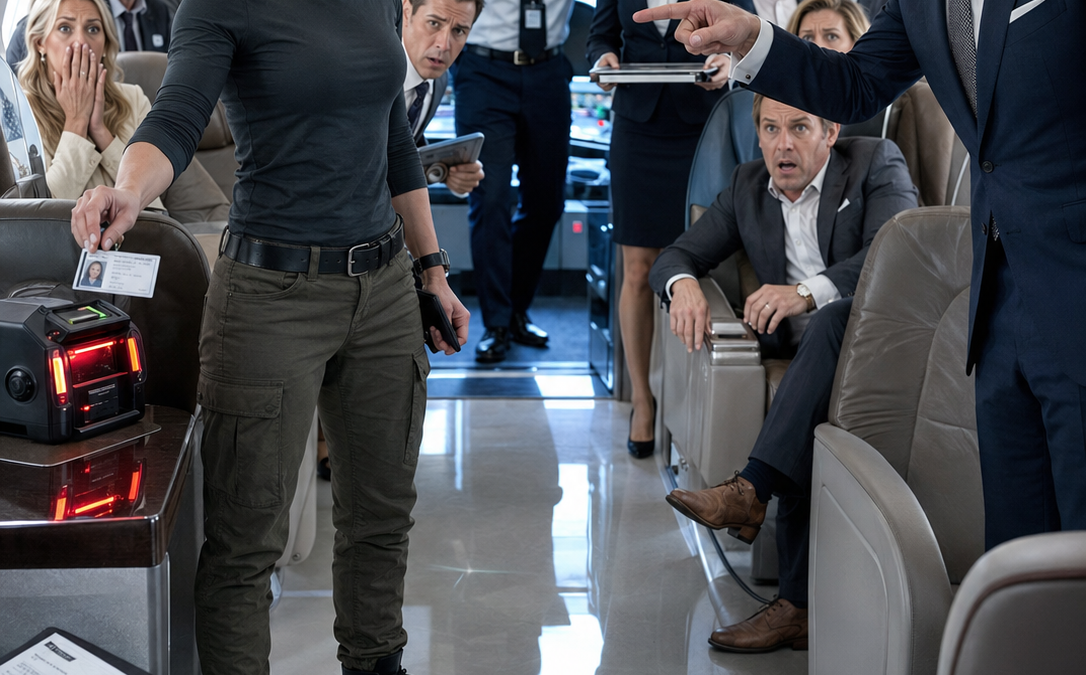
“What did the service actually teach you—how to attach yourself to a man with a large bank account?” my billionaire father-in-law sneered as he dropped a $100,000 check beside my boot like he was feeding a stray. The next morning, he trapped me aboard his private jet, shoved me toward the rear seat, and ordered the crew to scan my military ID in front of everyone so he could expose me as a fraud. The reader suddenly screamed. The engines dropped to idle. Then the terrified co-pilot stared at the screen, turned pale, and bowed his head. “Commander Ellis… I didn’t know you were Specter.” Grant thought he had cornered me. Instead, he had just activated the one authority on his aircraft he couldn’t control.
### Part 1
The check drifted from Grant Caldwell’s fingers and landed beside my boot with a dry whisper.
One hundred thousand dollars.
The amount was printed in neat black numbers on paper thick enough to feel like cardboard, and Grant watched it settle on the polished floor of the private dining room as though he had just thrown a steak to a hungry dog.
“What did the service actually teach you?” he asked. “How to fold blankets with crisp corners, or how to attach yourself to a man with a large bank account?”
The air-conditioning blew against the back of my neck, carrying the faint smells of lemon polish, grilled meat, and the expensive whiskey turning amber in Grant’s glass.
My name is Mara Ellis. I was thirty-two years old, an active-duty Navy commander, and engaged to Grant’s only son, Lucas Caldwell.
Grant knew the first fact, doubted the second, and considered the third an attack on everything he had built.
I looked at the check without bending down.
Across the table, Lucas’s chair creaked as he shifted forward. His jaw tightened, and his hand closed around the edge of the white tablecloth.
“Dad, pick it up,” he said.
Grant ignored him.
He wore a charcoal suit that probably cost more than my first car, and his silver hair remained perfectly combed even after three glasses of whiskey. He had built Caldwell Aeronautics from a regional maintenance company into a private aviation empire, and decades of wealth had taught him the wrong lesson.
He believed every person had a price.
Grant leaned forward and pointed toward the check.
“Take it, Mara. You can tell everyone you left Lucas because military life was too demanding. No embarrassment, no ugly public scene, and no questions about what you were really after.”
A jagged scar beneath the cuff of my shirt began to throb.
It always did when the room was too cold.
Five years earlier, a piece of torn metal had sliced across my wrist while I pulled two civilians away from a damaged aircraft during a coastal evacuation. The scar was not heroic. It was simply something my body carried after a day when several people went home and others did not.
I tugged my cuff lower.
Grant mistook the movement for nervousness, and his smile widened.
“You should understand something,” he continued. “Lucas has never had to wonder whether people love him or love what his name can buy. I intend to keep it that way.”
Lucas started to stand.
Under the table, I placed my hand on his knee.
He turned toward me, anger burning in his eyes, but I gave him one firm squeeze.
Stay seated.
I did not need Lucas fighting a battle I had already survived in different rooms, with different people, using different insults.
Grant lifted his glass.
“Nothing to say?”
“I have plenty to say,” I replied. “You just haven’t earned the right to hear it.”
His smile disappeared.
For the first time that evening, the silence belonged to me.
Grant set down his glass hard enough to spill whiskey over the rim. The liquid spread across the tablecloth in a dark, uneven stain.
“Eight tomorrow morning,” he said. “Palm Harbor Executive Terminal. Lucas and I are flying to our property in the islands for a business inspection. You’re coming.”
“Why?”
“Because I want to see how you behave when you’re somewhere you cannot hide behind a uniform.”
Lucas stared at him. “She doesn’t have to prove anything to you.”
Grant pointed at me.
“She wants to join this family. She can spend one day showing me she understands responsibility, restraint, and basic respect.”
The absurdity almost made me laugh.
Instead, I stood.
The leg of my chair scraped against the hardwood, and Grant’s eyes dropped briefly toward the check, as though he still expected me to pick it up.
I stepped over it.
“I’ll be there at eight,” I said.
Lucas followed me through the brass doors and into the heavy South Florida heat. The humidity wrapped around us immediately, carrying the smells of traffic, salt, and rain trapped somewhere beyond the darkening sky.
“Mara, why did you agree to that?”
“Because your father isn’t taking me to inspect a property.”
Lucas frowned. “What do you think he’s doing?”
“Looking for a different way to humiliate me.”
“Then don’t go.”
I turned toward him.
Lucas was not weak. He had defended me many times when Grant made smaller remarks over dinner or questioned my intentions in front of friends. But Lucas had also spent thirty-four years learning how to survive his father by lowering his voice, changing the subject, and waiting for the storm to pass.
I had grown up doing the same thing.
Eventually, I learned that storms did not pass when everyone kept pretending the damage was normal.
“I’m going,” I said. “But I’m going on my terms.”
Lucas glanced back through the restaurant window. Grant remained at the table, staring at the untouched check.
“What aren’t you telling me?”
I looked at the expensive black car waiting near the curb, then at the pale line of an aircraft crossing the evening sky.
“Nothing that matters unless tomorrow goes very wrong.”
At that moment, Grant’s assistant stepped outside and hurried toward us.
She held a tablet against her chest, and the confidence had vanished from her face.
“Mr. Caldwell wants me to confirm something,” she said. “Mara, what kind of military identification will you be carrying tomorrow?”
The question was too specific to be casual.
I met her eyes.
“My current one.”
She swallowed.
“Is there anything unusual connected to it?”
I looked through the glass at Grant.
He believed he had designed tomorrow’s trap.
He had no idea he was already standing inside mine.
### Part 2
That night, I opened the bottom drawer of my dresser and found ten years of receipts tied together with a faded rubber band.
Wire transfers.
Mortgage payments.
Utility bills.
Rehabilitation invoices for my older brother, Dean.
Every page smelled faintly of dust and old ink, and each one recorded another month when I had mistaken financial sacrifice for love.
I grew up outside Erie, Pennsylvania, in a narrow two-story house with cracked siding and a furnace that groaned through every winter. My father repaired commercial refrigerators until his back gave out, and my mother worked irregular shifts at a nursing home.
Dean was four years older than I was, charming when he wanted something and furious when anyone expected him to change.
When I enlisted at twenty, my mother cried at the bus station and called me brave.
Three months later, she asked for money.
At first, it was two hundred dollars for the electric bill. Then it was six hundred for the furnace, three thousand for property taxes, and eight thousand for one of Dean’s treatment programs.
Every request arrived wrapped in the language of family.
“We’re all each other has.”
“Your brother needs another chance.”
“You’re the strong one.”
I sent the money because being needed felt close enough to being loved.
By the time I was twenty-seven, I had paid off my parents’ mortgage, covered most of Dean’s expenses, and delayed buying anything for myself beyond an old sedan and furniture from a discount warehouse.
I told myself I was protecting them.
The truth became clear on Thanksgiving night.
I had returned from an overseas assignment two days earlier and driven through sleet to surprise my family. Snow crusted the roadside, and the wind cut through my thin jacket as I carried a bakery pie toward the back porch.
Through the kitchen window, I could see everyone gathered around the table.
My mother was hugging Dean.
He had completed another treatment program, and the family was celebrating as if he had returned from a war.
“You’re the one with the real heart,” Mom told him. “You’ve suffered so much, but you keep coming back to us.”
My aunt asked where I was.
Mom waved one hand toward the window.
“Mara’s always working. Besides, what does she spend money on? Paying off this house was the least she could do after leaving us to handle everything.”
The least I could do.
I stood outside while heat from the furnace I had paid to repair fogged the kitchen windows. Turkey and gravy scented the cold air leaking through the frame, but no one had set a place for me.
My phone vibrated.
It was a message from Mom.
Dean needs help replacing his car. Can you send $4,000 tonight?
I looked through the glass and saw Dean lift a beer while everyone toasted him.
Then I put the pie on the porch railing, walked back to my car, and drove away.
The next morning, I changed my bank account and canceled every automatic transfer.
My mother called seventeen times.
My father left a message saying I was punishing everyone because I was jealous of Dean.
Dean said a “real sister” would never abandon him during a difficult year.
I listened to each message once.
Then I blocked them.
The silence afterward hurt more than the accusations. For months, I woke up expecting guilt to crush me, but little by little, I realized that the people who had called me selfish were somehow surviving without access to my paycheck.
Grant Caldwell’s check had landed near my boot because he recognized something familiar in me.
He saw a woman from a poor family who had learned to endure insults quietly. He assumed quiet endurance meant weakness.
That mistake had cost my relatives their private bank.
Tomorrow, it might cost Grant something larger.
I removed my identification card from my wallet and placed it on the dresser.
It looked ordinary—white plastic, a photograph, a chip, and a series of numbers most people would never notice.
The card did not say what I had done.
It did not describe the aircraft I had helped guide through storms, the rescue missions coordinated through dead radio zones, or the classified joint-response program that had assigned me the operational call sign Specter.
It did contain an active federal aviation priority code.
That designation existed because, during certain emergencies, I could be moved onto a military, government, or contracted aircraft without waiting for standard civilian clearance. Any secure aviation system reading the card was required to verify my status before departure.
Grant’s company operated several aircraft under federal readiness contracts.
If he had chosen one of those planes for tomorrow’s trip, my identification would not produce the harmless green light he expected.
It would temporarily place the aircraft under federal security review.
I packed jeans, a plain shirt, my uniform jacket, and a weatherproof notebook into an old green duffel bag.
At 11:14, Lucas called.
“My father changed the aircraft,” he said. “We aren’t taking his usual jet.”
“What are we taking?”
“The Caldor Nine.”
My hand stopped on the zipper.
The Caldor Nine was Grant’s most advanced aircraft, a long-range jet equipped under a federal emergency-transport agreement.
“Why did he change it?”
“He said he wanted to impress a group of investors after we land.”
“That aircraft has a secure passenger verification system.”
“I know.”
“Did he know that before tonight?”
Lucas was quiet.
In the background, I heard a door close.
“I just found an email he sent the flight crew,” he said. “He told them to check your identification in front of everyone because he expects it to be expired or restricted.”
Grant did not merely want to embarrass me.
He wanted evidence he could use to convince Lucas that I had lied about my career.
“Do not warn him,” I said.
“Mara—”
“Let him run the card.”
I ended the call and stared at the thin piece of plastic on the dresser.
By morning, Grant would finally get the public spectacle he had been demanding.
It just would not have the victim he expected.
### Part 3
Grant’s SUV stopped outside my apartment at 7:59 the next morning.
The rear door opened before I reached the curb.
“You’re late,” Grant said without looking up from his tablet.
My watch changed to 8:00 as I climbed inside.
Lucas sat across from him, his expression tight. He gave me a small nod, but neither of us mentioned the call from the previous night.
Grant wore a navy suit and a pale tie. Morning sunlight flashed across his watch as the SUV moved through traffic toward Palm Harbor Executive Terminal.
After several minutes, he put down the tablet.
“Lucas says you’re some kind of aviation specialist.”
“I work in joint air-response coordination.”
“That sounds like a title invented to make office work important.”
“Sometimes it is office work.”
“And the rest of the time?”
“The rest of the time, someone is having the worst day of their life.”
Grant studied me, waiting for more.
I looked through the window at palm trees bending in the warm wind.
“What did the Navy actually teach you?” he asked. “Besides how to speak in vague sentences?”
“How to stay calm when another person’s panic is trying to become mine.”
Lucas turned toward the window, hiding what might have been a smile.
Grant did not speak again until we reached the terminal.
The Caldor Nine waited on the sun-bright tarmac, its white body reflecting enough light to make me squint. Heat shimmered above the pavement, and the smell of fuel drifted through the open boarding door.
The captain introduced himself as Nathan Cole.
Beside him stood the co-pilot, Eli Mercer, a younger man with tired eyes and a clipboard pressed against his side.
Eli recognized my name before he saw my identification.
That much was clear from the way his shoulders stiffened.
Grant did not notice.
He walked up the stairs and pointed toward a seat near the rear of the cabin.
“You can sit there,” he told me. “Try not to touch anything.”
The interior smelled of leather, coffee, and cold filtered air. Pale wood panels lined the walls, and glassware gleamed in recessed cabinets.
I placed my duffel bag beneath the rear seat and fastened my belt.
Lucas sat across the aisle.
Grant settled near the front, where he could turn around and watch what happened.
A few minutes later, Eli came through the cabin carrying a secure tablet.
“Passenger identification,” he said.
Grant leaned back and folded his arms.
I handed Eli my card.
His fingers paused when he saw the code printed near the lower edge.
He looked at me.
I gave no sign that he should stop.
Eli inserted the card into the reader.
The tablet emitted a long, high tone.
Every overhead display went dark.
The cabin lights changed from soft white to a steady amber, and the engines, which had begun to spool, dropped back to idle.
Eli stared at the screen.
His face lost color.
A message appeared on the nearest display:
Priority passenger verification in progress. Aircraft departure restricted.
Grant bolted upright.
“What did you do?”
“I handed him my identification.”
“Eli, clear the warning.”
The co-pilot did not move.
Another message appeared beneath the first.
Federal readiness contract activated. Awaiting secure confirmation.
Grant crossed the aisle in three angry strides.
“This is my aircraft.”
Eli swallowed and looked toward me rather than Grant.
“Commander Ellis,” he said, “the system is requesting verbal verification.”
Grant stopped.
The title appeared to strike him harder than the warning.
“Commander?”
Eli removed his headset, lowered his head, and bent slightly at the waist in a gesture that was not theatrical submission but trained respect.
“Ma’am, I apologize. I did not know you were the Specter-designated officer listed in our federal readiness file.”
The cabin became completely silent.
Grant stared at him.
Then he stared at me.
“What is he talking about?”
I unfastened my seat belt and stood.
“Your company accepted federal money to keep this aircraft available for national emergency transport. My current assignment is part of the program that can activate it.”
“You’re telling me the government can simply take my plane?”
“No. I’m telling you your company signed a contract stating that this aircraft could be reassigned during specific emergencies.”
“I know what my contracts say.”
“Apparently not all of them.”
Grant snatched the tablet from Eli.
The verification page displayed my name, rank, and an authorization number. Most operational details remained sealed behind a security screen.
Grant’s thumb moved over the controls.
Nothing responded.
“Unlock it.”
“I can’t, sir,” Eli said. “The cockpit controls are restricted until Commander Ellis provides the verbal code.”
Grant turned toward me.
His face had darkened to a blotchy red.
“Do it.”
“You invited me here to expose me as a fraud.”
“I invited you here because my son is making a catastrophic mistake.”
“And now?”
“Now you are abusing some ridiculous government rule to make a point.”
I stepped closer, keeping my voice low.
“I did not select this aircraft. I did not order your crew to scan my identification, and I did not sign your federal contract. You built this moment yourself.”
Grant looked toward Lucas.
“Did you know?”
“I knew Mara had more responsibility than she discussed,” Lucas said. “I didn’t know the details because she respects the limits of her clearance.”
Grant’s hand tightened around the tablet.
“Verify yourself and end this performance.”
Before I could answer, a different sound came through the cockpit.
Three short emergency tones.
Captain Cole appeared in the doorway with one hand pressed against his headset.
“Commander, we have an active distress call from an aircraft eighty miles east. Federal control is requesting the closest readiness-equipped platform.”
Grant stared at him.
“We haven’t taken off.”
“They’re asking us to launch.”
“No.”
Captain Cole hesitated. “Sir?”
“We are not turning my aircraft into an ambulance because of a radio call.”
I looked past him toward the weather radar.
A dark band of red and purple was growing over the Atlantic.
“What kind of aircraft?” I asked.
Captain Cole looked directly at me.
“A regional medical transport with nine people aboard. They’ve lost reliable navigation, and the storm is moving faster than predicted.”
Grant stepped between us.
“This flight is going to my island.”
Another emergency tone sounded.
Then the cabin speakers carried a broken voice through a wall of static.
“Any aircraft receiving… we are losing altitude.”
Grant’s expensive jet had stopped being a stage for his humiliation.
It had become the closest lifeline nine strangers had.
### Part 4
Grant ordered the crew to shut off the distress transmission.
Nobody obeyed him.
The voice came through again, weaker this time.
“Navigation failure. Heavy turbulence. We cannot identify the horizon.”
Captain Cole looked at me.
“Federal control wants us airborne in four minutes.”
“You are employed by me,” Grant said. “Our destination is Shoreline Cay.”
Eli’s hands shook around the tablet, but his answer remained clear.
“Once the readiness contract is activated during a declared emergency, operational direction transfers to the assigned federal commander.”
Grant slowly turned toward me.
“You planned this.”
I almost admired the depth of his arrogance. Even with nine lives hanging inside a storm, he believed the emergency must somehow be about him.
“I did not plan the weather.”
“You could refuse.”
“I could.”
Hope flickered across his face.
“Then refuse.”
I thought of the cold porch outside my parents’ house and the long years of hearing that my comfort mattered less than everyone else’s needs.
There was a difference between being exploited and choosing to help.
My family had taught me that difference by trying to erase it.
I looked toward Captain Cole.
“Launch the aircraft.”
Grant’s expression changed from anger to disbelief.
“You cannot give orders on my jet.”
“I just did.”
Captain Cole returned to the cockpit.
The cabin door closed, and the engines began rising from a hum to a deep mechanical roar.
Grant planted himself in the aisle.
“If this aircraft is damaged, I will hold you personally responsible.”
Lucas stood.
“Sit down, Dad.”
“You stay out of this.”
“No. I stayed out of too much for too long.”
That was the first moment Grant truly looked at his son.
Lucas’s face was pale, but he did not lower his eyes.
“You insulted Mara at dinner, threw money at her, and arranged this entire trip to humiliate her. Now people may die, and you are worried about the paint on your aircraft.”
“I am protecting what belongs to this family.”
“You mean what belongs to you.”
The plane began moving.
Grant gripped the back of a seat as we taxied, and for once, he had no reply.
I entered the cockpit and took the jump seat behind the pilots.
Radar painted the storm as a hooked wall stretching across our route. Sunlight still filled the runway, but beyond the coast, the sky had turned the color of bruised steel.
Captain Cole handed me a headset.
“Distressed aircraft is Harbor Medical Seven,” he said. “They were transporting a patient and medical team from an island clinic. Lightning damaged several systems.”
“Any visual support nearby?”
“A Coast Guard rescue helicopter is approaching from the northwest, but it’s fighting headwinds.”
I switched to the emergency frequency.
“Harbor Medical Seven, this is Caldor Nine with federal response control. Do you copy?”
Static answered.
Then a man gasped through the noise.
“We copy. Barely.”
“Identify your current altitude.”
The pilot gave me a number, then corrected himself.
His instruments disagreed.
“Stop chasing the broken readings,” I said. “Hold your current control pressure and describe what you can see.”
“Nothing. Gray outside every window. We keep banking left.”
“You may be experiencing spatial disorientation. Trust my instructions, not your body. Level your wings according to the backup indicator.”
“The backup is flickering.”
“Then you are going to use another aircraft as your horizon.”
Captain Cole glanced back at me.
“The rescue helicopter isn’t there yet.”
“How far?”
“Seven minutes.”
Harbor Medical Seven did not sound as though it had seven minutes.
I studied our route.
“Can we reach them first?”
“Possibly,” Captain Cole said. “But we will be entering the outer storm band.”
Grant’s voice came from the cockpit doorway.
“You are not risking all of us.”
I turned.
He stood behind Lucas, one hand braced against the frame. The anger had faded from his face, replaced by something tighter and older.
Fear.
“Return to your seat,” I said.
“I have spent thirty years building this company.”
“And those people have spent their entire lives becoming someone worth returning home to.”
“You don’t know them.”
“I don’t need to.”
Grant’s eyes hardened.
“That uniform has already taken enough from my family.”
The statement was different from his earlier insults. It carried weight, and the pain beneath it was too raw to have been invented that morning.
“What did it take?” I asked.
He stared through the windshield at the dark Atlantic.
“My brother.”
The storm flashed white in the distance.
“His boat went down during Hurricane Odessa,” Grant said. “A military rescue team told him to wait. They never reached him.”
A cold sensation moved through my chest.
“What year?”
“2014.”
“What was the boat’s name?”
Grant’s mouth tightened.
“Northstar.”
For a moment, every sound in the cockpit seemed to fall away.
I remembered a fractured transmission, a man shouting coordinates through rain, and a final warning sent on every channel my equipment could reach.
Northstar had not been abandoned.
Northstar had ignored the evacuation order and sailed directly into a closing rescue corridor.
I had been the last voice its captain heard.
Grant saw recognition in my face.
“You know the name.”
“Yes.”
“How?”
Before I could answer, Harbor Medical Seven screamed through the headset.
“We are dropping!”
The aircraft’s pilot was losing control.
I turned back to the console.
Grant’s dead brother would have to wait.
The living did not have that luxury.
### Part 5
“Harbor Medical Seven, release back pressure and level your wings.”
“I can’t feel which way is level.”
“Your body is lying to you. Listen only to my voice.”
Rain began hammering our windshield as Caldor Nine entered the outer edge of the storm.
The daylight vanished.
Warning lights reflected across the cockpit glass, and turbulence rolled through the aircraft in long, heavy waves.
I kept my breathing slow.
Fear is contagious, but so is control.
“Captain Cole, bring us ten miles south of their last confirmed position.”
Grant remained at the cockpit door until Lucas pulled him back toward the cabin.
The distressed pilot’s breathing filled my headset.
“My patient is unstable. The cabin is shouting at me.”
“They are shouting because they are frightened. You do not have permission to become frightened with them.”
There was a pause.
Then the pilot gave a shaky laugh that ended almost like a sob.
“Understood.”
“Good. Tell me your heading.”
He read the backup compass.
“Hold it. Reduce power by three percent.”
Our radar located a faint return ahead and below us.
Captain Cole pointed.
“That has to be them.”
A flash of lightning illuminated a small twin-engine aircraft banking through the clouds. It disappeared again almost immediately.
“Harbor Medical Seven, Caldor Nine has visual contact. We are above and behind you.”
“Can you guide us out?”
“Yes.”
I did not know whether that answer was true yet.
It was simply the only answer he could use.
The Coast Guard helicopter checked in through the secondary channel. Its pilot reported severe visibility but confirmed that it was approaching from the west.
“Move beneath our left wing,” I ordered. “Use your forward strobe as a visual reference for Harbor Medical Seven.”
The helicopter descended.
Its white light flashed through the storm like a slow heartbeat.
“Harbor Medical Seven, look out your left window.”
“I see something.”
“That light is level. Keep it centered. Do not chase it. Let it guide your wings.”
The medical aircraft steadied.
One degree at a time, its uncontrolled bank flattened.
“Altitude is stabilizing,” Captain Cole said.
The pilot on the radio began crying.
“We’re level.”
“Stay focused,” I said. “You can celebrate after every person is on the ground.”
We guided them toward a break in the storm where federal control had opened an emergency corridor. The helicopter stayed beside them while we flew ahead, sending weather information and heading corrections.
For nineteen minutes, nobody in our cockpit spoke except to exchange numbers.
Then Harbor Medical Seven crossed into clear air.
Sunlight struck its wings.
The pilot exhaled so loudly that the sound filled my headset.
“We are out. We are alive.”
I closed my eyes for one second.
“Continue with the helicopter to the emergency field. They will remain with you until landing.”
“Caldor Nine, who am I speaking to?”
“Commander Mara Ellis.”
“I will remember that name for the rest of my life.”
I removed the headset before I could answer.
Praise was always more difficult for me than crisis.
When I returned to the cabin, Grant sat alone near the window. Lucas stood farther back, giving us space.
Grant’s skin looked gray.
“You were there,” he said.
I remained standing.
“During my brother’s final transmission.”
“Yes.”
“He said rescuers abandoned him.”
“He was frightened.”
“That isn’t an answer.”
“No, Grant. It isn’t.”
I took the seat opposite him.
“Northstar was warned not to leave port. Your brother believed the hurricane would turn north, and he was trying to move the boat before the marina closed. When the storm accelerated, he entered a restricted rescue zone.”
Grant’s eyes shone with anger.
“He called for help.”
“We answered.”
“Then why did he die?”
“Because the rescue helicopter sent toward him lost an engine warning and had to turn back. A second crew launched, but Northstar’s radio antenna failed before they reached his position.”
Grant shook his head.
“He told me nobody was coming.”
“I told him help was coming. The storm damaged the transmission before he heard the full message.”
“You expect me to believe that?”
“I transmitted the same warning eleven times over four frequencies. I violated procedure by remaining on the channel after my supervisor ordered me to transfer responsibility.”
I pulled up my sleeve.
The scar around my wrist looked pale beneath the cabin lights.
“The next morning, I joined the shoreline search. A damaged rescue panel broke loose while we were evacuating people from another vessel. That is where this came from.”
Grant stared at the scar he had mocked me for hiding.
“I heard your brother until the radio went silent,” I continued. “I heard him call your name. I heard him apologize for taking the boat out.”
Grant’s lips parted, but no words came.
“He said my name?”
“Yes.”
“What did he say?”
I had carried the sentence for twelve years.
I never expected to give it to the person for whom it had been intended.
“He said, ‘Tell Grant I should have listened to him for once.’”
Grant folded forward as though something inside him had collapsed.
His hands covered his face.
For years, he had blamed the uniform because hatred had been easier than accepting his brother’s mistake. He had turned grief into contempt and aimed it at every service member who reminded him of the night he could not control.
Including me.
“I thought your people left him,” he whispered.
“They tried.”
“And you heard all of it?”
“Yes.”
He looked at me with tears running openly down his face.
“I’m sorry.”
The apology came too quickly, pulled from shock rather than understanding.
I did not accept it.
Outside the window, the blue gap in the sky began closing again.
Captain Cole’s voice came over the speaker.
“Secure the cabin. The storm has shifted across our route, and our original destination is no longer reachable.”
Grant wiped his face.
“Where are we going?”
The aircraft dropped sharply enough to rattle every glass in the cabinet.
Captain Cole answered through a burst of static.
“Wherever Commander Ellis can get us.”
### Part 6
The safest landing field lay southwest, behind a corridor of violent weather.
Every civilian route around the storm had closed.
Caldor Nine shook as wind struck its right side, and a metal latch clattered somewhere above us.
Grant tightened his seat belt.
He no longer issued orders.
I returned to the cockpit and studied the radar. A narrow band of less severe weather curved between two dense storm cells, but reaching it required temporary access through restricted airspace surrounding a federal emergency field.
“Request the Key Passage corridor,” I said.
Captain Cole transmitted the request.
The answer returned immediately.
“Civilian access denied.”
Eli glanced at me.
“Your authorization may open it.”
I took the microphone.
“Federal control, this is Commander Mara Ellis, Specter authorization six-four. We are operating under an active rescue contract with four souls aboard and limited diversion options. Request immediate access to Key Passage.”
Static filled the cockpit.
Three seconds stretched longer than the entire morning.
Then a controller responded.
“Specter six-four confirmed. Key Passage open for Caldor Nine. Maintain assigned heading. Emergency crews will receive you.”
Grant heard every word from the cabin.
The jet turned toward the corridor.
Rain struck the windshield so hard it sounded like gravel. Lightning flashed beyond the left wing, turning the clouds white from the inside.
Caldor Nine dropped.
My stomach lifted, but I kept one hand against the console and watched the instruments.
“Do not fight the downdraft,” I told Captain Cole. “Reduce the correction. Let the aircraft settle, then recover gradually.”
Another drop threw Grant’s empty glass from a table. It shattered against the floor, scattering crystal fragments across the carpet.
Lucas called from the cabin.
“We’re secure.”
“Keep your heads down and remain seated.”
The plane rolled right.
Captain Cole corrected, then stopped himself before overcorrecting. Eli read altitude and heading in a steady rhythm that grew stronger with every repetition.
Grant had hired good people.
He had simply never learned that ownership and leadership were not the same thing.
The radar showed the passage narrowing.
“Two minutes,” Eli said.
The engine tone changed as the aircraft climbed through a heavy current.
Metal groaned around us.
I remembered Northstar’s broken radio and the empty space that followed its last transmission. I remembered every night when I woke believing I could have found one more frequency, one better sentence, one impossible way to hold a man above the water with my voice.
Harbor Medical Seven had lived.
Grant’s brother had not.
Both truths existed, and neither canceled the other.
“Thirty seconds,” Eli said.
The darkness ahead thinned.
Then Caldor Nine burst through the cloud wall into brilliant sunlight.
The sudden quiet felt unreal.
Blue sky stretched above a silver runway, and emergency vehicles waited near the far end of the federal field.
Captain Cole released a breath.
“Field in sight.”
We landed hard but safely.
The tires struck the wet runway, engines reversed, and the aircraft slowed beneath a sky already brightening behind the storm.
When the door opened, humid air rushed through the cabin.
A line of uniformed rescue personnel waited at the foot of the stairs. Several had been listening to the operation over federal channels.
I stepped onto the top stair.
One officer raised his hand in salute.
The others followed.
Behind me, Grant stopped.
“Are they saluting you?”
“They’re saluting the work.”
I walked down.
Grant remained near the aircraft while Lucas joined me on the tarmac.
Rainwater gleamed in shallow pools, and the air smelled of fuel and wet concrete.
“You saved those people,” Lucas said.
“Their pilot saved them. He kept listening.”
“You know what I mean.”
I turned toward him.
Lucas’s hair was disordered, his shirt wrinkled, and there was a small cut on his palm from securing a cabinet during the turbulence.
“Why didn’t you tell me about Specter?” he asked.
“Because it is an assignment, not an identity.”
“You could have told me something.”
“I told you I coordinated emergency aviation.”
“You said it like you scheduled meetings.”
“Most days, I do.”
Despite everything, he laughed.
Then his expression became serious.
“I should have stopped my father before the restaurant.”
“I stopped you.”
“You shouldn’t have needed to.”
That answer mattered.
Not because he blamed himself, but because he finally understood that loving me was not the same as privately disagreeing with the people who mistreated me.
“I don’t need you to fight every battle,” I said. “I do need you to recognize when silence becomes participation.”
“I understand.”
“Do you?”
“Yes.”
He glanced back at Grant.
“My father will apologize.”
“An apology does not create access.”
Lucas looked at me carefully.
“What does that mean?”
“It means he does not get to insult me, discover that I am useful, and then call us family. He can change because changing is right. He cannot change as a bargain for my forgiveness.”
Lucas nodded slowly.
“I won’t ask you to forgive him.”
Grant approached us.
His steps were unsteady, and his wet suit clung to his shoulders.
“Mara.”
I waited.
“I was wrong about your service. I was wrong about you.”
“Yes.”
The blunt answer surprised him.
He looked toward the aircraft.
“I blamed an entire institution for my brother’s death because I could not blame him. Then I blamed you for wanting my son because I couldn’t accept that Lucas had built a life outside my control.”
I said nothing.
Grant swallowed.
“I want an opportunity to make this right.”
“You had opportunities.”
“I didn’t understand.”
“You understood that you were hurting me. You simply believed you were entitled to do it.”
His eyes dropped.
That truth hurt him more than any insult I could have returned.
“What happens now?” he asked.
“Lucas and I decide what happens to our relationship. You are not part of that decision.”
“And between you and me?”
“There is no relationship between you and me.”
Grant flinched.
I did not enjoy it.
I also did not rescue him from it.
### Part 7
Three weeks after the flight, Grant invited two hundred employees, investors, and family friends to a formal dinner at Caldwell Aeronautics.
I did not want to attend.
Lucas asked once.
When I declined, he accepted my answer.
Grant sent a second invitation containing no emotional pressure, only a handwritten note saying he intended to address what he had done publicly whether I witnessed it or not.
I chose to go because the flight crew would be there.
The reception hall overlooked a private marina. White lights reflected on the dark water, servers moved between tables carrying glasses, and conversations softened when Lucas and I entered.
Grant stood near the stage.
He did not approach me.
That was the first evidence that he had listened.
Eli Mercer saw me and crossed the room.
“Commander.”
“You can call me Mara when we are not inside an active emergency.”
He smiled nervously.
“I wanted to thank you.”
“You did your job.”
“I almost didn’t. When Mr. Caldwell told us to ignore the distress call, I froze.”
“But you didn’t obey him.”
“Because you were there.”
“You will not always have someone standing beside you.”
His expression changed.
“I know.”
“Then remember the procedure, trust your training, and never confuse the person signing your paycheck with the person holding lawful authority.”
“Yes, ma’am.”
A spoon tapped against a glass.
Grant stepped to the microphone.
He looked smaller than he had in the restaurant, though nothing about his physical appearance had changed.
“I spent most of my career believing wealth proved competence,” he began. “I thought that because I had built a company, I understood every person who worked inside it and every contract carrying my signature.”
The room became silent.
“Several weeks ago, I invited my son’s fiancée onto one of our aircraft for the purpose of humiliating her. Before that flight, I offered her money to leave my family. I called her a gold digger and insulted her military service.”
People shifted uncomfortably.
Grant did not soften the truth.
“When an emergency occurred, Commander Mara Ellis used the same training I mocked to help save nine people aboard a medical aircraft. She then helped guide our own aircraft through dangerous weather.”
His hand tightened around the microphone.
“She also told me the truth about the night my brother died—a truth she had carried for twelve years while I carried only blame.”
Grant looked toward me.
“I am sorry.”
I held his gaze but did not nod.
He continued.
“This apology does not entitle me to forgiveness. Commander Ellis made that clear, and she was right.”
That sentence produced the first genuine change I felt in him.
Not because he apologized publicly, but because he finally understood that remorse did not purchase the victim’s participation.
Grant announced that Caldwell Aeronautics would expand its emergency-readiness division, increase training for flight crews, and establish a memorial program supporting families of civilian rescue pilots.
The program would carry his brother’s name.
The room applauded.
I did not.
When the speeches ended, Grant remained on the opposite side of the hall. He spoke to pilots, employees, and rescue personnel without attempting to use their praise as a bridge back to me.
Lucas and I walked outside.
The marina smelled of salt, engine oil, and rain-soaked wood. Music from the reception faded behind the glass doors.
“I postponed the wedding reservation,” Lucas said.
I stopped.
“You did what?”
“I didn’t cancel us. I canceled the date.”
“Why?”
“Because we planned the wedding while I was still pretending my father’s approval did not matter to me. It mattered too much, and that affected you.”
I leaned against the railing.
A small boat moved through the marina, its wake tapping gently against the pilings.
“Are you ending our engagement?”
“No. I’m asking whether we can build the marriage before we perform the wedding.”
That was not the dramatic declaration I expected.
It was better.
“What would that look like?”
“Counseling. Boundaries with my father. No money from him, no property from him, and no role for him in our decisions.”
“You are prepared to walk away from your inheritance?”
“I’m prepared to stop acting as though inheritance is another word for love.”
The sentence settled between us.
I removed my engagement ring and held it in my palm.
Lucas’s face changed, but he did not interrupt.
“I love you,” I said. “But I will not marry a man who stands beside me only after the danger becomes obvious.”
“I know.”
“I need to see who you are in ordinary rooms, when the insult is quiet and nobody is applauding.”
“You should.”
I slipped the ring back onto my finger.
Relief moved across his face, but I raised one hand.
“This is not a promise that everything returns to normal.”
“I don’t want normal.”
“Good.”
My phone vibrated inside my purse.
The number was unfamiliar, but the area code belonged to Pennsylvania.
I opened the message.
Your father is sick. Dean lost his job. We heard you are marrying into money, and after everything we did for you, you owe this family a conversation.
A photograph followed.
My mother, father, and Dean stood outside the old house beneath a sagging porch roof.
For a second, I could smell Thanksgiving gravy leaking through a cracked window and feel frozen brass against my palm.
Then another message appeared.
We are coming to Florida for the wedding. You cannot keep us away from what belongs to us.
Lucas read my face.
“Your family?”
“Yes.”
“What are you going to do?”
I looked through the reception hall toward Grant, then back at the three people on my screen.
One wealthy family had tried to buy me out.
One poor family believed they had already bought me with guilt.
Neither understood that the account was permanently closed.
### Part 8
My parents arrived in Florida four days later.
There was no wedding for them to invade, so they came to my apartment.
Building security called at 9:20 on Saturday morning.
“A woman downstairs says she is your mother.”
“She is.”
“Should I send her up?”
“No.”
Through the lobby camera, I saw Mom standing beside Dad and Dean. Dean wore sunglasses indoors and kept glancing toward the elevators as though he expected someone to recognize him.
They had brought suitcases.
That detail removed the last trace of doubt about their intentions.
I took the elevator down but remained behind the locked interior doors separating residents from visitors.
Mom rushed toward the glass.
“Mara, thank God.”
I stayed where I was.
Dad looked older, his shoulders curved beneath a brown jacket. Seeing him hurt, but pain did not require surrender.
Dean removed his sunglasses.
“You blocked all of us.”
“Yes.”
“We drove eighteen hours.”
“That was your decision.”
Mom pressed both hands against the glass.
“Your father’s health is failing, Dean has had a terrible year, and we heard you’re marrying a billionaire’s son. We thought you would finally stop this childish punishment.”
“I am not marrying a billionaire’s son. I am engaged to Lucas, who is building a life separate from his father.”
She blinked.
“But the Caldwell money—”
“Does not belong to me.”
“It will after the wedding.”
“No.”
Dean stepped forward.
“Come on, Mara. We know you’re still angry about old stuff, but family should move on.”
“Which old stuff?”
He shrugged.
“Thanksgiving. The money. Whatever.”
“You spent ten years accepting money from me and never once asked what it cost.”
“I was struggling.”
“So was I.”
Mom’s voice sharpened.
“You chose the military. Nobody forced you to leave.”
“And nobody forced you to treat my paycheck like a family inheritance.”
Dad finally spoke.
“We made mistakes.”
“Yes.”
“But I am sick.”
“I’m sorry you’re sick.”
His eyes lifted with hope.
“I will give you the information for a veterans-and-families medical assistance counselor in Pennsylvania. They can explain the programs available to you.”
Mom’s face hardened.
“A counselor? Your father needs money.”
“No.”
The word did not shake.
Dean struck the glass with the flat of his palm.
“You have plenty.”
Security stepped toward him.
I did not move.
“You do not know what I have, Dean.”
“We know you sent hundreds of thousands before.”
“And you converted every sacrifice into evidence that I owed you more.”
Mom began crying.
Years earlier, her tears would have opened every locked door inside me.
Now I saw them for what they were: real emotion attached to an unreasonable demand.
“You are abandoning us,” she said.
“No. I stopped financing people who abandoned me while I was still standing beside them.”
I turned to the security supervisor.
“They are not authorized to enter this building. Please escort them off the property.”
Mom called my name.
Dad looked down.
Dean shouted that I would regret choosing strangers over blood.
I walked toward the elevator without answering.
My hands trembled only after the doors closed.
Setting a boundary did not erase grief.
It simply stopped grief from controlling the outcome.
When I reached my apartment, Lucas was waiting in the kitchen with two cups of coffee. He did not ask whether I wanted him to confront them or fix anything.
He placed one cup near me and sat quietly.
“They’re gone,” I said.
“How do you feel?”
“Like someone removed a piece of metal that had been lodged in me so long my body grew around it.”
“Relieved?”
“And bleeding a little.”
He reached across the table, palm up.
I placed my hand in his.
Six months later, we married at a small coastal inn with thirty-two guests.
Grant was not among them.
He had asked once whether attending might be possible. I said no, and he accepted the answer without argument.
He sent no expensive gift.
Instead, a card arrived containing only two handwritten sentences.
I understand that respecting your boundary is part of my apology. I wish both of you a peaceful life.
I kept the card, but not as evidence that everything had been repaired.
Some things should not be repaired.
Sometimes the healthiest outcome is a clean distance between what happened and what comes next.
Lucas continued working outside his father’s company. Grant expanded the rescue-readiness program and quietly funded new emergency communication equipment along the Atlantic coast.
I heard about those changes from other pilots, never from him.
That was how I knew he might truly be changing.
He had stopped demanding an audience.
A year after the storm, I stood inside an aviation operations center watching a live weather map while a new group of officers completed emergency training.
Eli Mercer was among the instructors.
During a break, he approached me with a photograph of the crew and passengers from Harbor Medical Seven. All nine had survived. The patient they were transporting had recovered and returned home.
The pilot had written a message on the back.
Thank you for becoming the horizon when we could not find one.
I read it twice.
For years, I believed the voices I failed to save were the truest measure of my service. I carried Northstar like a verdict and mistook guilt for loyalty to the dead.
That photograph taught me something different.
The people we lose remain part of us, but they are not supposed to consume every living part.
That evening, Lucas met me beside the marina.
We walked along the dock as sunset turned the water copper and violet. A jet passed high overhead, its engines rolling across the sky like distant thunder.
“Does that sound ever bother you?” Lucas asked.
“Sometimes.”
“And tonight?”
I listened until the noise softened into the horizon.
“Tonight, it sounds like people going home.”
He slipped his hand into mine.
My parents remained blocked.
Grant remained outside my life.
I had not forgiven either family, and I no longer believed forgiveness was the admission price for peace.
They could regret what they had done.
They could grow, apologize, collapse, rebuild, or spend the rest of their lives telling themselves I had been cruel.
None of that required my return.
For the first time, I understood that refusing to forgive did not mean I was trapped in anger.
It meant I had stopped confusing an open door with a good heart.
Some ghosts followed us because they were wounds.
Others remained because they had once stood watch during the storm.
I looked toward the fading vapor trail, breathed in the salt air, and felt Lucas’s steady hand around mine.
Then I went home without looking back.
The End.
THE END!
Disclaimer: Our stories are inspired by real-life events but are carefully rewritten for entertainment. Any resemblance to actual people or situations is purely coincidental.








