They Abandoned My Father-in-Law at the Hospital… Then He Whispered, “Drive to My Lawyer.”
They Abandoned My Father-in-Law at the Hospital… Then He Whispered, “Drive to My Lawyer.”
The morning I picked up my 82-year-old father-in-law from the hospital, I expected a quiet drive back to his farm. Instead, Harold Bennett grabbed my arm, looked over his shoulder, and whispered, “Don’t take me home.” Minutes later, inside my truck, he played a recording of his own sons discussing how much money they would make after he died. I thought that was the worst secret I would hear. I was wrong. Harold had been quietly documenting his family for years—and when he chose me to protect the truth, I lost customers, friends, my reputation, and nearly my thirty-year marriage before discovering what he had really planned.
Part 1: One hospital ride exposes a family’s hidden greed and betrayal
The moment Harold Bennett climbed into my truck outside OhioHealth Riverside Methodist Hospital, he gripped my forearm harder than I thought an 82-year-old man could.
“Don’t take me home.”
His voice was barely above a whisper.
I looked at him. “Harold?”
He glanced over his shoulder toward the hospital entrance. His face was pale from twelve days in a hospital bed, but his eyes were clear.
“Drive to my lawyer’s office before my family realizes I’m gone.”
For one second, I wondered if the stroke had confused him. Then I saw fear in his eyes.
I shifted my 2018 Ford F-150 into drive.
My name is Michael Carter. I was 58 then, married to Harold’s daughter Linda for thirty years. I’d spent most of my life repairing heating and air-conditioning systems around central Ohio. Nothing impressive. Just honest work, a paid-off ranch house, two aging trucks, and enough retirement savings if Linda and I stayed careful.
Her brothers had never considered that much of a life.
Rick Bennett owned a commercial landscaping company and talked about money the way preachers talk about salvation. Dennis sold commercial real estate and could turn Thanksgiving dinner into a presentation about investment returns.
“The HVAC business still keeping you busy, Mike?”
“You ever think about doing something bigger?”
Linda rarely defended me. She usually changed the subject.
I told myself that was enough.
Harold was different.
Whenever I visited his farm near Lancaster, he’d point toward the porch and say, “Coffee’s fresh.”
That was usually his whole greeting.
We could sit for an hour without needing to impress each other.
Twelve days earlier, Harold had suffered a mild stroke while feeding cattle. A neighbor found him quickly, and his doctors expected a good recovery.
On discharge morning, the Bennett family group text started before sunrise.
Rick had an emergency shareholders meeting.
Dennis had a golf tournament with potential clients.
Linda had promised to lead a church ministry meeting.
Then someone wrote:
Mike’s retired enough. He can make the drive.
Nobody asked me.
They simply decided.
So I went.
Now, ten minutes outside the hospital, Harold reached over and locked the truck doors.
Click.
Then he pulled a small digital recorder from his flannel shirt.
“I need you to hear something.”
He pressed play.
Static.
Then Rick’s voice.
“If we split the south field into residential lots, we’ll make twice as much.”
Dennis laughed.
“No point waiting forever. Dad probably won’t make another Christmas anyway.”
Another laugh.
A hospital monitor beeped faintly in the background.
Harold stopped the recording.
“I was awake,” he said.
My hands tightened around the steering wheel.
“They thought you were sleeping?”
“I pretended.”
I didn’t know what to say.
Harold stared through the windshield. “I’ve listened to it every day since.”
“I’m sorry.”
“So am I.”
We drove another mile.
Then he said something even stranger.
“I’ve waited twelve years for today.”
His attorney, Susan Miller, worked from a brick building near the courthouse in downtown Columbus. When we walked into her office, she greeted Harold without surprise.
She had been expecting us.
Inside her conference room, Harold placed a small brass key on the table.
Susan used it to unlock a fireproof cabinet.
From inside, she removed a thick sealed envelope covered with dust.
“This has been here seven years,” she said.
I stared at Harold.
“Seven years?”
He gave me a sad smile.
“I hoped I’d never need it.”
The envelope contained handwritten notes, letters, property records, names, dates.
Years of them.
This wasn’t panic after a stroke.
It was preparation.
Harold folded his hands.
“Michael, remember all those fishing trips we kept postponing?”
“Sure. You were always busy.”
“No.”
He looked directly at me.
“I invited you. More than once.”
I frowned.
“I never got the invitations.”
“I know.”
Something cold moved through my stomach.
Harold leaned back.
“There are things Linda doesn’t know.”
He paused.
“And things she chose not to know.”
My phone began vibrating.
Linda.
Then Rick.
Then Dennis.
I turned it facedown.
Harold watched me quietly.
Then he spoke the words that would follow me for months.
“By tonight, Michael, everyone in my family is going to hate you.”
And for the first time in thirty years, I wondered if the man sitting across from me knew my wife better than I did.
Part 2: Returning home turns Harold’s secret into war against me
We reached Harold’s farm shortly after four.
Three vehicles were waiting in the gravel driveway: Rick’s black GMC Yukon, Dennis’s silver Lexus, and Linda’s Subaru.
Rick stormed outside before I had opened my door.
“Where the hell have you been? You’ve been gone six hours.”
Dennis followed him.
“We’ve called all day.”
Neither man asked Harold how he felt.
Their eyes stayed on me.
Harold slowly climbed down using his cane.
Immediately, Rick’s expression changed.
“Dad. We were worried sick.”
Harold looked at him.
“No. You were curious.”
Rick blinked.
“What?”
“I went where I needed to go.”
He walked toward the farmhouse.
At dinner, nobody spoke for nearly five minutes.
Finally, Rick put down his fork.
“So where exactly did you two go?”
“Out,” I said.
Dennis laughed. “Out where?”
Harold answered.
“I asked Michael to drive. He drove. That’s all you need to know.”
Rick forced a smile.
“Dad, if something important happened, we’re your children.”
Harold stared at him.
“Then perhaps you should have come to the hospital.”
Nobody had an answer for that.
At 11:30 that night, I went downstairs for water and noticed a light inside my truck.
Linda was searching the center console.
Receipts. Registration folder. Glove compartment.
“What are you doing?”
She jumped.
“I was looking for something.”
“What?”
She hesitated.
“The lawyer’s receipt.”
My chest tightened.
“You followed us?”
“No. Rick figured Dad probably changed something.”
“So you searched my truck?”
“I needed to know.”
“You could have asked.”
“I am asking. What did Dad sign?”
Harold had made me promise not to tell anyone.
“I can’t answer that.”
Linda stared at me.
“You can’t?”
“No.”
“Or you won’t?”
“I gave your father my word.”
She walked past me.
Our bedroom door slammed upstairs.
The next morning, Susan called.
“The trust is effective,” she said. “And Michael?”
“Yes?”
“Thank you for showing up.”
“I only drove him.”
“No. You did something harder.”
She paused.
“Things may become uncomfortable.”
She underestimated it.
Within days, conversations stopped when I entered hardware stores. At church, people smiled differently. A longtime acquaintance finally pulled me aside.
“Mike, people are saying you convinced Harold to cut out his children.”
“I didn’t.”
“I didn’t think so. But Rick’s talking.”
Then a gray SUV began appearing wherever I went.
Outside service calls.
Near the grocery store.
Across from my house.
One afternoon, I caught the driver photographing me.
I called Susan.
“Rick hired a private investigator,” she admitted.
“For what?”
“He believes you manipulated Harold.”
I almost laughed.
“I fix air conditioners, Susan. I don’t manipulate wealthy old farmers.”
“I know. But grief and greed can sound remarkably alike.”
Two nights later, she asked me to visit her office.
On the conference table sat a folder containing emails, property valuations and maps dividing Harold’s farm into residential lots.
One document made me stop breathing.
LETTER OF INTENT—PENDING PROBATE.
The date was three months before Harold’s stroke.
“They were already talking to developers?”
Susan nodded.
One email from Rick discussed road access.
Another estimated profits.
Someone had written:
Once probate clears, this should move quickly.
Probate.
They were planning what to do with Harold’s land while Harold was still feeding cattle every morning.
I thought the hospital recording had started everything.
Susan closed the folder.
“No, Michael.”
She looked at me with tired eyes.
“This started years ago.”
And before I left that office, I realized Harold hadn’t taken me there merely to change a will.
He had taken me there because he knew what his own children were preparing to do.
Part 3: My marriage collapses as Harold reveals a twelve-year-old sacrifice
The first person I truly lost wasn’t Rick or Dennis.
It was Linda.
Our marriage didn’t explode in one dramatic argument. It came apart like an old house nobody maintained.
A loose board.
A leaking roof.
One ignored crack at a time.
For two weeks, Linda and I spoke only about bills and groceries.
One evening, I found her sitting on the back porch with untouched coffee.
“Do you really believe I’d steal from your father?” I asked.
She stared across the yard.
“I don’t know what to believe anymore.”
That hurt more than yes.
“You know me.”
“I thought I did.”
“So did I.”
She finally turned.
“Why won’t you tell me what happened?”
“Because I promised him.”
“I’m your wife.”
“I know.”
“Then trust me.”
“I do.”
“Prove it.”
I looked at my hands. Those hands had repaired furnaces for thirty years. They had held our children when they were babies. They had never signed a dishonest invoice.
“I can’t.”
Linda stood.
“So your promise to my father matters more than our marriage?”
The answer came before I could soften it.
“My promise matters because your father is the only person who asked me to keep one.”
Her face changed.
Then she walked inside.
Three days later, longtime customers began canceling.
Then the bank questioned my business credit line because of a “pending inheritance dispute.”
Rick wasn’t trying to prove I was guilty.
He was trying to make defending myself too expensive.
That night, I packed a bag and moved into a roadside motel.
Around midnight, I nearly quit.
I started my truck, intending to drive to Susan’s office the next morning and tell her I wanted nothing more to do with the Bennett family.
Then Harold called.
“Can you come?”
Twenty minutes later, I was beside his bed.
He looked older.
“Help me outside.”
We sat on the farmhouse porch under an October sky.
After several quiet minutes, Harold spoke.
“Twelve years ago, Rick’s company was collapsing.”
“I remember.”
“You don’t remember all of it.”
He looked at me.
“I needed ninety thousand dollars.”
My throat tightened.
I knew where this was going.
“You loaned it to me,” Harold said.
“I knew you’d repay me.”
“You emptied nearly half your retirement savings.”
“You paid me back.”
“Last year.”
I shrugged.
“No one needed to know.”
Harold smiled sadly.
“That’s exactly why I trusted you.”
Rick never knew the money saving his company had come from me.
Linda never knew either.
Harold reached into his jacket and handed me a sealed envelope with my name written across it.
“Don’t open this.”
“I won’t.”
“Not unless they leave you no choice.”
He squeezed my wrist.
“If you open it too soon, they’ll destroy you before the truth gets a chance.”
I placed it inside my jacket.
As I stood to leave, he called after me.
“Michael.”
I turned.
“Thank you for showing up.”
Harold Bennett died on a cold December morning.
Quietly.
A Bible on his nightstand.
A photograph of his late wife beside him.
At the funeral, Rick and Dennis stood near the front discussing responsibilities, property and the future.
Three weeks later, Rick filed a petition in probate court.
He accused me of manipulating Harold.
Of isolating him.
Of using an elderly stroke victim for my own financial benefit.
And when Susan called me, her voice was unusually serious.
“Bring Harold’s envelope to court.”
I looked at the unopened envelope sitting inside my desk drawer.
“What’s in it?”
“I don’t know.”
“Then why does it matter?”
Susan went silent.
“Because Harold believed there would come a day when his own words were the only thing that could save you.”
Part 4: A packed courtroom hears the evidence Harold secretly prepared
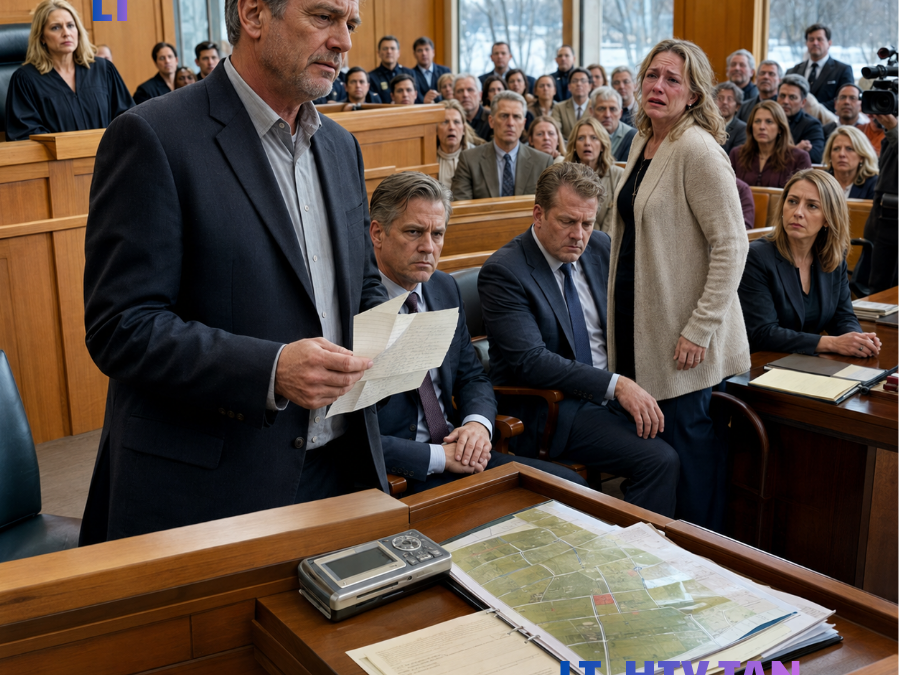
The Fairfield County Courthouse was packed on the morning of the hearing.
Farmers Harold had known for decades sat beside church members and local reporters.
Rick’s lawyer presented a simple story.
An elderly man suffered a stroke.
His son-in-law isolated him.
Suddenly, a new trust appeared.
Then he pointed at me.
“Mr. Carter benefited enormously.”
The statement wasn’t true.
But confidence can make a lie sound respectable.
Susan stood.
“The evidence tells another story.”
Harold’s neurologist testified first.
The stroke had affected movement, not judgment. Cognitive testing showed no dementia, confusion or impaired decision-making.
Susan then explained how she had met Harold privately on separate days. She asked the same questions more than once. His answers remained consistent.
Independent witnesses observed every signature.
I had never been present.
I had simply driven him.
Then Susan placed Harold’s digital recorder into evidence.
Static filled the courtroom.
Rick’s voice followed.
“If we split the south field into residential lots, we’ll make twice as much.”
Then Dennis laughing.
“Dad probably won’t make another Christmas anyway.”
Nobody moved.
Even the court reporter looked up.
Rick’s lawyer stood.
“Private conversations can be misleading.”
Susan nodded.
“I agree.”
She paused.
“That’s why this is not our strongest evidence.”
Emails appeared next.
Property maps.
Estimated lot prices.
Utility plans.
A message from Rick:
Once Dad passes, we’ll move quickly before neighbors complain.
The judge removed his glasses and read the page again.
Then Susan called Thomas Avery, Rick’s retired accountant.
“I struggled with coming here,” Avery admitted.
“What changed your mind?” Susan asked.
“Harold deserved better.”
Avery testified that Rick had ordered tax projections based on the expected sale of the farm months before Harold’s stroke.
Then came something even I hadn’t known.
A developer had placed a refundable deposit in escrow pending probate.
Rick’s attorney objected.
Susan produced certified financial records.
The objection failed.
Rick’s face turned pale.
Dennis stared at the floor.
For months, they had told people I was the man chasing Harold’s money.
Now an entire courtroom could see who had been counting it before he was dead.
I thought the hearing was finished.
Then Susan turned toward me.
“Mr. Carter.”
She held up the envelope Harold had given me.
My heartbeat changed.
“I believe Mr. Bennett left this in your care.”
I walked to the witness stand.
For weeks I had protected that envelope without opening it.
Now, with Linda sitting behind her brothers and half the town watching, I broke the seal.
Several handwritten pages slid into my hands.
Harold’s handwriting.
Steady.
Careful.
Personal.
I looked toward the judge.
“May I read it?”
He nodded.
I unfolded the first page.
“My children,” I began.
The courtroom became so silent I could hear the heating system above us.
“If you are hearing these words, then I am gone.”
I stopped for a breath.
Then I saw my own name farther down the page.
And beside it were the words Harold had apparently waited years for his family to hear.
Part 5: Harold’s final letter exposes everyone—and forces Linda to choose
“I loved each of you more than you will ever know,” I read. “But love cannot survive without honesty.”
My hands began shaking.
“Rick, you measured this farm in dollars while I was still measuring my remaining days. Dennis, you missed moments that can never be rescheduled.”
I turned the page.
“And Michael…”
My voice caught.
“The only man who never asked me for anything is the one person I trusted with everything that truly mattered. Not because he married into this family, but because he showed up when everyone else found an excuse.”
I lowered the letter.
For months, people had whispered when I entered a room.
Now no one whispered.
Then a chair moved behind me.
Linda stood.
Her attorney looked surprised.
Rick turned sharply.
“Linda, sit down.”
She ignored him.
“Your Honor, I need to say something.”
The judge allowed it.
Linda looked at me.
“For thirty years, I let other people tell me what kind of husband Michael was.”
Tears filled her eyes.
“I never stopped long enough to see him for myself.”
Rick tried again.
“Linda.”
She turned toward him.
“No.”
It was the first time I had ever heard her say that word to her brother and make it sound final.
“Michael never asked Dad for money. He never asked for this farm. He never asked for anything.”
Then she looked back at me.
“I was wrong.”
The judge eventually upheld Harold’s trust.
His mental capacity was clear.
The documents were properly executed.
The claims of undue influence had failed.
The gavel struck once.
After months of rumors, it sounded like truth.
But the final surprise came two weeks later.
Susan invited me to her office and pushed the trust documents across the table.
“So what happens to the farm?” I asked.
“It stays in the Bennett Family Trust.”
No individual family member could force a sale.
Nobody could borrow against it.
The property couldn’t be chopped into subdivisions without meeting conditions Harold had deliberately made almost impossible.
Then I found my name.
Successor Trustee: Michael Carter.
I looked up.
“I don’t own the farm?”
Susan smiled.
“No.”
I read the page again.
After everything Rick had said about me stealing an inheritance, Harold hadn’t left me the farm at all.
He had left me responsibility for it.
“For how long?” I asked.
“As long as you’re willing.”
Rick and Dennis had not been entirely disinherited. Harold wasn’t interested in revenge.
Each received a modest inheritance.
But they would never control the land.
Harold had understood something they hadn’t.
Money wasn’t the greatest thing he could withhold from them.
Control was.
I walked outside Susan’s office and stood beneath the cold Ohio sky.
For months, people had called me greedy.
But Harold’s final decision proved the opposite.
He hadn’t trusted me because I wanted his property.
He trusted me because I didn’t.
And now I had to decide what kind of man I would be with something I could protect—but never possess.
Part 6: The farm survives, my marriage heals, and Harold’s lesson remains
Rick appealed once.
Then his attorney quietly advised him to stop.
Dennis returned to real estate. Rick kept his landscaping company, though several customers eventually walked away after learning what happened.
I didn’t celebrate.
I didn’t need to.
My first concern was Harold’s farm.
I wasn’t a farmer, and pretending otherwise would have been foolish. So I contacted Harold’s longtime neighbor, Ben Walker.
We sat in his pickup overlooking the fields.
“You interested in leasing it?” I asked.
Ben smiled.
“I was hoping you’d ask.”
We agreed on fair numbers over coffee before Susan prepared the formal paperwork.
The fields remained green.
The fences were repaired.
The old red barn received its first fresh coat of paint in fifteen years.
Every time I drove past it, I imagined Harold sitting on the porch with a coffee cup.
The next September, we held a community harvest festival.
Church volunteers sold pies. Firefighters grilled hamburgers. Children rode through the fields on hay wagons while a bluegrass band played beneath a white tent.
The farm was making something again.
Not money.
Memories.
Near sunset, a black SUV slowed on the county road.
Rick.
He stopped for a few seconds but never entered.
Children laughed beside the pumpkin patch. Neighbors talked beneath the trees.
Then Rick drove away.
Nobody chased him.
Nobody shouted.
Most people never noticed him.
Sometimes being forgotten hurts more than being hated.
Linda came that afternoon too.
She stood near the cider table looking like a visitor to a life that had once belonged to her.
I walked over.
“I’m glad you came.”
“So am I.”
She gave me a small smile.
“I heard the goats escaped twice.”
“They’re smarter than we are.”
She laughed.
It was the first real laugh I’d heard from her in months.
Later we sat on Harold’s porch.
“I’ve been going to counseling,” she said.
“I know.”
“I have a lot to work on.”
“So do I.”
There was no dramatic reunion.
No promise that thirty years of mistakes disappeared because somebody finally apologized.
Healing happened in smaller ways.
A phone call.
Dinner.
Listening before assuming.
By Thanksgiving, Linda and I were spending weekends together again.
Slowly.
Honestly.
A few weeks before Christmas, I visited Harold’s grave.
Snow dusted the surrounding farmland.
I brought an old pair of leather work gloves he had once forgotten in my truck after we repaired a fence together.
I placed them beside the headstone.
“Still showing up,” I whispered.
The wind moved through the dry grass.
That was enough.
People sometimes imagine justice means watching the people who hurt you suffer.
Harold taught me something different.
Real justice is truth arriving after lies have had every opportunity to win.
Rick and Dennis didn’t lose because a judge denied them control of a farm. They had lost something more valuable years earlier—every afternoon they could have spent with their father, every invitation they ignored, every moment they traded for the assumption that there would always be another Christmas.
And me?
I had driven more than a hundred miles that morning because everyone else said they were too busy.
It wasn’t the longest drive I ever made.
It was simply the most important.
Because Harold’s greatest gift wasn’t land, money, or even the trust he placed in my name.
It was making me understand that character is built quietly, long before anyone is watching.
Then one day, when everything is on the line, all those quiet choices become evidence.
And the truth finally speaks for itself.
THE END.
All the characters and events in this story are fictional and created for the purpose of storytelling and entertainment.
If this story brought you a moment of reflection, comfort, or curiosity, then it has truly fulfilled its purpose.
Thank you sincerely for reading. Your feedback and support are always appreciated and inspire me to keep sharing more stories with you.








