At 2:07 A.M., the Hospital Called About My Husband and His Affair—Then His Safe Exposed What He Had Done to My Future
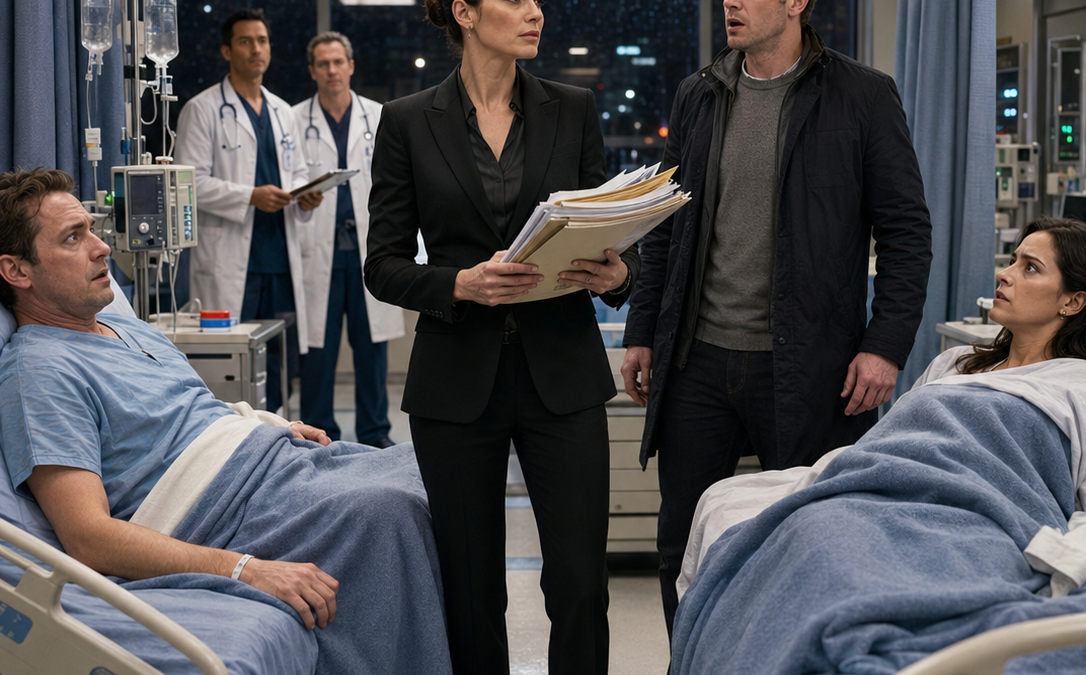
At 2:07 A.M., the Hospital Called About My Husband and His Affair—Then His Safe Exposed What He Had Done to My Future
At 2:07 in the morning, a hospital nurse called and told me my husband had been admitted with my brother’s wife after a private product in his travel bag caused a medical emergency.
Three days earlier, I had discovered them together in my bedroom.
In one reckless moment of rage, I had tampered with that product.
I would regret that decision.
But what happened at Saint Anthony Medical Center was not the worst thing Kenneth had done to me.
Because when his hidden safe was finally opened, I found bank records, forged company approvals—
and a medical document bearing my signature that proved my husband had secretly made a decision about my chance to become a mother.
A decision I had never authorized.
Part 1
The call came at exactly 2:07 A.M.
I remember because the red numbers on the clock were the only clear thing in the room.
2:07.
Everything else felt unreal.
The dark bedroom.
The cold March rain against the windows.
The empty side of the bed.
The phone vibrating across my nightstand.
And the lie Kenneth had handed me five hours earlier.
“Colorado Springs,” he had said while fastening his watch.
“Tonight?”
“Client dinner ran long. We’re finalizing the Aspen logistics contract.”
He picked up his leather travel bag.
“I’ll probably stay at the Broadmoor.”
Then he kissed my forehead.
“Don’t wait up.”
Eleven years of marriage teaches you how to hear familiar words without examining them.
Business trip.
Late meeting.
Client dinner.
Don’t wait up.
Those phrases had become furniture in our marriage.
Always present.
Rarely questioned.
So when an unfamiliar number appeared on my phone after two in the morning, I answered like a wife expecting bad news.
“Hello?”
“May I speak with Mrs. Sabrina Rollins?”
A woman.
Professional voice.
Hospital background noise.
“This is she.”
“My name is Caroline. I’m calling from Saint Anthony Medical Center in Lakewood. Your husband, Kenneth Rollins, has been admitted to the emergency department.”
I sat upright.
“What happened?”
A pause.
Not long.
Long enough.
“Your husband is stable.”
Something about the careful emphasis made my stomach tighten.
“But there is another patient involved.”
I closed my eyes.
I already knew.
Still, I asked.
“Who?”
“I’m not able to provide another patient’s information without permission.”
Of course.
HIPAA.
Privacy.
Professional boundaries.
Things my husband apparently respected only inside hospitals.
Caroline continued.
“The medical team believes the two patients were exposed to an adhesive substance during an intimate encounter. They require treatment, and the circumstances are… unusually sensitive.”
Silence.
Rain tapped against the glass.
I placed one bare foot on the bedroom floor.
Cold hardwood.
Grounding.
Three days earlier, anger had taken control of me.
I had tampered with something Kenneth carried in his travel bag after discovering that he had been sleeping with Maya—
my younger brother Justin’s wife.
It had been reckless.
Vindictive.
Wrong.
At the time, I wanted humiliation.
I wanted one consequence Kenneth could not explain away.
I had not imagined doctors.
An emergency department.
Other people forced to clean up what my rage had created.
That part belonged to me.
And I knew it.
“Mrs. Rollins?”
“I’m here.”
“We need to know exactly what substance may have been involved.”
My throat tightened.
So I told her.
Immediately.
No lie.
No pretending I had no idea.
The nurse became quieter.
“Thank you. That information matters.”
I stared at Kenneth’s empty pillow.
“Is he going to be okay?”
“The physician will explain everything when you arrive.”
“I’m coming.”
I ended the call.
Then I sat there for several seconds.
Not celebrating.
Not laughing.
That surprised me.
For three days I had imagined Kenneth being publicly exposed.
I thought revenge would feel like justice.
At 2:07 in the morning, with an emergency room calling my house, it felt different.
Ugly.
Small.
I had let two dishonest people pull me into behavior that did not belong to the woman I had spent forty-three years becoming.
I stood.
Then I opened my closet.
I did not put on pajamas or sweatpants.
I dressed in black trousers, a cream blouse, and the dark blazer I wore to Rollins Global Enterprises board meetings.
I tied my hair back.
Not because I wanted to intimidate anyone.
Because I needed to recognize myself.
Before Kenneth had spent years telling me I was suspicious, emotional, controlling, and incapable of relaxing—
I had been Sabrina Rollins.
Chief Financial Officer of Rollins Global Enterprises.
Youngest CFO in the company’s eighty-two-year history.
A woman who could walk into a room containing six bankers and three lawyers, identify the one number everyone was avoiding, and ask about it until the room stopped pretending.
I had forgotten her.
Not completely.
Enough to become dangerous to myself.
I walked into my home office.
Opened the bottom locked drawer.
Removed a blue folder.
Six months of bank statements.
Hotel records.
Photographs.
Expense reports.
Private-investigator notes.
I placed it under my arm.
Then I drove into the rain.
But the real beginning of that night had happened seventy-two hours earlier.
My flight to Salt Lake City had been canceled.
Heavy snow farther west.
The captain apologized.
Passengers groaned.
Phones came out.
I felt irritated for approximately thirty seconds.
Then I smiled.
Kenneth believed I would not return until the following evening.
I could surprise him.
On the drive home, I stopped at a chocolate shop in Denver and bought a box of salted caramel truffles.
Thirty-eight dollars.
Ridiculous.
Kenneth loved them.
I pictured walking into the house.
His surprised expression.
Opening a bottle of wine.
Complaining about airlines.
Ordinary marriage.
That picture survived until I opened our front door in Cherry Hills Village.
I heard laughter upstairs.
A woman’s laugh.
Soft.
Familiar.
The box of chocolates remained in my hands.
At first, my mind offered harmless explanations.
Television.
Podcast.
Someone on speakerphone.
Then Kenneth laughed.
Low.
Private.
The laugh he used when he wanted someone to believe they had become the center of his attention.
A woman answered him.
My fingers tightened around the chocolate box.
I knew the voice.
Maya.
My brother’s wife.
Maya Rollins had texted our family group chat that morning.
Taking Mom to Boulder. Staying overnight.
My brother Justin had replied with a heart.
I climbed the stairs.
One step.
Then another.
My heart beat hard enough that I felt it inside my throat.
The bedroom door was partially open.
I stopped beside it.
Maya’s purse sat on my reading chair.
White leather.
Gold chain.
A birthday gift Justin bought her the previous year.
Kenneth’s shirt lay on the floor.
Then I saw them.
My husband.
My brother’s wife.
In the bed where Kenneth and I had slept for eleven years.
I did not scream.
I wish I could tell you that was strength.
It was shock.
The body sometimes goes silent before the mind catches up.
I backed away.
One hand covered my mouth.
The chocolates pressed against my ribs.
I returned downstairs.
Closed the front door without making a sound.
Placed the chocolates in my passenger seat.
Then drove.
I ended up at a coffee shop near downtown Denver.
I do not remember deciding to go there.
I ordered black coffee.
Sat beside a window.
Outside, office workers moved along the sidewalk beneath a gray Colorado sky.
My coffee went cold.
For two hours, my marriage replayed itself in fragments.
Kenneth taking calls in the garage.
Kenneth changing passwords.
Kenneth saying a hotel charge from Boulder had been “client-related.”
Kenneth telling me Maya was “basically family” when I asked why she called him after midnight.
And then the smaller moments.
The more dangerous ones.
“You’re imagining patterns.”
“You always need something to investigate.”
“You’re CFO at work, Sabrina. You don’t have to audit your husband.”
“Sometimes I think you enjoy being suspicious.”
Five years.
He had spent five years taking every instinct I trusted professionally and turning it into evidence that something was wrong with me personally.
Have you ever had someone lie to you so consistently that you began doing their work for them?
You explain the contradiction.
You soften the inconsistency.
You call your own memory unreliable.
Eventually they barely need to deceive you.
You become the person protecting the lie.
I looked at my reflection in the café window.
Forty-three.
Dark hair.
Gray beginning near my temples.
Tailored coat.
A woman employees came to when numbers stopped making sense.
And yet inside my own marriage, I had allowed a man to convince me that noticing something was the same as inventing it.
The anger came slowly.
Not fire.
Ice.
By the time I left the café, I no longer wanted an explanation.
I wanted a record.
That evening, I returned to the house after Kenneth and Maya were gone.
The bed had been made.
Maya’s perfume remained faintly in the room.
That bothered me more than the sheets.
Kenneth’s travel briefcase sat inside the closet.
He believed I was stranded at the airport.
He believed he had time.
I placed the case on his desk.
Opened it.
Hotel receipts.
Aspen.
Colorado Springs.
Vail.
Nights that did not match business travel.
Restaurant bills for two.
Jewelry receipts.
A bracelet purchased on my birthday.
Not for me.
I photographed everything.
Then I found several corporate expense reports.
That changed the nature of what I was seeing.
Kenneth was not merely lying to his wife.
Some of his affair expenses had been coded through Rollins Global.
Client development.
Vendor hospitality.
Strategic meetings.
My family’s company had paid for hotel rooms where my husband met my brother’s wife.
I sat down.
The betrayal expanded.
Marriage.
Family.
Company.
All touching the same lie.
Then I found the private item in his bag.
Anger took over.
I did something reckless.
Something intended to embarrass two people who had humiliated me.
I tampered with it.
Then put it back.
I am not proud of that.
Anger can explain a bad decision.
It does not turn the decision into a good one.
The following morning, I hired a private investigator.
Not because I wanted photographs of an affair.
I already had certainty.
I wanted to know whether Kenneth’s financial lies stopped with hotel rooms.
They did not.
Six months of reconstructed records showed repeated meetings between Kenneth, Maya, and people connected to three consulting firms I had never heard of.
Two of those firms billed Rollins Global.
More than $1.7 million in eighteen months.
The descriptions were vague.
Strategic advisory.
Market access.
Risk consulting.
As CFO, I should have noticed.
Except the payments stayed beneath individual review thresholds and were spread across divisions Kenneth influenced.
Someone understood our controls.
That frightened me.
Three days after discovering the affair—
my phone rang at 2:07 A.M.
And now I was driving toward the hospital with the folder on my passenger seat.
Saint Anthony Medical Center glowed white against wet pavement.
The lobby smelled of disinfectant, coffee, and rainwater tracked in on shoes.
A nurse met me.
“Mrs. Rollins?”
“Yes.”
“Thank you for telling us what was involved.”
Shame burned beneath my collar.
“I should have told you before you asked.”
She did not judge me.
That somehow felt worse.
“We have what we need now.”
She led me through a corridor.
Before opening the curtain, she said:
“Both patients are medically stable.”
I nodded.
Then stepped inside.
Kenneth’s face changed instantly.
Maya turned toward the wall.
Separate blankets covered them as much as possible.
Two physicians stood near a monitor.
A nurse checked an IV line.
Nobody laughed.
Nobody stared.
Medical professionals are better at dignity than betrayed spouses sometimes are.
Kenneth swallowed.
“Sabrina.”
I placed my folder on a chair.
His eyes found it.
Fear entered his expression.
Not because of the hospital.
Because he recognized the folder.
“What is that?”
“Six months.”
Maya turned.
“What?”
I opened it.
First photograph.
Kenneth and Maya entering a hotel near Cherry Creek.
Second.
Leaving another hotel.
Third.
Meeting a man named Philip Aster outside a restaurant.
Kenneth stared.
“You had me followed?”
“No.”
My voice remained flat.
“I had the discrepancies followed.”
“That’s insane.”
I pulled out a corporate expense report.
“Suite 614 at the Four Seasons was billed to Rollins Global as a vendor negotiation.”
Kenneth’s mouth opened.
I placed another page on top.
“Maya’s bracelet was coded as client entertainment.”
Maya looked toward him.
“What?”
Kenneth snapped:
“Not now.”
Interesting.
Her expression changed.
She had not known that part.
I continued.
“Three consulting firms connected to people you met received $1.7 million from my family’s company.”
Kenneth’s face tightened.
“You don’t know what those payments were.”
“That’s why forensic audit requests exist.”
“You’re overreacting because you caught us.”
Maya began crying.
“Sabrina, please.”
I looked at her.
“Justin thinks you’re in Boulder with your mother.”
She closed her eyes.
That was when I called my brother.
He arrived twenty-three minutes later.
Rain covered his coat.
His hair was wet.
He looked terrified.
“What happened?”
I did not explain.
I opened the curtain.
His face emptied.
Maya whispered his name.
“Justin—”
He moved forward.
Fast.
I stepped directly into his path.
“Don’t.”
His eyes stayed on Kenneth.
“Move.”
“No.”
“Sabrina.”
“Do not give them a way to turn you into the problem.”
His breathing came hard.
Kenneth began talking.
Maya began talking.
Within thirty seconds, the great forbidden love they had risked two marriages to protect disintegrated.
“She pursued me.”
“You told me you were leaving Sabrina!”
“You said Justin didn’t care about you!”
“You promised—”
“You knew what this was!”
Justin stared.
Not furious anymore.
Worse.
He looked devastated.
Maya reached toward him.
He stepped backward.
“You told me you were taking your mother to Boulder.”
“I can explain.”
“No.”
His voice cracked.
“You already did.”
The physician returned.
He explained the treatment plan.
Kenneth could provide his own consent.
There was no dramatic document requiring my permission.
No spouse gets to barter with another person’s emergency care.
That mattered.
I had already created enough harm.
Kenneth signed.
Maya signed.
The medical team began preparations.
Then Kenneth grabbed my wrist.
Not hard.
Desperate.
“Don’t leave.”
I looked down at his hand.
“Why?”
“My wallet and insurance cards are at home.”
“A nurse can help with that.”
“My medication list is in the office safe.”
There.
The word.
Safe.
Maya stopped crying.
Just for a fraction of a second.
I noticed.
So did Justin.
I looked at Kenneth.
“What safe?”
His eyes shifted.
“The wall safe.”
“You told me that was empty.”
“It has personal papers.”
Maya looked away.
My instincts sharpened.
“What papers?”
“Nothing related to this.”
I almost laughed.
People say that sentence only when something is absolutely related.
Kenneth gave me the combination because he wanted me to retrieve a medication document and insurance information before morning.
A nurse wrote down the medication list he remembered in the meantime.
I wrote down the safe combination.
Not as a bargain.
As information he had voluntarily given me in front of witnesses.
Then the gurneys rolled away.
Justin and I stood in the corridor.
He leaned against the wall.
For several seconds, neither of us spoke.
Finally:
“How long?”
“I saw them three days ago.”
His face turned toward me.
“Three days?”
“I hired someone immediately.”
I showed him the folder.
He flipped through the photographs.
Then the payments.
“This is company money?”
“Some of it.”
Justin looked at me.
“What else?”
“I don’t know.”
Then I thought about Maya’s face when Kenneth mentioned the safe.
“But I think we’re about to.”
Before leaving the hospital, I found the attending physician.
I told him exactly what I had done.
Everything.
No excuses.
He listened.
Then security took a statement.
Police were notified.
That part of the story was mine to answer for.
I had wanted humiliation.
I had caused a medical emergency.
Whatever Kenneth and Maya had done did not erase my responsibility.
That realization would matter later.
At 4:31 in the morning, Justin and I entered my house.
The rain had slowed.
Kenneth’s office smelled of leather and cedar.
Behind a built-in cabinet was a small steel safe.
I had known it existed.
Kenneth always claimed it held old passports and watches.
I entered the combination.
The lock clicked.
Inside were three shelves.
Top shelf:
cash.
Not hundreds.
Thousands.
Bundled.
Second shelf:
two external drives.
Four passports.
Corporate access tokens.
A black notebook.
Bottom shelf:
a thick envelope bearing the logo of a Denver reproductive medicine clinic.
My heart stopped.
I knew the logo.
Kenneth and I had gone there four years earlier.
We had spent almost two years trying to have a child.
Then testing.
Appointments.
Procedures.
Hope measured in bloodwork and phone calls.
Eventually the clinic told us there were no remaining viable embryos from our final cycle.
I remembered sitting in the parking lot afterward.
Kenneth held my hand.
“I’m sorry,” he said.
“We can try something else.”
I had been forty.
Something else became later.
Later became never.
I opened the envelope.
Inside was a copy of a consent form.
Disposition of Cryopreserved Embryos.
I read the first paragraph.
Then the second.
Three embryos.
Viable at the time of disposition.
I stopped breathing.
The form authorized their destruction.
At the bottom were two signatures.
Kenneth Rollins.
Sabrina Rollins.
My signature looked almost perfect.
Almost.
Justin was reading over my shoulder.
“What is that?”
I could not answer.
The date was four years earlier.
A week before Kenneth told me the clinic had called to say our final embryos had stopped developing.
I turned the page.
Attached was an email printout.
From Kenneth.
To an administrative address.
My wife and I have decided not to continue storage. Attached are signed instructions. Please direct future questions to me because Sabrina is having difficulty accepting the decision.
My vision blurred.
I sat down on the office floor.
Not elegantly.
My knees simply stopped supporting me.
For years, I had blamed my body.
My age.
My work schedule.
Stress.
I had sat in bathrooms holding negative tests while Kenneth told me:
“Maybe this wasn’t meant for us.”
He knew.
He had made the decision.
Then forged my name beneath it.
Justin lowered himself beside me.
“Sabrina.”
I stared at the paper.
“I didn’t sign this.”
“I know.”
“I never signed this.”
“I know.”
That was when I began crying.
Not at the hospital.
Not when I saw Kenneth with Maya.
Not when I found hotel receipts.
Here.
On the floor.
Because an affair steals the present.
This had stolen a future.
Have you ever discovered that someone did not merely lie about what happened yesterday—
but quietly changed what your tomorrow was allowed to become?
There are betrayals you can leave.
And there are betrayals that force you to grieve a life that never got the chance to exist.
I pressed one hand over my mouth.
Justin took the document from me.
His own hands were shaking.
Then he noticed the black notebook.
He opened it.
Numbers.
Dates.
Company names.
Initials.
Percentage splits.
One heading appeared repeatedly.
ALTITUDE.
Beside it:
$8.4M.
Then:
K — 40%.
M — 20%.
PA — 25%.
Reserve — 15%.
Justin looked at me.
“What the hell is Altitude?”
I wiped my face.
The CFO returned before the wife did.
I took the notebook.
Turned pages.
Vendor payments.
Consulting invoices.
Acquisition targets.
Confidential pricing information.
Rollins Global bid numbers.
Competitor names.
My pulse slowed.
Kenneth and Maya were not merely charging hotel rooms to the company.
They had built a scheme around us.
And based on what was inside that safe—
the affair might have been the least expensive betrayal in the room.
Part 2
At 6:05 A.M., I called Rollins Global’s general counsel.
Margaret Chen answered on the second ring.
“Sabrina?”
“I need you to listen before asking questions.”
Her voice changed.
“Go.”
“I have reason to believe Kenneth has been diverting company information and possibly funds through outside consulting entities.”
Silence.
“Where are you?”
“Home.”
“Is he there?”
“No.”
“Do not email anything from your company account.”
“I wasn’t planning to.”
“What evidence?”
“Physical notebook. External drives. Corporate tokens. Vendor records.”
Another pause.
“How did you obtain them?”
“He gave me the combination to our home safe at the hospital so I could retrieve personal documents. My brother is here. We opened it together.”
“Touch nothing else.”
“I haven’t.”
“Photograph the safe as-is.”
“I already did.”
Margaret exhaled.
“Of course you did.”
For the first time that morning, I almost smiled.
Then she said:
“I’m calling outside counsel and our audit committee chair.”
I looked toward the fertility documents.
“There’s something personal too.”
“Do you need me as company counsel or as your friend?”
The question broke something inside me.
“Both.”
So I told her.
She became silent.
Then:
“Oh, Sabrina.”
That was all.
Not a legal opinion.
Not analysis.
Just my name.
At 7:20, two outside attorneys arrived.
At 8:05, a forensic imaging specialist documented the electronic devices without altering them.
At 8:40, Rollins Global froze Kenneth’s company access.
At 9:15, the audit committee convened.
I did not attend.
For the first time in my career, I voluntarily stepped away from a financial investigation involving my own company.
Because I was too close.
Being capable does not mean pretending conflict of interest disappears when the victim is you.
Margaret appointed an independent forensic team.
I handed them everything.
Then I called the reproductive clinic.
The administrator placed me on hold.
Eight minutes.
Longest eight minutes of my life.
Finally, a physician came on the line.
Dr. Elaine Porter.
I remembered her.
Warm eyes.
Silver necklace.
She had once held my hand after a failed transfer.
“Mrs. Rollins?”
“Yes.”
“I understand you have questions about a historical consent form.”
“I never signed it.”
Silence.
“I see.”
“You destroyed three viable embryos.”
Another silence.
Longer.
“I need to review the file before I answer that.”
“My husband forged my name.”
“I understand what you’re alleging.”
“I’m not alleging it. I’m holding the copy.”
Dr. Porter’s voice remained steady.
“Then we need to investigate our own procedures as well.”
That mattered.
She did not defend the clinic.
Did not tell me I must have forgotten.
Did not explain why I was emotional.
She said:
We need to investigate.
Those four words felt like oxygen.
By noon, Kenneth had been released from the hospital into police questioning related to the medical incident and a separate interview regarding the company investigation.
I was interviewed too.
My attorney sat beside me.
I told the truth about tampering with the product.
No justification.
No “but he cheated.”
I had made a dangerous choice.
The detective looked at me.
“You understand this could have legal consequences for you?”
“Yes.”
“Even if your husband committed other offenses?”
“Yes.”
I signed my statement.
There are moments when accountability becomes a form of returning to yourself.
Not because punishment feels good.
Because lying to escape it would make you dependent on the same moral logic you condemn in someone else.
Kenneth hired an attorney that afternoon.
By evening, his version began circulating through our family.
Sabrina had snapped.
Sabrina had become obsessed with the affair.
Sabrina broke into Kenneth’s private safe.
Sabrina was now using company power to destroy him.
Notice what disappeared.
The forged fertility consent.
The $8.4 million notebook.
The outside vendors.
My signature.
People rewriting reality rarely remove everything.
They remove the part that changes who deserves sympathy.
My father called at 7:30.
Daniel Rollins.
Seventy-two.
Founder’s son.
Current chairman of the family holding company.
“Sabrina.”
His voice sounded tired.
“I’m hearing ugly things.”
“So am I.”
“Did you hurt Kenneth?”
The question stung.
“Yes.”
Silence.
“I did something reckless after finding him with Maya.”
My father inhaled.
I continued.
“I told the hospital. I told police. My attorney is handling it.”
Another silence.
“And the rest?”
“Dad, I found what appears to be an $8.4 million fraud scheme involving confidential company information and vendors.”
His breathing changed.
“Who?”
“I don’t know yet.”
“Kenneth?”
“Yes.”
“Maya?”
“Her initial is in the ledger. We need the forensic team.”
My father swore quietly.
Then I told him about the embryos.
Nothing came through the phone.
“Dad?”
His voice cracked.
“He did what?”
That was when I understood something.
For years, Kenneth had relied on my fear of being seen as emotional.
But there are facts that make emotion irrelevant.
Forged consent is not a marital misunderstanding.
An eight-million-dollar ledger is not jealousy.
Evidence changes the room.
Two days later, the first findings arrived.
Altitude Advisory LLC.
Registered eighteen months earlier in Wyoming.
Its beneficial ownership had been obscured through another entity.
But bank records showed transfers to accounts linked to Philip Aster—
a former Rollins Global procurement consultant.
Altitude had received payments from three vendors after those vendors won major Rollins contracts.
Kickbacks.
But that was only one side.
The external drives contained exported bid data, supplier pricing, acquisition models, and confidential projections.
Information valuable to competitors.
Kenneth had access through his strategic development role.
Maya had access to family schedules, relationships, social gatherings, and information she overheard through Justin, who ran operations.
They had turned proximity into inventory.
The $8.4 million figure was not money already stolen.
It was their projected total if a planned acquisition closed later that year.
That was the scheme.
They were selling inside information and steering contracts—
then preparing to manipulate the acquisition itself.
Kenneth’s expected share:
forty percent.
Maya:
twenty.
The affair had become a business partnership.
Or perhaps the business partnership had become an affair.
At that point, I no longer cared which came first.
The forensic team found something else.
Kenneth had downloaded copies of my electronic signature from board documents.
My signature.
Again.
My throat tightened when Margaret told me.
“What was he planning?”
“We don’t know yet.”
Three hours later, we did.
A draft indemnification certificate.
If the acquisition produced regulatory trouble, the document stated that I, as CFO, had reviewed and approved several disputed vendor relationships.
My electronic signature had already been placed beneath it.
Not executed.
Prepared.
Waiting.
I stared at the screen.
The pattern became unbearable.
Marriage.
Fertility.
Company.
Whenever Kenneth needed permission he did not have—
he simply created Sabrina’s agreement.
A husband can steal many things.
Money.
Time.
Trust.
But there is a special violence in stealing another person’s consent.
Because consent is authorship.
It is the right to say:
This is what I choose.
Kenneth had repeatedly decided that my “no” was merely an administrative inconvenience.
Have you ever realized that someone did not love your strength—
they loved having access to it?
They admired your name.
Your position.
Your family.
Your credibility.
But only as long as those things could be used.
The moment you say no, admiration becomes resentment.
Three weeks after the hospital incident, Rollins Global held an emergency shareholder and executive meeting at the company’s Denver headquarters.
I did not want a spectacle.
Neither did my father.
But rumors were destroying the company from inside.
Employees believed the CFO had attacked her husband and used the scandal to remove him.
Vendors were asking questions.
Two lenders requested explanations.
Silence was no longer protecting dignity.
It was protecting misinformation.
The meeting took place in the main auditorium.
Two hundred employees.
Senior managers.
Regional leaders.
Board members.
Family shareholders.
Justin sat three seats from me.
Maya did not attend.
Her attorney advised against it.
Kenneth did.
That surprised me.
He walked in wearing a dark suit.
Thinner.
Pale.
Still handsome enough to remind me why strangers trusted him quickly.
His attorney sat beside him.
I felt nothing when he looked at me.
That frightened me more than anger would have.
My father opened the meeting.
“This company has survived wars, recessions, strikes, lawsuits, and several generations of Rollins family arguments.”
A few nervous laughs.
Then he became serious.
“It will survive this.”
Margaret presented the audit findings.
No affair photographs.
No hospital details.
Nothing salacious.
Vendor payments.
Ownership diagrams.
Access logs.
Exported files.
Bank transfers.
The Altitude ledger.
Then the draft indemnification certificate appeared.
My name.
My electronic signature.
The auditorium became quiet.
Margaret spoke.
“Mrs. Rollins did not create, authorize, approve, or sign this document.”
Kenneth stood.
His lawyer touched his sleeve.
He ignored him.
“This is ridiculous.”
My father looked at him.
“Sit down.”
“You’re letting Sabrina turn a marital dispute into corporate retaliation.”
There it was again.
Marital dispute.
A useful phrase.
Soft enough to hide millions of dollars.
Kenneth pointed toward me.
“She admitted attacking me.”
I stood.
Not because I wanted to.
Because I could not allow two separate truths to be used to cancel each other.
“Yes.”
The room changed.
I walked toward the microphone.
“I made a reckless and unacceptable decision after discovering my husband’s affair.”
Kenneth’s expression brightened.
For one second, he thought I was helping him.
“I disclosed it to the hospital and law enforcement immediately. I am handling the legal consequences through counsel.”
His smile disappeared.
I continued.
“My wrongdoing does not authenticate a forged signature.”
Silence.
“It does not explain exported bid data.”
I looked at him.
“It does not create an $8.4 million fraud ledger.”
My hands remained still.
“And it does not give my husband the right to forge my consent in any other part of my life.”
Kenneth’s face changed.
He knew.
I did not mention the fertility clinic details.
Not yet.
Those belonged to me.
But my father did something I did not expect.
He stood.
“Kenneth.”
Kenneth looked toward him.
“You have spent weeks describing my daughter as unstable.”
My father’s voice remained calm.
“She just admitted her own misconduct in front of two hundred people.”
He pointed toward the forensic report.
“When are you going to admit yours?”
No answer.
The silence lasted.
Five seconds.
Ten.
Kenneth looked at his attorney.
Then back at us.
“These financial records are being taken out of context.”
Margaret displayed another slide.
Bank transfers from Altitude.
One to an account controlled by Kenneth.
Another to a trust linked to Maya.
Another to Philip Aster.
Context appeared to be doing fine.
A low murmur crossed the auditorium.
Justin stared at the screen.
His face tightened when Maya’s trust appeared.
For weeks, part of him had wanted to believe she had merely been unfaithful.
Now he saw numbers.
Dates.
Participation.
Kenneth sat down.
Not defeated.
Cornered.
There is a difference.
But sometimes the public collapse of a lie is quieter than applause.
No one laughed.
No one cheered.
People simply stopped believing him.
That was enough.
My father announced that Kenneth had been terminated for cause.
The board also suspended every vendor relationship connected to Altitude pending review.
Outside auditors would oversee the cleanup.
Employee payroll and benefits would continue.
No mass layoffs.
No sudden shutdown.
I watched shoulders relax.
That mattered more than Kenneth’s face.
When the meeting ended, people avoided him.
The same executives who once crossed the room to shake his hand found urgent reasons to look elsewhere.
Power disappears strangely.
Sometimes nobody takes it from you.
People simply stop lending it to you.
Kenneth walked past me.
Then stopped.
“Are you happy now?”
I looked at him.
“No.”
That answer surprised him.
“You wanted to destroy me.”
“No.”
I lowered my voice.
“I wanted you to stop using my name.”
He stared.
Then left.
Part 3
The reproductive clinic completed its investigation first.
Their attorney called mine.
Then Dr. Porter asked to meet me personally.
We sat in a small consultation room.
I had spent enough time in rooms like that to hate the color beige.
She placed a folder between us.
“We failed you.”
No hesitation.
No defensive language.
I looked at her.
She continued.
“The consent form was submitted electronically from your husband’s patient portal credentials. Staff contacted the number listed for confirmation.”
“My number?”
She shook her head.
“A temporary number added to the account eleven days earlier.”
Kenneth’s.
Of course.
“The employee documented speaking with ‘Mrs. Rollins.’”
My stomach tightened.
“Who answered?”
“We cannot establish that with certainty.”
Maya?
Someone else?
It almost did not matter.
Dr. Porter continued.
“The process should have required independent verification with both patients. It did not.”
I looked at the report.
“So the embryos were viable.”
“Yes.”
The word nearly broke me again.
“And they were destroyed.”
Her eyes lowered.
“Yes.”
I stared at the table.
For years, Kenneth had held me while I cried about a loss he had secretly chosen.
I remembered one night.
I was forty-one.
Sitting on the bathroom floor.
A pregnancy announcement from a college friend had appeared on my phone.
I was ashamed of the jealousy.
Kenneth sat beside me.
“Maybe we’re meant to have a different kind of life.”
At the time, I thought it was compassion.
Now I knew it was management.
He was managing the consequences of a truth only he knew.
“Why?” I whispered.
Dr. Porter could not answer.
Kenneth eventually did.
Months later.
During a deposition.
His attorney objected repeatedly.
But the question stood.
Why authorize disposal of embryos Sabrina wanted to keep?
Kenneth looked down.
Then he said:
“Because I had already decided I didn’t want children.”
My attorney asked:
“Did your wife know that?”
“No.”
“Why not tell her?”
Long pause.
“She would have left.”
That sentence removed the last mystery.
He did not steal my chance at motherhood because he hated children.
He stole my choice because honesty might have cost him access to my life.
My marriage.
My family.
Rollins Global.
My money.
My name.
His calculation was simple.
If Sabrina knew, Sabrina might choose.
So do not let Sabrina know.
My attorney asked one more question.
“You continued attending fertility appointments after the embryos were destroyed?”
Kenneth closed his eyes.
“Yes.”
“Why?”
“I didn’t know how to tell her.”
I almost laughed when I read the transcript later.
People often call cowardice confusion because confusion sounds forgivable.
He knew exactly what truth required.
He simply preferred the lie.
The financial investigation took longer.
Altitude Advisory became part of civil litigation and regulatory referrals.
Philip Aster cooperated.
Maya eventually did too.
That destroyed what remained of her marriage to Justin.
Not because cooperation was wrong.
Because what she admitted removed every fantasy that she had merely been manipulated by Kenneth.
She had helped identify vendors.
Passed information.
Accepted money.
Used family conversations.
She had known enough.
Justin filed for divorce.
For months, he barely spoke about her.
Then one Sunday he came to my house.
We sat on the back terrace overlooking wet spring grass.
He held a coffee mug.
“I keep trying to find the version where she loved me.”
I understood.
“Maybe she did.”
He looked at me.
“That’s worse.”
“Yes.”
Because love and betrayal can occupy the same person.
That is what makes betrayal painful.
If monsters hurt us, leaving would be simple.
The people who hurt us are often people who also made breakfast, remembered birthdays, and held our hands during funerals.
The good was real.
So was the harm.
Healing requires accepting both without allowing one to erase the other.
The legal matter involving my own retaliation ended more quietly.
I accepted responsibility.
My attorney negotiated the outcome.
I paid medical costs not covered by insurance.
I completed court-ordered requirements.
The record did not vanish because Kenneth had committed worse acts.
I did not ask it to.
For a while, I was ashamed that this story would never let me be the perfect victim.
Then I realized perfect victims exist mostly in stories written by people who want morality to be easy.
I had been betrayed.
I had also made a bad choice.
Both were true.
Taking responsibility for mine gave Kenneth less power, not more.
He could no longer point to my worst moment and use it as evidence that his entire version of me had been right.
“Yes,” I could say.
“I did that.”
Then:
“Now we can return to what you did.”
There is enormous freedom in owning the truth before someone weaponizes it.
The divorce became final eleven months after the hospital call.
Kenneth lost his position at Rollins Global.
He surrendered disputed compensation and part of his marital financial claims as the civil cases developed.
The criminal and regulatory processes moved separately.
Some ended in settlements.
Others took longer.
I stopped tracking every consequence.
For months, I had believed peace would arrive when Kenneth had lost enough.
Job.
Marriage.
Money.
Reputation.
But revenge is a poor accountant.
It never knows when the balance has been paid.
So I stopped using his losses to measure my recovery.
Rollins Global survived.
That mattered.
We changed approval controls.
Required independent confirmation for high-risk electronic signatures.
Rebuilt vendor-review procedures.
Separated executive access.
Created whistleblower channels outside management reporting lines.
During the first board meeting after the reforms, my father looked at me.
“You staying?”
He meant as CFO.
I looked at the old Rollins Global logo carved into the conference-room wall.
For years, my identity had been attached to the company.
Youngest CFO.
Daniel Rollins’s daughter.
Justin’s sister.
Kenneth Rollins’s wife.
Titles built through relationships.
“I don’t know.”
My father nodded.
“Take your time.”
That was the first gift he gave me during the entire crisis.
No expectation.
Choice.
I stayed for another year.
Long enough to finish the controls.
Long enough to help stabilize the company.
Then I resigned.
Not because I lost.
Because I wanted to discover who Sabrina was when every room did not already know her last name.
I opened a small advisory practice in Denver.
Corporate governance.
Financial controls.
Fraud-risk review.
Family-business succession.
My first office was on the fourth floor of a renovated brick building with mountain views visible only if you leaned too far toward one corner window.
I loved it.
The conference table seated six.
The coffee machine was too loud.
My assistant kept a cactus alive despite my best efforts.
Clients came with problems that often sounded strangely familiar.
“My brother says we don’t need formal approvals.”
“My husband handles all vendor payments.”
“My business partner thinks contracts are insulting because we trust each other.”
I learned to answer gently.
Trust and controls are not enemies.
A locked door does not accuse every visitor of theft.
It simply recognizes that valuable things deserve boundaries.
The same is true of people.
One afternoon, nearly two years after the hospital call, Justin visited my office.
He carried a small cardboard box.
“What’s that?”
“Something Mom found.”
Inside were photographs from our childhood.
Justin at six.
Me at eleven.
Our father younger than either of us remembered.
One photograph showed Justin sitting on my shoulders at a county fair.
His hands covered my eyes.
I was laughing.
“You used to carry me everywhere,” he said.
“You were lazy.”
“I was five.”
“Excuses.”
He smiled.
Then became serious.
“Do you ever think we missed something?”
“What?”
“With Maya. With Kenneth.”
“All the time.”
“Could we have known?”
I looked at the photograph.
“Maybe some things.”
Then:
“But hindsight is an auditor with unlimited access.”
Justin laughed quietly.
I continued.
“We know where the fraud ended, so every old detail looks obvious now.”
He nodded.
“The late calls.”
“The weird expenses.”
“Maya suddenly caring about Dad’s acquisition strategy.”
I looked at him.
“We saw pieces.”
“So why didn’t we put them together?”
“Because normal people don’t wake up expecting the people they love to be running parallel betrayals.”
He stared at the photograph.
That answer seemed to help him.
It helped me too.
There is a difference between ignoring evidence and failing to imagine something cruel enough.
I had done some of both.
I learned from the first.
I forgave myself for the second.
My relationship with motherhood took longer.
For months, I could not pass a stroller without thinking about three embryos.
Three.
I knew they were cells.
Possibilities.
Not guaranteed children.
I understood every clinical explanation.
Grief does not care how accurately you define the thing you lost.
I grieved possibility.
The right to decide.
The future version of myself who might have said yes.
Or no.
But on my terms.
I considered adoption.
Then froze.
Considered fertility treatment again.
Then panicked.
Friends told me not to rush.
For once, I listened.
At forty-five, I became a foster mentor through a Denver nonprofit serving teenagers aging out of care.
Not motherhood.
Not replacement.
Something else.
A girl named Tessa was seventeen when we met.
Sharp.
Suspicious.
Excellent at mathematics.
Terrible at accepting help.
I recognized her immediately.
Not because we shared history.
Because she believed needing someone meant owing them.
One afternoon, I helped her review a college financial-aid package.
She pushed the paper away.
“I hate people knowing I need things.”
I looked at her.
“Why?”
“Because then they think they own part of you.”
The sentence stopped me.
I folded my hands.
“The right people don’t.”
She looked skeptical.
“How do you know?”
I thought about Kenneth.
My company.
My family.
The hospital.
Then Margaret.
Justin.
Dr. Porter admitting failure.
My father telling me to take my time.
“Because help without choice is control.”
Tessa looked back at the forms.
“And help with choice?”
“Support.”
She nodded.
That distinction became important to both of us.
My life did not become the life I had imagined at thirty-two.
No husband.
No children running through the Cherry Hills house.
I eventually sold that house.
Not because of the bedroom.
Because I wanted fewer rooms.
The new place was a townhouse near Washington Park.
Morning light.
Small patio.
A kitchen designed for one person without apology.
On moving day, I found the old box of salted caramel chocolates.
Not the original chocolates.
Those had gone into the trash years earlier.
The empty decorative box.
I had somehow kept it.
I sat on the floor holding it.
That box represented the woman who drove home believing love was waiting upstairs.
For a long time, I pitied her.
Then I stopped.
She was not stupid.
She was trusting.
Those are not synonyms.
Trust becomes dangerous only when someone decides to exploit it.
I threw the box away.
No ceremony.
Just cardboard into recycling.
Some symbols do not deserve a shrine.
Three years after the hospital call, Rollins Global held its eighty-fifth anniversary dinner at a hotel in downtown Denver.
I almost declined.
Then Justin called.
“Come.”
“Why?”
“Dad is going to cry during his speech, and I need someone else to suffer.”
So I went.
The ballroom was filled with employees.
Old photographs.
Generations of company history.
I wore a dark green dress.
No folder.
No evidence.
No lawyer.
Just me.
My father spoke about the company surviving because people had repeatedly chosen truth over convenience.
Then he surprised me.
“My daughter Sabrina taught this family something expensive.”
The room laughed softly.
He looked toward me.
“Systems matter.”
More laughter.
Then his voice changed.
“But systems are not what saved us.”
He paused.
“Character did.”
My throat tightened.
“Sabrina discovered wrongdoing involving people she loved. She also made a serious mistake of her own during that crisis.”
The room became quiet.
I appreciated that he did not erase it.
“She took responsibility for hers.”
Then he looked toward the executives.
“And she refused to take responsibility for anyone else’s.”
That sentence stayed with me.
For most of my marriage, Kenneth trained me to do exactly the opposite.
His secrecy became my suspicion.
His contradictions became my insecurity.
His affair became my failure to be warm enough.
His fraud would have become my approval.
His decision about our embryos became my inability to conceive.
He transferred consequences the way accountants transfer numbers between columns.
Again.
And again.
Until I finally stopped accepting the entries.
My father lifted his glass.
“To accurate records.”
People laughed.
I raised mine.
“To accurate records.”
Later that night, I stood alone on the hotel terrace.
Denver lights stretched below.
The mountains were only dark shapes on the horizon.
Justin joined me.
“You okay?”
“Yes.”
He leaned against the railing.
“You know what’s weird?”
“What?”
“I thought the hospital was going to be the story we’d tell forever.”
I understood.
It had been absurd.
Humiliating.
The kind of scandal families imagine will define them.
But years later, the hospital had become almost incidental.
The real story was consent.
Financial.
Medical.
Emotional.
The right to decide what carries your name.
“I don’t think the worst thing Kenneth did was cheat,” I said.
Justin nodded.
“Neither do I.”
“He kept making choices for other people.”
“For you.”
“For you.”
“For the company.”
Justin stared at the city.
“Maya too.”
“Yes.”
The wind lifted my hair.
For years, I believed strength meant staying calm while other people lied.
Then I believed strength meant exposing them.
I understand it differently now.
Strength is keeping ownership of yourself.
Your name.
Your work.
Your body.
Your future.
Your yes.
Your no.
The most dangerous people are not always the loud ones.
Sometimes they are the people who smile while quietly replacing your decision with theirs.
They call it convenience.
Love.
Protection.
A technicality.
A placeholder.
Anything except what it is.
Control.
Kenneth lost me long before I discovered Maya in our bedroom.
He lost me every time he taught me that noticing the truth was a personality defect.
I simply had not realized it yet.
And I nearly lost myself when I answered betrayal with an act designed to cause humiliation and harm.
That lesson belongs to me too.
Another person’s wrongdoing does not improve when you imitate it.
Pain does not become justice simply because the person receiving it hurt you first.
My strongest moment was not what I did to Kenneth’s bag.
It was admitting I had done it.
Telling the hospital the truth.
Signing my own statement.
Accepting the consequences.
Then standing up and saying:
Now we can talk about yours.
That was power.
Not revenge.
Responsibility without surrender.
Years later, a young client sat across from me in my office.
Her business partner had moved money without authorization.
She had discovered it the night before.
Her hands shook.
“I feel stupid.”
I slid a glass of water toward her.
“You’re not.”
“I trusted him.”
“That isn’t stupidity.”
“I should have known.”
“Maybe.”
She looked surprised.
I continued.
“Maybe there were things you missed. We’ll examine them.”
Then:
“But missing a warning does not grant someone permission to betray you.”
Her eyes filled.
“What do I do first?”
I thought about the woman I had been at 2:07 A.M.
A phone in the dark.
A lie.
A hospital.
A folder beneath my arm.
Then the woman on the office floor holding a forged medical consent.
“First?”
I pushed a legal pad toward her.
“We separate what you know from what you feel.”
She picked up the pen.
“And then?”
“We preserve the record.”
The words made me smile.
Not because they were dramatic.
Because they had become my life.
Betrayal tries to create confusion.
Truth needs structure.
What happened?
What can be proven?
What belongs to you?
What belongs to them?
What must you take responsibility for?
What responsibility are you carrying that was never yours?
Those questions rebuilt me.
My story did not end when Kenneth was exposed.
It did not end when the company investigation closed.
It did not end when the divorce decree arrived.
Those were external endings.
The real ending came quietly.
One Sunday morning in my townhouse, I woke after sunrise.
No alarm.
No nightmare.
No instinct to check someone else’s phone.
Coffee brewed downstairs.
Rain tapped lightly against the patio door.
For several minutes, I remained in bed.
The other side was empty.
And it did not feel abandoned.
It felt spacious.
That was when I knew.
I was no longer living in reaction to Kenneth.
I was simply living.
I walked downstairs.
Opened the patio door.
Cold Colorado air entered.
Somewhere nearby, a dog barked.
Cars moved along the wet street.
Ordinary life.
I had spent years thinking ordinary life was something Kenneth and I had lost.
Now I understood.
Ordinary life was not a marriage.
It was not a house.
It was the ability to wake up without someone else editing reality before breakfast.
The ability to trust your own memory.
The ability to say no without defending the existence of the word.
The ability to make a mistake, own it, and still know you deserve protection from what others chose to do.
Kenneth had tried to make my signature mean whatever served him.
On financial documents.
On a medical decision.
Inside our marriage.
He failed.
My name belonged to me.
My future belonged to me.
And even the parts of that future that could never be recovered were mine to grieve without accepting his explanation for why they disappeared.
There are betrayals you forgive.
There are betrayals you prosecute.
There are betrayals you simply survive.
And there are some that teach you a rule you should have known all along:
No one who truly loves you needs to steal your consent.
Not with money.
Not with family.
Not with your body.
Not with your future.
And when someone repeatedly signs your name beneath a life you never chose—
the most important thing you can do is take the pen back.
Our story ends here.
But if you have ever been called suspicious for noticing contradictions, difficult for asking questions, controlling for demanding clarity, or unforgiving because someone wanted access before trust had been rebuilt—
remember this:
Trust does not require blindness.
Forgiveness does not require access.
Taking responsibility for your own mistakes does not require carrying someone else’s.
And love without respect for your choices is not love.
It is control wearing a familiar face.
Protect your name.
Protect your choices.
Listen when your instincts keep returning to the same unanswered question.
And never let someone convince you that your “no” is merely a space where they are allowed to write their own “yes.”
You Might Also Enjoy

Dad Told Me To Leave Forever After My Sister’s Kid Threw My Son’s Lunch — By 6AM He Was Begging At M

My Nephew Shut Down My Daughter’s Birthday Party For A BMX Bike — The Venue Owner’s Photo Made My Si

At 11:30 P.M., My Brother Took The Marina Keys. By Sunrise, The $92,000 Speedboat Was Smashed Agains

My Niece Took My Son’s $1,800 Scooter And Dad Called Him A Nobody — By 6AM A Locksmith Blocked My…




