My sister vanished after our parents dismissed her pain, but five years later her goodbye letter led me to a hidden coastal community—and a confrontation our family couldn’t control
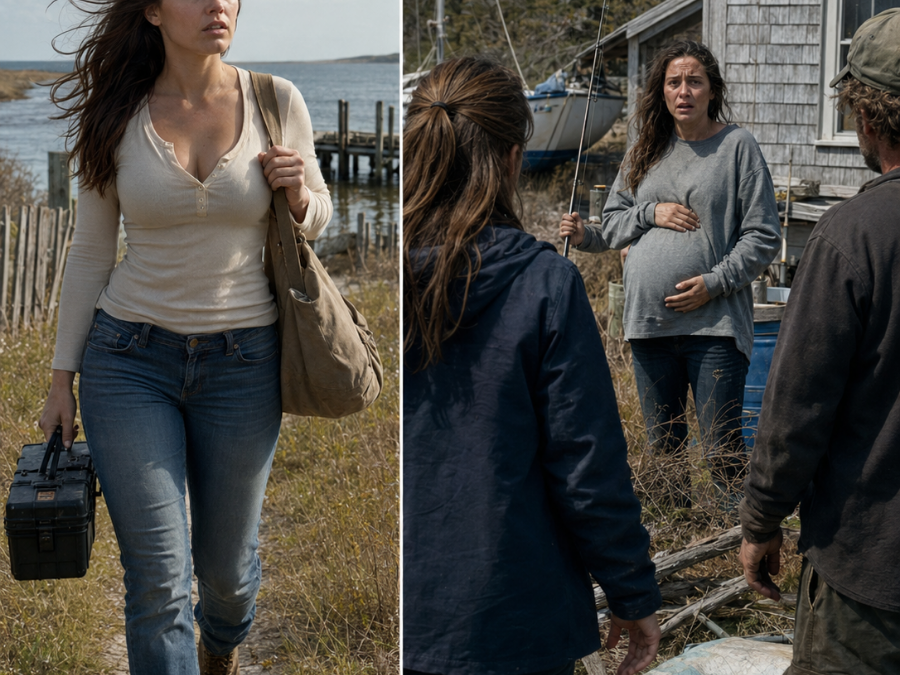
My sister vanished after our parents dismissed her pain, but five years later her goodbye letter led me to a hidden coastal community—and a confrontation our family couldn’t control
Part 1 — The Daughter Our Parents Refused to Hear
My younger sister, Avery, was thirteen when something happened that changed the way she moved through the world, although our parents spent years pretending nothing had changed at all. She had been trapped inside a small neighborhood market during a violent robbery, and while she survived physically unharmed, she came home unable to sleep in darkness, unable to tolerate slammed doors, and terrified whenever raised voices erupted unexpectedly around her.
We lived in the fictional town of Fairmont Ridge, Virginia, where our parents owned Ashford Design Group, a successful architecture and development firm that had built office parks, apartment communities, and boutique hotels across several counties. My mother, Caroline Hale, treated reputation like another building project, something that required clean lines, perfect surfaces, and no visible cracks.
Avery’s fear did not fit that image.
“She needs to stop feeding it,” Mom said whenever Avery asked about therapy.
Dad usually agreed.
“Life doesn’t stop because something bad happened,” he told her. “You stay busy, you keep your grades up, and eventually your brain gets the message.”
Avery tried.
For two years she buried herself in school, art classes, and long walks, but I could see how much effort normal life required from her.
I was twenty when I came home early from college one afternoon and found her locked in the downstairs bathroom, crying and clearly in serious emotional distress after hurting herself. I will not describe the injuries, because what mattered was the realization that hit me with sickening force: my little sister had been asking for help for years, and every adult with the power to get it for her had decided her pain was inconvenient.
I called our parents.
Mom came home first.
She looked at Avery, then at me, then closed her eyes as though we had interrupted an important meeting.
“This is attention-seeking behavior.”
I stared at her.
“She needs a therapist.”
“She needs structure.”
Dad arrived forty minutes later and asked whether the situation could wait until after a client dinner.
That was the moment I stopped trusting either of them with her.
My name is Madison Hale, and I had about sixteen hundred dollars saved from working campus jobs.
Two days later, I spent nearly half of it taking Avery somewhere our parents had never thought to take her.
Away.
We drove east until we reached the fictional North Carolina coastal town of Grayhaven Point, a weathered little harbor full of salt-stained cottages, shrimp boats, bait sheds, gulls, marsh grass, and fishermen who spoke to strangers as if they had known them for years. I chose it because Avery had always calmed near water.
The effect was almost immediate.
On our second morning, she sat on a dock with her shoes beside her and watched sunlight move across the harbor.
“You know what I like about the ocean?” she asked.
“What?”
“It’s loud enough that my head has to be quiet.”
I nearly cried.
That afternoon we wandered into Bellweather Marine Repair, a rambling workshop where old engines sat beside buckets of bolts, propellers leaned against cedar walls, and half-restored boats filled the yard.
The owner was a sixty-eight-year-old widower named Arthur Bell.
Avery asked him twenty questions in ten minutes.
Instead of becoming annoyed, he handed her a wrench.
“Then quit asking and help me find out.”
For the remainder of our trip, Avery went to Arthur’s shop every morning.
She cleaned carburetors.
Sorted hardware.
Learned basic engine maintenance.
Helped sand an old twenty-foot sailboat Arthur was restoring.
The night before we left, Arthur found me alone near the dock.
“Your sister doesn’t want to disappear,” he said.
I looked at him sharply.
“What does that mean?”
“She wants someplace big enough to hear herself think without everybody telling her what she ought to feel.”
That sentence stayed with me.
Back in Fairmont Ridge, Avery changed.
She began reading everything she could find about navigation, small-engine repair, solar systems, freshwater collection, coastal weather, and living aboard older boats.
For the first time since the robbery, she seemed excited about a future.
Then she made the mistake of showing our parents.
At dinner one Sunday, she spread maps and sketches across the table.
“I want to work near the coast after graduation,” she said. “Maybe apprentice at a marina. Eventually I could buy an old boat and rebuild it.”
Mom actually laughed.
“You are not throwing away your future to become some dockhand.”
Dad picked up one of her maps.
“You’re going to college.”
“I might later.”
“No. You’re going now.”
He tore the map in half.
Avery froze.
I stood so abruptly my chair scraped backward.
“Dad.”
“This fantasy ends here.”
Within a week, he had blocked marine forums on the home network, confiscated several of Avery’s tools, and threatened to cut off any financial support if she refused the college program he selected.
Three weeks before Avery disappeared, she became strangely calm.
She gave away clothes.
Sold her laptop.
Packed childhood possessions into labeled boxes.
I mistook that calm for surrender.
It was preparation.
One morning, her bedroom was empty.
On the pillow lay a handwritten letter.
She wrote that she had tried to become the daughter everyone wanted, that she could no longer live as a burden, and that she was “going toward the water where everything finally becomes quiet.”
Her car was found later that day beside an abandoned service road near a bluff overlooking the Atlantic.
Her wallet remained inside.
So did her phone.
Medication.
Keys.
Everything that suggested she intended never to return.
Search teams spent nearly two weeks combing beaches, marshland, cliffs, and wooded trails.
No body was found.
No clothing.
No footprints leading into the surf.
Eventually, investigators concluded she had probably entered the ocean and been carried away.
Our parents held a memorial service with an empty casket.
Mom cried harder than I had ever seen her cry.
Dad told everyone they should have “watched Avery more closely.”
Neither ever said they should have listened.
Within a year, they sold the Fairmont Ridge house and moved two counties away.
I stayed behind.
I started therapy.
And I kept Avery’s goodbye letter in the bottom drawer of my desk.
For five years, I read it until I knew every sentence.
Then one night, I finally noticed something impossible.
It didn’t read like a goodbye.
It read like directions.
Part 2 — Five Years Later, Her Goodbye Became a Map
There were odd phrases scattered through Avery’s letter that I had always blamed on emotion.
“Follow what the tide leaves behind.”
“Count the safe harbors.”
“Save what can still float.”
Certain paragraphs contained exactly the same number of words.
Others ended with terms Arthur had taught us at Grayhaven Point.
Port.
Bearing.
Tide.
Sounding.
I became obsessed.
I counted sentences.
Letters.
Paragraphs.
Then I remembered a code Avery and I had used as children when we hid birthday presents from each other.
Numbers meant different things depending on where they appeared.
A page number might become a street address.
A word count might become steps.
A repeated phrase meant reverse direction.
At three in the morning, after weeks of experimenting, I converted the paragraph lengths using an old navigation chart I found among Avery’s belongings.
Coordinates appeared.
They pointed to a remote inlet south of Grayhaven Point.
I booked a flight the next morning.
I told no one.
Especially not our parents.
Arthur Bell had died three years earlier, but Bellweather Marine Repair still existed.
His son, Connor Bell, ran it now.
Connor was thirty-four, lean, sunburned, and immediately nervous when I said my last name.
“I don’t know anybody named Avery Hale.”
Too quick.
Too rehearsed.
Then I noticed a bracelet around his wrist.
Thirteen small knots tied into faded blue cord.
Avery used to draw that exact symbol beside sketches of anchors.
I showed him her photograph.
“I buried my sister without a body,” I said. “Look at me and tell me she’s dead.”
Connor looked away.
A woman emerged from the workshop behind him.
His wife, Elise.
“Stop lying,” she said.
Connor turned.
“Elise.”
“She deserves to know.”
My knees nearly gave out before Elise even finished.
Avery was alive.
She had reached Grayhaven five years earlier.
Arthur had helped her leave the identity our parents could trace and move among several small coastal communities where people exchanged labor, supplies, repairs, and temporary shelter.
She became a marine mechanic.
Then a navigator.
Then an instructor.
She taught people how to repair water pumps, read weather, maintain small engines, and travel safely between isolated communities.
For years, she occasionally sent Arthur coded confirmation that she was safe.
My relief lasted less than thirty seconds before anger arrived behind it.
“She knew we held a funeral.”
Elise’s face softened.
“Yes.”
“She knew I thought she was dead.”
“Yes.”
I had imagined finding Avery alive thousands of times.
I had never imagined being furious when it happened.
Connor finally spoke.
“She wasn’t trying to punish you.”
“She let me mourn her for five years.”
“She was terrified your parents would use you to locate her.”
That sentence silenced me.
Because I knew they might have.
Not because I would deliberately betray Avery.
Because Mom and Dad had spent my entire childhood teaching me that obedience and love were the same thing.
Elise explained that Arthur had created a loose network of people along the coast who helped individuals leaving dangerous or controlling situations.
Nothing formal.
No organization.
No headquarters.
Just spare rooms, boat rides, temporary work, radios, food, mechanical help, and people who understood that sometimes safety required time before reunion.
Avery eventually became one of the network’s most trusted members.
Then something changed.
Six months earlier, her regular communications stopped.
Connor claimed she wanted deeper privacy.
Elise didn’t believe that was the whole story.
As we talked, I noticed Connor answering questions that were never directed toward him.
Where Avery lived.
What she wanted.
Who she trusted.
Whether she was ready to see me.
Every answer began with some version of, “Avery needs…”
It felt familiar.
Too familiar.
The next day I walked the harbor showing Avery’s photograph discreetly.
An older mechanic recognized her.
“She goes by Ava now.”
My heart stopped.
“When did you last see her?”
“Few months.”
He described her posture perfectly.
“She always picks a seat where she can see the door.”
That was Avery.
Another dockworker remembered her trading repair work for medical supplies.
That evening, the marina manager reluctantly let Elise show me old security footage.
A woman crossed the dock wearing a faded gray sweatshirt.
My sweatshirt.
The one Avery stole from me when she was sixteen.
I sat down.
Alive.
Older.
Real.
Connor eventually admitted Arthur had died without formally transferring control of the network.
Afterward, Connor began coordinating fuel, transportation, and money.
Elise said his definition of protection had slowly changed.
Arthur helped people choose.
Connor had begun deciding for them.
Then my bank card stopped working.
I called the bank.
A family investment account my parents still controlled had been frozen after they noticed travel charges associated with me.
My phone showed thirty-eight missed calls.
Mom.
Dad.
Over and over.
I turned it off.
For the first time, I understood what Avery had been trying to escape.
Not merely indifference.
Control disguised as concern.
And if Connor had become another version of that same cage, I needed to find my sister before somebody else decided her life for her again.
Part 3 — Everyone Protected Her Until Protection Became Control
Grayhaven Point became a wall.
Boats were suddenly unavailable.
Fuel deliveries were delayed.
People who had spoken freely the previous day stopped answering questions.
Connor walked the marina telling everyone I was a threat to Avery’s stability.
Then a retired schoolteacher named June Parker invited me into her kitchen.
“Avery taught navigation classes here under the name Ava Lane,” she said. “She helped half the kids in this community learn how to read weather.”
June showed me a storage key Avery had left behind months earlier.
Inside a small waterproof locker, Elise and I found water filters, emergency food, medical supplies, notebooks, and prenatal vitamins.
I stared at them.
Elise went silent.
A receipt tucked beneath the supplies was less than a week old.
Avery had been there recently.
Then June remembered something.
“She looked pregnant.”
“How pregnant?”
“Very.”
My chest tightened.
Further conversations suggested nearly eight months.
A local midwife would not disclose private details, but her expression confirmed enough when I explained why I was searching.
Avery was alive.
Pregnant.
Living somewhere isolated.
And Connor was deciding who could reach her.
When I confronted him, he offered me twenty thousand dollars to go home.
I recorded the conversation.
“Why are you paying me to leave?”
“Because your presence is destabilizing her.”
“Did Avery ask you to say that?”
“She doesn’t need to.”
That sentence told me everything.
Elise heard the recording.
So did three fishermen.
Then others started talking.
Connor had withheld fuel from people who challenged him.
Delayed transportation.
Controlled access to emergency funds.
Used Arthur’s reputation to justify decisions Arthur would never have made.
Elise found Arthur’s old journal hidden in the marina office.
One line was underlined twice:
Protecting someone while taking away their choice only builds a different cage.
After Elise read it aloud, Connor’s influence began collapsing.
Five boat owners agreed to help me search.
Avery’s oldest friend, Daniel Price, arrived from Virginia carrying a small stuffed whale she had loved since childhood.
“She called me once every year,” he admitted.
I stared at him.
“You knew?”
“I knew she was alive.”
The betrayal hit hard.
But his eyes filled.
“She made me swear. I thought I was protecting her.”
“Everyone keeps deciding what protecting her means.”
He looked down.
“You’re right.”
Together we reconstructed Avery’s likely route using navigation notes, supply records, and a small vessel named Thirteenth Tide that matched sketches she had drawn years earlier.
Before leaving, I sent a handwritten message through a fisherman Avery trusted.
I wrote only:
I am not coming to take you home. I am not bringing Mom or Dad. I only want to know you are safe. If you tell me to leave, I will leave.
No answer came.
Two days later, weather conditions cleared.
We traveled for hours through open water toward a chain of isolated barrier islands.
Late in the afternoon, we saw a small house beyond the dunes.
Solar panels.
A rainwater system.
Vegetable beds protected from salt wind.
A repaired sailboat tied beside a narrow dock.
This wasn’t a desperate hideout.
It was a home.
Smoke rose from a metal chimney.
Then someone appeared between the sea grass and pines.
A woman with long dark hair.
One hand rested beneath a heavily pregnant belly.
Around her wrist was the blue bracelet I had made when we were teenagers.
I knew my sister before I could clearly see her face.
The boat slowed.
I stopped breathing.
After five years of mourning Avery Hale, I was finally looking at her.
And she looked terrified to see me.
Part 4 — Our Parents Arrived Just as Her Labor Began
I stepped onto the beach but did not approach.
Avery stood perhaps thirty feet away.
She was twenty-five now.
Sun-browned.
Stronger.
A pale scar crossed one shin.
Her hair reached the middle of her back.
She held one hand against her stomach and watched me with the expression of someone seeing both home and danger in the same place.
Daniel placed the stuffed whale on a piece of driftwood.
Avery’s face crumpled.
“I thought you threw that away.”
“I kept it because you never came back for it.”
She sat down slowly on a weathered bench.
A young woman named Tessa emerged from the cottage behind her, instantly protective.
Nobody rushed Avery.
Nobody touched her.
That mattered.
Finally, she looked at me.
“You weren’t supposed to find me.”
“I know.”
“Did they send you?”
“No.”
“Do they know?”
“They know I traveled.”
Panic flashed across her face.
I raised both hands.
“I didn’t tell them where.”
Avery’s breathing slowed.
Then she began crying.
“I watched the memorial online.”
The words hit me harder than anything else.
“You watched us bury you?”
“I watched you.”
I looked away.
She continued.
“I almost called.”
“You should have.”
“I know.”
There was nothing clean about reunion.
No dramatic embrace that erased everything.
Avery had survived.
But I had grieved.
Both things were true.
She showed me notebooks documenting years of our parents dismissing her symptoms, interfering with therapy, controlling money, and threatening consequences when I tried to help her.
Then she said quietly, “I knew they would use you.”
That hurt because she was partly right.
“When you needed me most, I backed down,” I admitted. “They threatened to stop paying my tuition, and I got scared.”
“You were twenty.”
“I was still your sister.”
Avery cried harder.
“So was I.”
Before either of us could say more, an engine roared beyond the cove.
Connor arrived.
He stepped onto the beach holding a phone.
Our mother’s voice came through the speaker.
“Avery, sweetheart, please listen to us.”
Avery went white.
Connor lifted the phone.
“I’m doing this because you need real help.”
Avery stared at him.
“You promised.”
“Things changed.”
“No. You changed.”
Then another boat appeared near the inlet.
My parents.
Mom stepped onto the sand wearing white linen pants and an expensive navy coat completely wrong for the weather.
Dad followed with the stiff posture he used in boardrooms.
They had somehow tracked Connor.
Mom moved forward.
“Avery.”
Avery backed away.
Tessa stepped between them.
Dad’s voice hardened.
“This has gone far enough.”
I moved beside Tessa.
“No.”
Dad stared at me.
“You have no idea what you’re involved in.”
“I have a very good idea.”
Mom began crying.
“We lost five years with our daughter.”
Avery laughed once.
It was not a happy sound.
“You lost me long before I left.”
Dad pointed toward the cottage.
“You are eight months pregnant, living on an island with strangers.”
“They aren’t strangers.”
“You need a hospital.”
“I have medical care.”
“You need family.”
Avery’s face tightened suddenly.
She bent forward.
Tessa rushed to her.
“What is it?”
Avery gripped her arm.
Another contraction came minutes later.
Then another.
The stress had triggered labor.
Everything changed immediately.
Tessa guided Avery toward the cottage while Daniel radioed the midwife.
Mom tried to follow.
I stepped in front of her.
“Move.”
“No.”
“She is my daughter.”
“And she asked you not to come.”
Dad came beside her.
“Madison, get out of the way.”
“No.”
There was no shouting.
No pushing.
Five fishermen simply stood with me.
A quiet line between Avery and the people who had spent years refusing to hear her.
Mom’s voice shook.
“You cannot keep us from our grandchild.”
“This isn’t about what you want.”
She stared at me as if I had become someone unrecognizable.
Maybe I had.
Inside the cottage, Avery called my name.
I turned away from my parents and went inside.
Hours later, I sat beside my sister while she held my hand so tightly my fingers went numb.
“Don’t let them in.”
“I won’t.”
“You promise?”
“This time I’m not backing down.”
Avery’s son was born shortly after sunset.
Healthy.
Loud.
Perfect.
She named him Arthur James.
When the baby cried, everyone outside fell silent.
Eventually, Tessa opened the door slightly.
Mom saw Avery holding her son.
Dad whispered, “We’re family.”
I looked directly at him.
“Family means believing a frightened child when she says she needs help. It doesn’t begin when there’s a baby you want access to.”
Dad said nothing.
For once, there was nothing he could control with money.
Nothing he could tear up.
No future he could choose for Avery.
The decision belonged entirely to her.
And she chose not to open the door.
Part 5 — The Family We Built After Everyone Stopped Choosing for Her
Our parents remained on the beach for nearly an hour.
Mom moved between apology, guilt, and promises.
Dad offered doctors, money, housing, lawyers, anything he could imagine that might restore his authority.
Avery declined all of it.
Eventually, they left.
Not because they understood.
Because they had no legal power to force an adult woman to return with them.
Connor’s control ended too.
Elise turned over records showing he had diverted funds and restricted supplies to maintain authority over people who depended on the network.
The coastal communities reorganized everything Arthur had built.
Shared accounting.
Multiple coordinators.
No single gatekeeper.
Most importantly, anyone receiving help retained the right to leave, contact family, disappear from contact, or reconnect on their own terms.
I stayed with Avery for several weeks.
We did not spend those weeks repairing five lost years.
You cannot repair five years like a broken engine.
You live forward from them.
Sometimes we talked while Arthur slept on Avery’s chest.
Sometimes we sat silently on the dock.
One evening she finally said, “I know what I did to you.”
I looked at her.
“I know why you did it.”
“That doesn’t make it harmless.”
“No.”
She nodded.
“I’m sorry.”
It was enough for that night.
Months later, I rented a small cottage on the mainland instead of returning permanently to Virginia.
I learned navigation badly.
Daniel taught first-aid workshops.
Elise helped rebuild the supply network.
Avery continued repairing engines and eventually began writing essays under a pen name about trauma, independence, and the strange way the ocean had taught her that distance could sometimes be medicine.
Our parents sent letters.
Mom’s were emotional.
Dad’s were defensive.
Neither understood why saying “we did our best” could not erase refusing professional help for a terrified child.
Avery read one letter.
Then stopped.
Forgiveness, I learned, did not require reopening every door.
A year after the reunion, Grayhaven Point held a small memorial for Arthur Bell.
Someone had built a bell from salvaged marine metal and mounted it outside his old workshop.
People Arthur had helped came from towns all along the coast.
A woman he once sheltered rang it.
Then a fisherman he had loaned money.
Then Daniel.
Then Elise.
Finally, Avery stepped forward holding her son.
Arthur James was almost one year old.
She guided his tiny hand around the wooden striker.
Together they hit the bell once.
The sound carried across the harbor.
Avery closed her eyes.
I watched her carefully.
She did not flinch.
Later, we sat on the dock where she had once told me the ocean was loud enough to silence her thoughts.
“I used to think being safe meant nobody knowing where I was,” she said.
“What do you think now?”
She looked toward Arthur playing with a plastic boat beside Daniel.
“I think being safe means the right people know where you are and still respect the door.”
That became the rule we lived by.
Nobody arrived uninvited.
Nobody demanded access.
Nobody called control love.
Avery still had difficult days.
Sudden bangs could make her freeze.
Crowded rooms exhausted her.
Sometimes she needed to leave a gathering without explaining.
Nobody rolled their eyes.
Nobody called it dramatic.
Nobody told her how lucky she should feel.
They simply made room.
Our parents never regained the relationship they assumed blood guaranteed them.
Mom eventually began therapy on her own.
Dad remained distant.
Maybe that would change.
Maybe it wouldn’t.
Avery stopped organizing her life around whether they understood.
And I stopped organizing mine around fixing them.
Five years earlier, I had believed my sister walked into the ocean because her pain became unbearable.
The truth was more complicated.
She had walked toward a different life.
She had hidden the route inside the letter because even when she was most afraid, some part of her hoped I might eventually understand the language we created together.
I used to be angry that she made the puzzle so difficult.
Now I understand.
She did not leave a map so I could drag her home.
She left one so that someday, if I had learned the difference between finding someone and claiming them, I might know where to knock.
And when I finally arrived, the most important thing I did was not rescue her.
It was wait outside until she decided to open the door.
The End. This story is entirely fictional and was created for entertainment purposes. All characters, names, locations, events, and situations depicted in this story are imaginary. Any resemblance to actual people, organizations, places, or events is purely coincidental.








