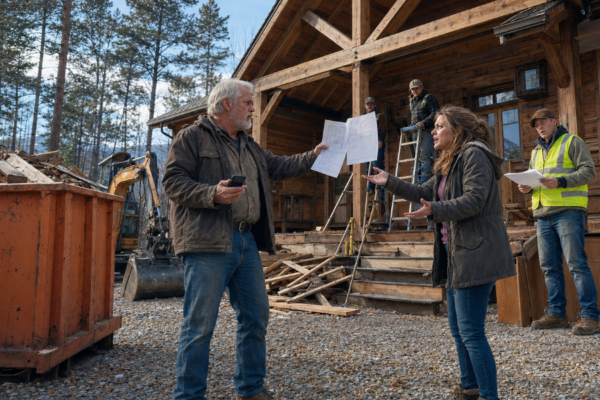
At brunch, my daughter-in-law proudly announced that nobody had the right to touch her mother’s properties. Two weeks later, she sat at my dining table with loan papers and asked me to put my own paid-off home at risk for her. I remembered every word she had said—and decided it was time she heard them back.
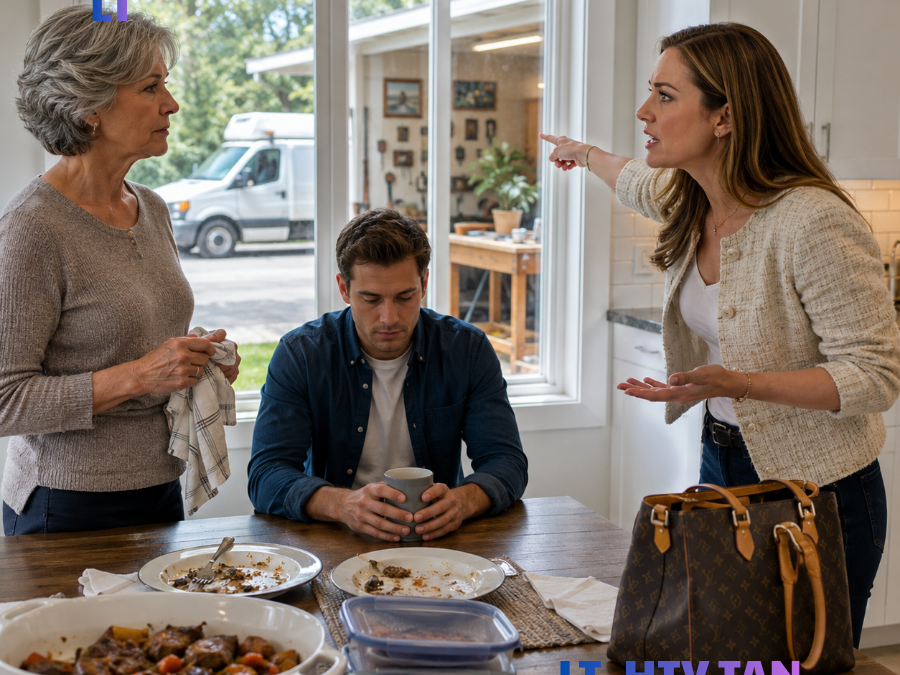
Part 2: At brunch, Camille unknowingly revealed the hypocrisy behind her demands.
Evelyn’s birthday brunch was held at an upscale bistro overlooking the James River.
Camille’s mother was sixty-five, recently retired from medical equipment sales, and financially comfortable. She lived in a gated neighborhood and owned two mortgage-free rental properties on the North Carolina coast.
I attended because family peace still mattered to me.
Camille sat beside Evelyn, talking enthusiastically about renovations and summer travel.
When our meals arrived, she smiled proudly.
“Mom just rented her second beach condo at peak summer rates.”
Evelyn dabbed the corner of her mouth with a linen napkin.
Camille continued.
“She worked more than thirty years in regional sales and earned every square foot of that portfolio. Nobody touches her investments.”
My coffee cup stopped halfway to my lips.
I looked at Camille.
She didn’t notice.
“That’s wonderful, Evelyn,” I said. “Real estate takes discipline.”
Evelyn nodded.
“It certainly does. You have to protect what you’ve built. Young people today expect everything immediately.”
Camille nodded vigorously.
For several seconds, I wondered whether either woman heard the contradiction.
Apparently not.
When the bill arrived, Evelyn tucked her purse beneath her chair without reaching for it.
Camille turned toward me.
“Blair, Caleb said you’re getting rental income from the cargo van now.”
“Yes.”
“So maybe you could cover Caleb’s share of brunch. We’re trying to build our earnest-money deposit.”
I glanced from Camille to Evelyn.
Evelyn remained silent.
Her investments were sacred.
My money was apparently available.
Caleb studied his silverware.
“I’ll pay for my own meal,” I said, placing cash beside the check. “Caleb is thirty-one. He can pay for his.”
Camille’s jaw tightened.
On the drive home, following the river through Richmond, I wasn’t angry.
I was sad.
Five years earlier, when Arthur died, Caleb had promised we would look after each other.
Somehow, “looking after each other” had slowly become “Mom will absorb whatever we don’t want to pay for.”
That night, I sat at Arthur’s antique walnut rolltop desk and opened my financial ledger.
My house was paid off.
My state pension and modest 401(k) covered my expenses comfortably.
The botanical classes now brought supplemental income. The van rental would cover most of my annual property taxes.
I had built security.
But I suddenly understood something uncomfortable.
To Camille, security did not mean I had succeeded.
It meant I had resources available for extraction.
First the workshop.
Then the van.
Then meals.
What came next?
A down payment?
A loan?
My signature on something that could threaten the house Arthur and I had spent three decades protecting?
I closed the ledger.
“No,” I whispered into the quiet study.
The precedent ended here.
Over the next several weeks, my life became peaceful again.
Gardeners gathered in my workshop every Saturday morning. The landscape crew collected the van on Tuesdays and Thursdays, leaving rental checks in a secure box beside my door.
I rejoined old friends from the county office.
I started walking in the park on weekends.
I stopped checking my phone every hour.
Caleb and Camille grew distant.
Camille posted vague social-media quotes about “toxic boomers” and “elders who refuse to support the next generation.”
I ignored them.
Then, one Wednesday afternoon, Caleb texted.
Can we come for dinner Sunday? We hit a problem with the mortgage approval. We need to discuss some creative family solutions.
I stared at those three words.
Creative family solutions.
I knew exactly what they meant.
I typed back:
Dinner at six. Roast chicken and vegetables.
Then I set my phone down.
Because if Camille was coming to my house to ask for what I suspected, I wanted to hear the request directly from her mouth.
Part 3: Camille arrived with loan documents aimed directly at my home.
Sunday evening was warm and still, with a light breeze moving through the dogwood trees.
Caleb and Camille arrived at exactly six.
Camille carried an unopened bottle of California Pinot Noir.
Caleb carried a sleek leather folder.
That folder told me more than their smiles did.
Dinner was painfully polite.
We discussed Virginia humidity, Caleb’s warehouse schedule, and whether my propagation classes were going well.
Nobody mentioned money.
Then I cleared the dinner plates and brought out coffee.
Camille unzipped the folder.
Three documents appeared on my polished oak table.
A mortgage amortization schedule.
An online appraisal of my house.
And a loan application.
My address was printed across the top.
I felt something inside me go very still.
“Blair,” Camille began, clasping her hands, “we want to be completely transparent.”
“Please do.”
“The lender needs a larger down payment because interest rates have increased. Without seventy thousand dollars down, our debt-to-income ratio won’t work.”
I looked at the appraisal.
“And why did you have my house valued?”
Camille leaned forward.
“It’s simple. Your home is worth approximately five hundred twenty thousand dollars. You don’t owe anything on it.”
She slid the loan application closer.
“If you open a small home-equity line of credit, you could gift us fifty thousand dollars. Caleb and I would pay the interest.”
Gift.
My money.
My debt.
Their house.
Camille smiled as though she had discovered an elegant solution.
“It’s a low-risk way to pass some wealth to the next generation while you’re alive to enjoy seeing what it does for us.”
I didn’t touch the paperwork.
Instead, I looked at Caleb.
“Is this your plan?”
He blinked.
“Mom, rent is going up twelve percent next month.”
“That wasn’t my question.”
He rubbed the back of his neck.
“If we don’t buy now, we might get priced out of the Henrico County school district.”
Camille jumped in.
“The equity is just sitting there.”
“The equity,” I said, “is not sitting there doing nothing.”
She frowned.
“It represents thirty years of taxes, repairs, roofs, emergencies, and sacrifice. It represents the double shifts your father worked during the recession so we wouldn’t lose this house.”
Camille leaned back and crossed her arms.
“Nobody is discounting your past.”
Her tone changed.
The sales presentation disappeared.
“Mom, share some of what you have.”
I watched her carefully.
“You live alone in a huge four-bedroom house. You’re sitting on hundreds of thousands of dollars in equity while your only son struggles to start a family.”
Caleb stared into his coffee.
Camille continued.
“Refusing to help when you have this much is selfish. You’re hoarding comfort at our expense.”
There was that word again.
Hoarding.
I looked at her designer watch.
Then the loan documents.
Then my son, sitting silently while his wife accused his widowed mother of selfishness for refusing to borrow against her home.
And suddenly I remembered brunch.
The river view.
Evelyn’s smile.
Camille’s proud voice.
Nobody touches her investments.
I folded my hands calmly.
“Camille,” I said.
She looked up.
“Before I answer your request, I need you to answer one question for me.”
Her confident expression faltered.
And for the first time that evening, Caleb lifted his eyes.
Part 4: One question exposed Camille’s double standard in front of Caleb.
“Your mother owns two coastal rental properties in North Carolina,” I said.
Camille stiffened.
“She owns them without mortgages. She also has a substantial retirement portfolio and just collected peak summer rental income.”
Camille’s fingers moved toward the leather folder.
I kept my eyes on hers.
“Have you printed an appraisal of one of her beach properties?”
Silence.
“Have you brought her a loan application?”
Camille said nothing.
“Have you asked Evelyn to take out a fifty-thousand-dollar equity line so you can buy your townhouse?”
Her expression changed instantly.
The confidence disappeared.
“That’s completely different.”
“How?”
“My mother is single.”
“So am I.”
“She worked over thirty years to build those assets.”
I leaned slightly forward.
“And what exactly do you believe I did for thirty years as a county assessor?”
Camille’s cheeks reddened.
“That isn’t what I meant.”
“Then explain what you meant.”
Caleb shifted in his chair.
Camille looked toward him, perhaps expecting rescue.
He gave her none.
“She needs those properties for retirement,” Camille said.
“And I don’t need my home?”
“I didn’t say that.”
“You said refusing to mortgage it for you was selfish.”
Camille opened her mouth.
I continued calmly.
“At brunch, you said nobody had the right to touch your mother’s investments because she earned them.”
The room went completely quiet.
I could hear the refrigerator humming from the kitchen.
“You said she worked thirty years and earned every square foot.”
Camille looked down.
“So tell me why your mother’s hard work is sacred while mine is communal property.”
No answer.
“Why is her paid-off real estate retirement security, but my paid-off real estate ‘unused equity’?”
Still nothing.
“Why would you never ask your mother to risk her property, yet you arrived at my home with paperwork already prepared for mine?”
Camille’s face flushed crimson.
Caleb stared at the documents as if seeing them clearly for the first time.
I picked them up.
Straightened the edges.
Then slid everything back into the leather folder.
“I will not borrow against my house.”
Camille swallowed.
“I will not finance a lifestyle you cannot currently afford. I will not provide free storage because you dislike paying storage fees. And I will not apologize for protecting what Arthur and I spent our adult lives building.”
Caleb finally spoke.
“Mom…”
I turned toward him.
His voice softened.
“I should’ve stopped this before we came.”
Camille looked sharply at him.
But Caleb reached across the table and zipped the folder closed.
“I’m sorry.”
Those two words surprised me more than anything Camille had said.
They left fifteen minutes later.
No shouting.
No slammed doors.
No dramatic final insult.
Just an uncomfortable silence as Caleb carried the folder back to their car.
From my window, I watched the taillights disappear down the street.
The house became quiet again.
Roses from my garden scented the sideboard.
I should have felt victorious.
Instead, I felt exhausted.
Because setting a boundary with strangers is easy.
Setting one with your only child can break your heart even when you know you are right.
And I still didn’t know whether Caleb’s apology meant anything—or whether I had just damaged our relationship permanently.
Part 5: Caleb finally chose responsibility, while my protected life began expanding.
For several weeks, Caleb barely called.
I gave him space.
Camille stopped posting pointed messages about selfish older relatives. She stopped asking about my van, workshop, savings, or house.
Then, almost two months after the dinner, my phone rang on a Sunday afternoon.
It was Caleb.
“Hey, Mom.”
His voice sounded different.
Quieter.
“We renewed our lease.”
I sat down on the back porch.
“The townhouse?”
“We let it go.”
He exhaled.
“We found a smaller apartment instead. Lower rent. We canceled the storage unit too.”
“What happened to everything inside it?”
“We sold half of it.”
Despite myself, I smiled.
Caleb continued.
“We started paying down the credit cards aggressively. Camille canceled the luxury gym. I picked up some extra logistics shifts.”
There was a pause.
“We were spending money trying to look like we were doing better than we actually were.”
That was the most honest sentence I had heard from my son in years.
“And Camille?” I asked.
“She’s embarrassed.”
“I imagine so.”
“She knows you were right about her mom.”
I looked across my garden.
“I wasn’t trying to embarrass her, Caleb.”
“I know.”
Another silence.
“I think that made it worse.”
I laughed softly.
Our Sunday calls gradually returned.
Not every conversation was perfect. Camille and I never became especially close.
But something important changed.
The hidden financial agenda disappeared.
If Caleb asked how I was doing, he actually wanted to know.
Meanwhile, my own life grew larger.
The propagation classes became so popular that the Richmond Botanical Guild invited me to lead a regional seminar series in the fall.
The landscape company extended the cargo-van lease.
That income covered my property taxes and helped pay for a new solar array on the workshop roof.
One bright Saturday morning, I walked into my garden carrying pruning shears and a wicker basket.
Lavender moved gently in the breeze.
Sunlight warmed the brick patio Arthur and I had laid ourselves nearly thirty years earlier.
I remembered us kneeling there together, arguing affectionately about whether the bricks were straight.
I remembered him wiping mortar from his hands and telling me, “Someday we’ll sit out here and enjoy this place instead of always fixing it.”
He never got enough of those years.
So I intended to enjoy them for both of us.
Then I heard a car door.
Caleb walked through the side gate carrying two cups of coffee.
No folder.
No paperwork.
No request.
“Thought you might want company,” he said.
I took one cup.
“That depends. Did you bring loan documents?”
He laughed, genuinely laughed, and shook his head.
“Never again.”
We sat on the patio together.
After a while, he looked toward the workshop.
“You know, Mom… I used to think you were being stubborn.”
“And now?”
“Now I think you were making us grow up.”
I turned the coffee cup between my hands.
“That was never my job, Caleb.”
He nodded.
“I know. It was ours.”
That was the final truth Camille’s loan papers had forced all of us to face.
Family support does not mean surrendering everything you worked for whenever another adult wants an easier path.
Love is not measured by how much access someone has to your property.
Sometimes love means helping.
Sometimes it means giving.
And sometimes the most loving sentence you can say is no.
My house remained mortgage-free.
My workshop remained mine.
My van continued earning income instead of carrying someone else’s clutter.
And my son, finally, began building a life he could truly afford.
I clipped several stems of lavender and placed them carefully into my basket.
For years after Arthur died, I had worried that protecting my independence might make me lonely.
Instead, protecting it gave me room to live again.
I looked across the thriving garden, the sunlit workshop, and the brick patio built by two people who had worked for everything they owned.
For the first time in months, nothing in front of me felt threatened.
Nothing needed defending.
My home was still mine.
My peace was still mine.
And now, at last, my family understood why.
THE END.
All the characters and events in this story are fictional and created for the purpose of storytelling and entertainment. Thank you sincerely for reading. Your feedback and support are always appreciated and inspire me to keep sharing more stories with you.