I came home from the probate lawyer carrying papers that said my late husband had left me two condos and the lake house we had dreamed of retiring in—property worth more than $800,000. I was seventy years old, newly widowed, and foolishly excited to tell my only daughter. But before I opened my own front door, I heard Laura and her husband discussing how quickly they could have me declared mentally incompetent.
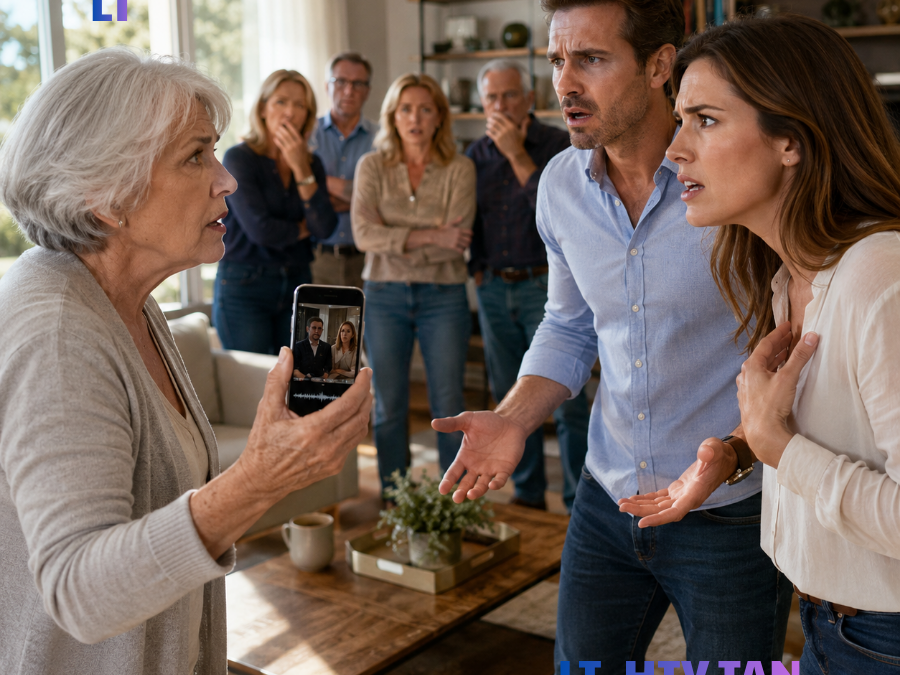
## Part 2: I played helpless while quietly building evidence against them.
Eleanor introduced me to her nephew Mark, who worked in technology.
By Thursday, three tiny cameras were hidden inside my condo—one near the bookshelf, one disguised beside the kitchen clock, another facing the dining table.
Mark showed me the recordings on my phone.
“Everything backs up automatically.”
I shook my head.
“Laura thinks I can barely send a picture.”
Mark smiled.
“That may work in your favor.”
Eleanor also arranged a meeting with attorney Arthur Sterling, a gray-haired guardianship and probate specialist who listened without interrupting as I described what I had overheard.
When I finished, he folded his hands.
“What they are attempting is elder financial abuse.”
Hearing the words officially made my stomach tighten.
“They can really have me declared incompetent?”
“They can try.”
He explained how relatives could petition a court using claims of forgetfulness, confusion, unsafe behavior, and medical opinions.
“But they made one mistake,” he added. “They gave you warning.”
He arranged an independent neurological evaluation.
Dr. Theodore Maxwell tested my memory, reasoning, finances, orientation, decision-making, and daily functioning for more than three hours.
At the end, he smiled.
“Mrs. Miller, you are cognitively healthy. Your reasoning is excellent.”
I almost hugged him.
Meanwhile, Eleanor discovered why Laura and James were desperate.
James owed more than $150,000 in credit cards and personal loans, and his employer was rumored to be preparing layoffs.
Laura had lost her hospital job six months earlier.
She had told people she quit to “care for her mother.”
She barely visited me.
On Sunday, I made Laura’s childhood favorite meal—pot roast, mashed potatoes, salad, homemade rolls.
I left my hair slightly messy.
I wore an old cardigan.
At the table, I let my hand tremble around my coffee cup.
Laura noticed everything.
Finally she asked, “So what happened with Dad’s estate?”
I lowered my eyes.
“The probate is finished.”
James stopped chewing.
“The two condos and the lake house belong to me now.”
Laura leaned closer.
“What are they worth?”
“About eight hundred thousand dollars altogether.”
Silence.
Not grief.
Not gratitude toward Robert.
Calculation.
I watched it move across both their faces.
James cleared his throat.
“That’s a lot for one person to manage.”
Laura took my hand.
“Especially at your age, Mom.”
There it was.
James opened his briefcase.
“We actually brought something that might make life easier.”
He placed several pages beside my plate.
A general power of attorney.
I pretended to struggle with the small print.
“What does all this mean?”
“It just lets us help,” Laura said.
“Help how?”
“Bills. Properties. Banking. Decisions.”
I deliberately loosened my grip on my coffee cup.
It smashed against the floor.
Laura jumped up.
“Oh, Mom.”
But I saw the glance she gave James.
Satisfaction.
Another example of poor old Susan losing control.
“I’m sorry,” I whispered.
James gathered the documents.
“Maybe you should rest.”
“Could I keep these?”
His eyes tightened.
Laura touched his arm.
“Of course.”
After they left, I locked the door.
Then I opened the camera application.
There they were.
The papers.
Their glances.
Their words.
The moment they believed they were winning.
I called Arthur.
“They brought the power of attorney.”
“Did you sign?”
“No.”
“Did the cameras capture it?”
“Everything.”
He exhaled.
“Good.”
The next morning, Laura called again.
I told her I might have my own lawyer review the documents.
For three full seconds, she said nothing.
Then her voice changed.
“Your own lawyer?”
That was when I knew.
The trap was working.
And frightened people, Arthur had warned me, often make their biggest mistakes when they realize they are losing control.
## Part 3: Their concern turned into an open attempt to erase me.
Three days later, a psychiatrist named Dr. Andrew Ross called.
“Your daughter contacted me,” he said. “She’s concerned about memory problems, confusion, difficulty making decisions.”
I closed my eyes.
They had moved faster than expected.
“I’ve already been evaluated by Dr. Theodore Maxwell.”
A pause.
“My daughter may have his report.”
“Perhaps a second opinion—”
“No.”
The word came easily.
“I will not undergo an unnecessary examination arranged without my consent.”
That evening, Laura appeared at my door.
Her face was red.
“Why were you rude to Dr. Ross?”
I let her inside because the cameras were running.
“I didn’t ask you to find me a psychiatrist.”
“We’re worried about you!”
“No. You’re worried about my money.”
Her face changed.
I kept my voice level.
“I heard you, Laura.”
Silence.
“The day I came home from probate. I was outside the door.”
She turned pale.
“I heard everything.”
“That’s ridiculous.”
“I heard James discussing doctors. Guardianship. Six months. I heard you say I was trusting enough to sign whatever you put in front of me.”
“You’re confused.”
I pulled out my phone.
“I have recordings too.”
Her fear became fury.
“You recorded your own family?”
“What kind of daughter plots to have her mother declared incompetent?”
Her eyes filled with tears.
This time I didn’t know whether they were real.
“James is under pressure,” she whispered. “We have debts. We thought if we managed the properties, maybe it could help everyone.”
“You could have asked me.”
She looked down.
“You chose to destroy me instead.”
“Mom—”
“Leave.”
“I’m your daughter.”
I opened the door.
“You are a stranger who shares my blood.”
The next morning Arthur called.
“They filed a guardianship petition.”
I gripped the kitchen counter.
“They’re claiming dementia and paranoia.”
“So this goes to court?”
“Yes.”
Laura spent the next two weeks telling neighbors I was unstable.
Some believed her.
Others came to my condo, drank coffee with me, watched me handle my bills and medications, and offered to testify.
On the morning of the hearing, Eleanor drove me to the courthouse.
I wore a simple gray suit.
Arthur met us near the security desk.
“Tell the truth,” he said. “I’ll handle the evidence.”
Inside, Laura sat beside James.
She carried tissues.
James stared at the table.
Their lawyer portrayed me as a lonely elderly widow refusing desperately needed family help.
Then Laura took the stand.
“My mother has become paranoid,” she said, wiping her eyes. “She believes James and I are trying to steal from her.”
For one terrible moment, I understood how easily they might have succeeded.
Without evidence, my truth sounded exactly like the delusion they claimed it was.
Then Arthur stood.
“Your Honor, this is not cognitive decline.”
He placed a folder on the table.
“This is attempted elder financial abuse.”
The courtroom became very quiet.
And then he connected his laptop to the courtroom screen.
## Part 4: Their own recorded voices destroyed the lie they built.
Arthur began with Dr. Maxwell’s evaluation.
No dementia.
No cognitive impairment.
Excellent memory and reasoning.
Then came James’s debts.
More than $150,000.
Then Laura’s lost job and false claims that she had left employment to care for me.
Their lawyer objected.
The judge allowed Arthur to continue.
Finally, he pressed play.
James’s voice filled the courtroom.
“She’s already old.”
Laura stopped moving.
“It’ll be easy to convince a doctor she can’t handle her affairs.”
James closed his eyes.
Then Laura’s voice followed.
“We should act before she does something with the properties.”
The judge looked directly at them.
The recording continued.
Six months.
Manipulated evaluations.
Control of the properties.
Fake affection.
Signatures.
Every ugly word I had heard outside my own front door was now being heard by a judge.
Arthur played clips from Sunday lunch next—the power of attorney, their careful pressure, the way they spoke to me as though I were a child.
Then I testified.
Arthur asked my address.
My accounts.
The rental income.
The maintenance costs.
The history of each property.
I answered without hesitation.
The judge leaned forward.
“Mrs. Miller, why do you believe your daughter did this?”
I looked across the courtroom.
Laura was crying.
James stared straight ahead.
“Because they were desperate,” I said. “And somewhere along the way, they stopped seeing me as a person.”
My throat tightened.
“They saw eight hundred thousand dollars standing between them and financial relief.”
After closing arguments, the judge recessed.
Eleanor held my hand in the hallway.
I had survived seventy years of work, grief, sacrifice, and Robert’s death.
Yet those thirty minutes felt longer than all of it.
When court resumed, the judge looked down at her ruling.
“The petition for guardianship is without merit.”
My breath escaped.
“Mrs. Susan Miller has demonstrated full mental competency.”
Laura covered her mouth.
“The evidence presented also reveals a deliberate effort to manipulate Mrs. Miller and obtain control over her assets through false allegations.”
The judge ordered Laura and James to pay my legal costs.
Then came the twist none of us expected.
“I am also referring the evidence to the district attorney for review of potential fraud, conspiracy, and elder financial abuse.”
James finally looked at me.
Not angry.
Terrified.
The gavel struck.
Outside, sunlight had broken through the morning clouds.
I thought winning would feel joyful.
It didn’t.
It felt quiet.
Heavy.
Necessary.
Laura rushed after me.
“Mom!”
I stopped.
“James pressured me. I was scared. Please.”
I studied the daughter I had once carried sleeping from the car because I didn’t want to wake her.
“Would you be apologizing if the recordings had never existed?”
She had no answer.
That silence told me more than every letter she would later send.
## Part 5: I protected Robert’s legacy and reclaimed the life they targeted.
The months afterward changed everything.
James lost his job when the scandal reached his employer.
Friends disappeared from their lives.
Laura called once, then wrote letters.
I did not answer.
People told me she was my only daughter.
They said forgiveness was important.
Perhaps it is.
But forgiveness and access are not the same thing.
I sold one condo for approximately $300,000.
I paid Arthur every dollar I owed him and donated part of the proceeds to an organization helping older women facing financial abuse.
The second condo and the lake house went into a trust.
Eleanor became co-administrator.
Then I changed my will.
Laura would not inherit the fortune she had tried to seize while I was still alive.
Most of what remained would eventually support charities serving vulnerable seniors, with a portion left to Eleanor—the friend who protected me when my own family tried to erase me.
Six months after the hearing, I sat on the porch of the lake house.
Robert and I had bought it twenty years earlier when it was barely more than a tired cabin.
He replaced floors himself.
I painted walls.
We planted flowers together and promised that someday we would wake up there without alarms, commutes, or bills stacked on the kitchen counter.
Robert never made it to that retirement.
I did.
Eleanor sat beside me drinking coffee.
The lake reflected the orange evening sky.
“How do you feel?” she asked.
I thought about Laura.
About the unopened letters in my drawer.
About the woman standing in the courthouse claiming I could no longer recognize reality.
“Sad,” I said.
Eleanor waited.
“But free.”
That was the truth.
I had spent most of my life believing love meant sacrifice.
Work harder.
Give more.
Forgive faster.
Stay quiet.
Keep everyone together.
At seventy, I finally learned something Robert may have understood long before I did.
Love without respect becomes permission.
And sometimes the most loving thing you can do for yourself is close the door.
I still loved my daughter.
That was the final twist I had not expected.
Winning in court did not erase that.
Changing my will did not erase that.
Neither did anger.
But love no longer controlled my judgment.
Laura’s letters remain unopened.
Maybe someday I will read them.
Maybe someday she will take responsibility without blaming James, debt, fear, or desperation.
Maybe she never will.
My peace no longer depends on her answer.
The following morning, I woke before sunrise.
I made coffee and stepped barefoot onto the porch.
Mist floated above the lake.
A cardinal landed on the railing, exactly where Robert used to leave his work gloves.
For one foolish, beautiful second, I imagined him sitting beside me.
“You were right,” I whispered.
He had always told me I was stronger than I believed.
Behind me, on the kitchen table, sat the documents proving that the lake house belonged to me.
Not Laura.
Not James.
Not a guardian.
Me.
I could sell it.
Keep it.
Give it away.
Plant roses around it.
Make terrible decorating decisions.
Live another twenty years.
Those choices were mine.
And after spending a lifetime giving my choices to everyone else, ownership of my own future felt worth more than eight hundred thousand dollars.
My daughter thought my age made me weak.
Instead, seventy years had taught me exactly when to stop begging people to love me properly.
I lifted my coffee toward the lake as the first sunlight touched the water.
“For us, Robert.”
Then I went inside and opened the curtains on the life they had tried to take from me.
THE END.
All the characters and events in this story are fictional and created for the purpose of storytelling and entertainment. Thank you sincerely for reading. Your feedback and support are always appreciated and inspire me to keep sharing more stories with you.








