My Daughter Told Me Not to Expect Her Help When I Got Old After I Spent Years Raising Her Children, Then Called the Next Morning Expecting Me to Drop Everything for Her Again
My Daughter Told Me Not to Expect Her Help When I Got Old After I Spent Years Raising Her Children, Then Called the Next Morning Expecting Me to Drop Everything for Her Again
Part 1: The Dinner Where I Finally Heard What I Meant to Them
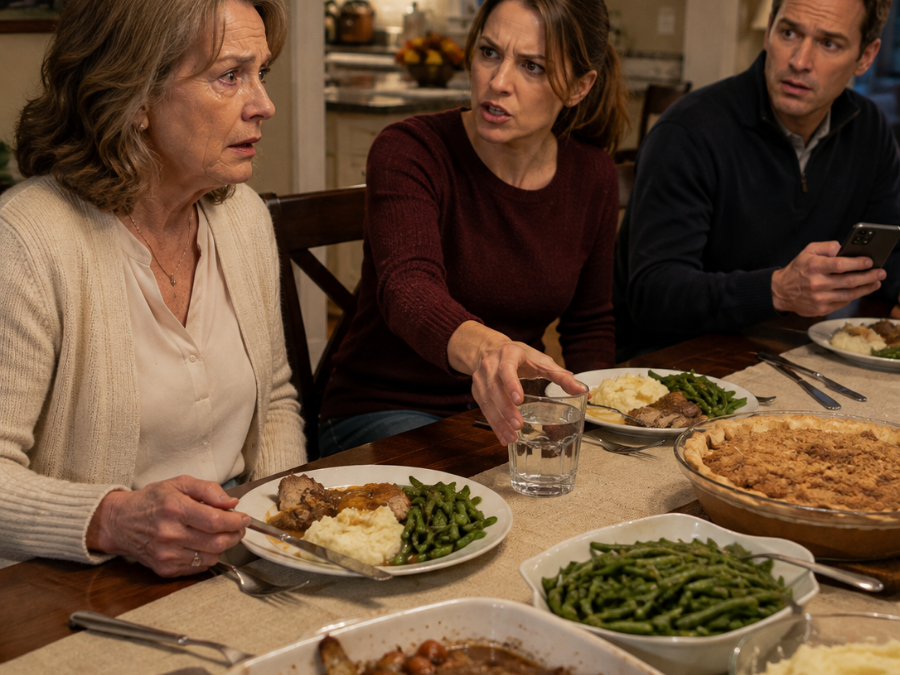
I had spent nearly four hours cooking dinner in my own kitchen before carrying everything across town to my daughter’s house, and twenty minutes after everyone sat down, my daughter placed her water glass beside her plate, looked directly into my face, and said, “Mom, you need to understand something now. When you get old, don’t expect me to reorganize my life around taking care of you.”
My fork stopped halfway to my mouth.
Across the table, my son-in-law continued looking at his phone.
He heard her.
There was no possibility he had missed it.
Yet Daniel Pierce merely cut another piece of roast beef, glanced at whatever was glowing on his screen, and kept eating.
My daughter, Melissa, seemed almost relieved after saying it.
“I have a husband and two kids,” she continued in the calm voice people use when they believe they are explaining something obvious. “I can’t become responsible for another adult someday. You need to plan accordingly.”
The strange part was that I had not asked her to promise me a room in her house, pay my bills, or become my nurse.
I had simply said, “When I slow down someday, I hope I can still count on you once in a while.”
That was all.
I was sixty-three years old, healthy, still working five mornings a week in the cafeteria at Pine Ridge Elementary, and perfectly capable of taking care of myself.
What hurt was not the practical answer.
It was the contempt underneath it.
For six years, since my husband Richard died, I had arranged nearly every part of my life around Melissa’s family.
I picked up ten-year-old Sophie from school three afternoons a week and collected seven-year-old Caleb from his after-school program ten minutes later.
I bought groceries when Melissa worked late.
I covered Saturdays when she and Daniel had errands, appointments, or simply “needed a break.”
I brought food whenever anyone was sick.
I had stayed overnight when Sophie had pneumonia because Daniel had an early route and Melissa had a double shift.
I had even used vacation days when their childcare arrangements fell apart.
I never called it sacrifice.
I called it family.
That evening, I had carried over pot roast, mashed potatoes, green beans, and the apple crisp Melissa had loved since she was a teenager because she had texted me that morning saying she was exhausted.
And now she was telling me that if I ever needed even a fraction of the care I had spent years giving, I should not expect it from her.
I looked at Daniel.
For one second, I wanted him to say something.
Anything.
Even, “Melissa, that came out wrong.”
Instead, his thumb moved across his phone.
His silence hurt almost more than her words.
“All right,” I said.
Melissa blinked.
“What?”
“I said all right.”
I finished the small amount of food remaining on my plate because leaving it untouched would have turned the moment into an argument, and I did not want to give either of them the satisfaction of calling me emotional.
When dinner ended, I washed the casserole dish I had brought.
Melissa tried once to tell me I could leave it.
“No,” I said quietly. “I’d rather take it home clean.”
Daniel finally looked up.
His expression was uncomfortable now.
But still, he said nothing.
I drove through the dark streets of Briar Glen, Pennsylvania, with the radio turned off.
At first, I tried making excuses for Melissa.
She was tired.
She worked long hours at a neighborhood market.
The children demanded a lot.
Maybe the question had frightened her.
Then I remembered her face.
There had been no fear in it.
Only certainty.
I remembered Daniel choosing his phone over me while his wife told me that I should expect nothing from them someday.
When I reached my small brick house on Meadow Lane, I locked the door and stood in the dark kitchen without removing my coat.
Richard’s old coffee mug was still in the cabinet above the sink.
His gardening gloves still hung on a hook near the back door because I had never been able to throw them away.
For six years after losing him, I had filled the empty space he left by making myself useful to everyone else.
The next morning, I woke at five as usual.
While reaching for creamer, I noticed the paper calendar attached to my refrigerator with an old red magnet Richard bought at a county fair.
My handwriting covered nearly every day.
Monday: Sophie, 3:15.
Tuesday: groceries for Melissa.
Wednesday: Sophie and Caleb.
Friday: pickups, dinner.
Saturday: kids, 10:00–4:00.
There were dentist reminders, school events, grocery lists, birthday shopping, and notes about things Melissa needed me to remember.
I stared at that calendar until my coffee went cold.
Almost nothing on it belonged to me.
My eyes filled before I could stop them.
It was not only what Melissa had said.
It was what her words had revealed.
Somewhere along the way, my daughter had stopped seeing my help as generosity.
It had become infrastructure.
I opened the drawer beside the refrigerator and took out a black pen.
My hand shook slightly as I crossed out every routine favor that had never actually been discussed.
Not forever.
Not in anger.
Just until someone bothered to ask.
I was still thinking about that decision after my cafeteria shift when my phone rang shortly after three.
Melissa.
“Mom, where are you?”
“I’m home.”
“Sophie is waiting outside school.”
I let the silence sit between us.
Then I said, “You didn’t ask me to pick her up today.”
Melissa actually laughed once.
Not because anything was funny.
Because she thought I was being ridiculous.
“Mom, you always pick her up on Wednesdays.”
“I have for years.”
“Then what is this?”
“This is me asking you to make arrangements for your own child unless you ask me first.”
Her breathing changed.
“Are you seriously punishing me because of last night?”
“No.”
I looked through my kitchen window at the maple tree Richard had planted twenty years earlier.
“You told me you have your own life and your own family. I heard you. From now on, I’m going to let you manage them.”
“Mom, this is childish.”
The word stung.
But for once, it did not move me.
“I’m sorry Sophie is inconvenienced. Call Daniel or another caregiver.”
“You know Daniel is working.”
“I know.”
“So what am I supposed to do?”
That question, more than anything, told me how deeply the arrangement had settled into her thinking.
She genuinely had no idea.
“You’ll figure it out,” I said.
When the call ended, I placed the phone on the table.
My heart was racing.
My fingers trembled.
And beneath the guilt was something I had almost forgotten how to recognize.
Relief.
Part 2: The Kind Words That Hid an Ugly Assumption
Daniel called me that evening.
His voice was so gentle that for a few minutes, I nearly doubted everything I had felt.
“Carol,” he said, “I heard you and Melissa had a rough day.”
“I suppose we did.”
“She’s under pressure. You know how she gets when she’s stretched thin.”
I waited.
Then he sighed.
“I tell her all the time how much you do for us. You are the person who keeps this family functioning.”
The words softened something in me.
After his silence at dinner, I had wanted badly to believe he understood.
“Thank you,” I said.
“I mean it. Most people wouldn’t do half of what you do.”
Then he added, “Give Melissa a little time. She’ll calm down.”
I went to bed telling myself at least Daniel appreciated me.
That comfort lasted less than twenty-four hours.
After work the next day, I stopped at Bellweather Market for coffee and eggs.
I was standing in the coffee aisle when a woman in her thirties recognized me.
“You’re Melissa’s mom, right?”
Her name was Jenna Lowe.
She worked with Melissa and had met me at two employee picnics.
We exchanged small talk until she said, “I hope everything works out with the childcare situation. Melissa was stressed about what they’re paying the temporary sitter.”
I stopped moving.
“Temporary sitter?”
Jenna’s expression changed.
“Oh. I thought you knew.”
“I didn’t.”
She hesitated.
Then, perhaps because she had already said too much, she continued carefully.
“Daniel was upset about having to pay someone. Melissa said he’s usually the one telling her to call you because you’re alone and… well…”
Her eyes shifted toward the shelves.
“Because he figures your schedule is more flexible.”
There was something almost absurd about standing beneath fluorescent lights holding a bag of coffee while understanding that the warm phone call from the previous evening had been a performance.
“You’re the person who keeps this family functioning.”
Of course I was.
Free childcare kept families functioning beautifully.
“Did she say anything else?” I asked.
Jenna looked embarrassed.
“She said Daniel always tells her, ‘Your mom doesn’t have anybody waiting at home. Just call her.’”
I put the coffee back on the shelf.
The drive home passed in a blur of traffic lights and wet autumn pavement.
When I turned into my driveway, Melissa was waiting on the front steps.
She stood before I was fully out of the car.
“Did Jenna talk to you?”
“She did.”
Melissa groaned and pressed both palms against her face.
“I knew she couldn’t keep her mouth shut.”
“That’s what bothers you?”
“No, Mom, that’s not what I meant.”
We went inside.
Melissa sat on the couch with her arms folded tightly.
“Daniel started this,” she said immediately. “He’s always telling me to call you. Always. He says you don’t mind.”
“Did he force you?”
“No, but—”
“Did he make you ask me to leave work early when Sophie was sick?”
Her eyes dropped.
“Did he make you schedule me every Saturday?”
“Mom, you always said yes.”
There it was.
Not cruelty.
Something more dangerous because it sounded reasonable.
“You always said yes.”
My phone rang from the kitchen table.
Melissa’s coworker Jenna again.
I almost ignored it, but Melissa said, “Answer it.”
I did, accidentally tapping speaker because my hand was tense.
Jenna spoke before I could explain Melissa was there.
“Carol, I’ve been feeling terrible. I shouldn’t have dropped that on you at the store. But I also don’t want Melissa blaming everything on Daniel.”
Melissa went rigid.
Jenna continued.
“Melissa used to say years ago that childcare would never be a problem because her mother always came whenever she called. That was before Caleb was born. I remember because she told me after Sophie started daycare.”
Melissa lunged for the phone.
“Jenna, enough.”
But it was too late.
The room became silent after she ended the call.
Melissa stared at the floor.
I said, “So it was both of you.”
Her eyes filled almost immediately.
For once, she did not argue.
“I was going to blame him,” she admitted.
Her voice cracked.
“I had the whole speech planned before you got home.”
I felt something inside me sink.
Not because I expected innocence.
Because she had arrived prepared to lie.
She wiped her cheek angrily.
“He encouraged it, Mom. He really did.”
“I believe you.”
She looked up.
“But you let yourself believe it too.”
That hurt her.
I could see it.
Her chin tightened.
Her shoulders rose defensively and then slowly dropped.
“I don’t know when it became normal.”
“I do.”
She frowned.
“When I stopped making you ask.”
That night, after Melissa left, I called my closest friend, Ruth Coleman.
Ruth had worked beside me in the school cafeteria for nineteen years and possessed the kind of honesty that could bruise you and heal you in the same sentence.
The next morning, she made me sit at a corner table before our shift.
“How many times have you changed work because Melissa called?” she asked.
“I don’t know.”
“I do. Five times this year.”
I stared at my coffee.
Ruth continued.
“When her heating bill surprised her after Sophie was born, who paid it?”
“I did.”
“When her car broke down?”
“I loaned her mine.”
“When childcare failed?”
“I stepped in.”
“Before she asked?”
I swallowed.
“Usually.”
Ruth leaned toward me.
“Carol, your daughter learned something from you too.”
My eyes burned.
“What?”
“That every emergency in her life becomes your responsibility before it has time to become hers.”
The words made me flinch.
“I was helping.”
“I know.”
Ruth’s voice softened.
“But you helped so quickly and so completely that nobody learned there was a cost to your time.”
A tear slipped down my face.
I left it there.
“So I taught her to use me.”
“No.”
Ruth reached across the table.
“You taught her that you would always catch her. She decided that meant she never had to notice your arms were getting tired.”
That distinction mattered.
It meant I could stop blaming only Melissa.
It also meant I could change something without hating her.
Part 3: The Pattern Had Started Before It Ever Reached Me
For the next three weeks, I began living differently.
Not dramatically.
That was the surprising part.
I simply stopped treating an empty hour as something that belonged to whoever called first.
I started walking before work.
I returned to the neglected flower beds behind my house, where Richard had once grown roses so carefully that neighbors stopped to ask his advice.
I began meeting Ruth for lunch on Thursdays.
I even joined a gardening group with my neighbor Diane Holloway, a seventy-year-old widow who somehow had more social plans than anyone I knew.
Melissa called twice asking for help.
Both times, she actually asked.
“Are you available?”
The first time I was.
The second time I was not.
Neither conversation turned into a fight.
Something was changing.
Slowly.
Then Melissa invited me to Caleb’s seventh birthday party.
Daniel’s mother, Margaret Pierce, was there.
Margaret was sixty-eight, compact, silver-haired, and so reserved that after twelve years of knowing her, I still could not say with certainty whether she liked me.
During cake, Daniel began complaining about schedules.
“Everything takes twice as much planning now,” he said.
Margaret placed her fork down.
“What does?”
“School pickups. Childcare. All of it.”
“You’re their father.”
Daniel gave a patient smile.
“I know, Mom.”
“Then why is caring for your children suddenly a logistical crisis?”
His smile stiffened.
“I work long hours.”
“So does Carol.”
“That’s different.”
Margaret tilted her head.
“How?”
Nobody answered.
Then she asked the question that changed everything.
“Why did you always expect Carol to rearrange her life, Daniel, but never me?”
Daniel’s face flushed.
“I never said that.”
“You didn’t have to.”
Margaret folded her hands.
“I live alone too. I’ve lived alone since your father died. Yet after I said no a few times, you stopped asking me.”
Daniel stared at his plate.
“You discovered Carol said yes.”
The room went quiet.
Even Melissa looked at him differently.
After the party, Margaret found me on the back porch.
The children were playing in the yard.
Cold wind carried the smell of leaves and chimney smoke.
“I owe you an apology,” she said.
“For what?”
“For recognizing this before you did and keeping quiet.”
My stomach tightened.
She looked toward the yard.
“Daniel tried this with me first.”
I said nothing.
“When Sophie was a baby, he expected me to fill every childcare gap. He also asked for money when bills were tight. I finally told him I would help when I chose to, but I would not be his standing backup plan.”
“What happened?”
“He got angry.”
A faint, bitter smile touched her mouth.
“Then he adapted.”
Margaret turned toward me.
“About a year later, I overheard him tell Melissa, ‘Your mother will do it. She doesn’t have anyone at home depending on her.’”
My hands went cold.
“You knew?”
“I knew he was redirecting his expectations toward you. I didn’t understand how far it went.”
Her eyes held mine.
“I told myself you were an adult and could say no.”
I thought about all the times I had nearly said no and then imagined Melissa struggling.
“I probably wouldn’t have listened.”
“Maybe not.”
Margaret’s jaw tightened.
“But I still should have told you.”
Three weeks later, Daniel called.
He sounded humble.
“Carol, Melissa and I have been talking. I want to apologize properly.”
The word properly caught my attention.
Still, I agreed to let them visit on Sunday afternoon.
Saturday evening, Daniel came home carrying a white pastry box from a small neighborhood bakery.
Inside was an almond pastry he knew I loved.
Melissa later told Margaret that seeing it nearly made her cry.
Daniel had remembered.
For a few hours, she believed his remorse was real.
But Margaret arrived at their house that same evening to return Caleb’s forgotten sweatshirt.
The front door had not latched completely.
She knocked.
Nobody answered.
Then she heard Daniel speaking from the kitchen.
“Just be nice to her for a couple of weeks.”
Margaret froze in the hallway.
Melissa said something too quietly for her to catch.
Then Daniel answered.
“Once she misses the kids enough, she’ll start helping again. Don’t push her. Let her feel like it’s her decision.”
Margaret’s fingers tightened around Caleb’s sweatshirt.
“The pastry will help,” Daniel continued. “She loves that place.”
There was silence.
Then Melissa spoke.
“You really think this will work?”
“She’s been alone for six years. Of course it will.”
Margaret stepped into the kitchen.
Both of them looked up.
Daniel’s face lost its color.
Melissa stared at him.
Margaret placed Caleb’s sweatshirt carefully on the table.
“I came to return this.”
Daniel took a step toward her.
“Mom, wait.”
She looked at the pastry box.
Then at her son.
“So that’s the apology?”
Nobody answered.
“No,” Margaret said quietly. “That’s bait.”
She walked out.
The next morning, she called me before Daniel and Melissa could arrive.
I listened to every word.
Then I looked through my kitchen window at Richard’s roses, newly pruned for winter.
For the first time, I understood the full pattern.
Daniel did not merely expect help.
He studied people.
He learned what softened them.
He knew when warmth was more useful than pressure.
And worst of all, Melissa had lived around that behavior long enough that some of it had begun to look normal to her.
Part 4: My Daughter Finally Saw Herself in Her Husband
Melissa came to my house alone three nights later.
No children.
No Daniel.
No pastry box.
Nothing in her hands.
That alone nearly made me cry.
For years, my daughter had rarely appeared at my door without bringing a need with her.
“Can I come in?” she asked.
Her eyes were swollen and tired.
We went into the kitchen.
I put water on for tea while Melissa sat at the same table where I had crossed her obligations off my calendar weeks earlier.
She pressed one thumbnail into her palm.
She had done that as a little girl whenever she was afraid to say something difficult.
“I want to blame Daniel for everything,” she said.
I sat across from her.
“He deserves some of it.”
“I know.”
She swallowed.
“But not all of it.”
Her voice trembled.
“He taught me how to justify things. He made it sound reasonable to say you were free because you lived alone.”
Her eyes dropped.
“But I was already taking advantage of you before he started saying that.”
I waited.
Melissa rubbed her palms against her jeans.
“When Sophie was a baby, I bragged to people that childcare would never be a problem because my mother would always come.”
A tear rolled down her cheek.
“I said it like you weren’t a person making a choice.”
She drew a shaky breath.
“You were just… available.”
Her voice broke.
“I knew your schedule better than I knew your life.”
That sentence hurt more than the dinner insult.
She continued before I could speak.
“I knew you finished work at one-thirty. I knew you could reach Sophie’s school by three. I knew Caleb liked your chicken casserole. I knew which Saturdays you could keep them overnight.”
She looked straight at me.
“But I didn’t know you started gardening again.”
Another tear fell.
“I didn’t know you had lunch with Ruth every Thursday. I didn’t know you liked walking before sunrise. I didn’t even know what book you were reading.”
Her lips trembled.
“I knew everything about what you could do for me and almost nothing about what made you happy.”
I could not stop my own eyes from filling.
Then I asked the question I had needed answered since dinner.
“Are you sorry because life became harder without my help, or because you hurt me?”
Melissa did not look away.
“Because I hurt you.”
Her voice collapsed on the final word.
“I made you feel like your value to this family was measured by how useful you were.”
She covered her mouth and breathed through a sob.
“You’re my mother. And I treated you like emergency equipment.”
Silence filled the kitchen.
The refrigerator hummed.
The kettle clicked off behind me.
I poured the tea because my hands needed something ordinary to do.
When I returned to the table, I said, “I forgive you.”
Melissa’s shoulders dropped.
“But we are never going back.”
“I don’t want to.”
“I mean that.”
“I know.”
She wiped her cheeks.
“I want something different.”
“What does different mean?”
“It means I ask.”
She counted softly.
“It means no is a complete answer. It means I don’t assume living alone means you have nothing important to do. It means the kids spend time with you because you all want to, not because I need coverage.”
Then she paused.
“And it means I start learning who you are when you aren’t helping me.”
Something in my chest loosened.
Not everything.
But enough.
“What about Daniel?”
Melissa’s face changed.
“He and I are having conversations he does not enjoy.”
Despite everything, I almost smiled.
“He keeps saying he was trying to make our lives easier.”
“He was.”
She nodded.
“That’s the problem. Easier for us became more important than fair to you.”
Daniel came two days later.
This time he brought nothing.
Margaret came too, not because I requested a witness, but because Daniel had apparently asked her to be present.
He sat across from me with both hands clasped.
“I owe you an apology.”
“Yes.”
He looked surprised by my bluntness.
I did not rescue him from it.
“I treated your time like it had less value than mine,” he said.
His voice was controlled but strained.
“When my mother established boundaries, I got angry. Then I found someone who didn’t.”
Melissa closed her eyes briefly.
Daniel continued.
“I told myself you liked helping.”
“I did like helping.”
He looked at me.
“That doesn’t mean I was entitled to it.”
“No.”
His jaw tightened.
“I also called you after that first argument because I wanted to calm you down enough that things would go back to normal.”
There it was.
At least now he said it plainly.
“And the pastry?”
His face flushed.
“I bought it because I knew you loved it.”
“That could have been kindness.”
“I know.”
He stared at the table.
“But I was also hoping it would make you more receptive.”
Margaret’s expression hardened.
Daniel looked genuinely ashamed.
“I didn’t understand how ugly that was until Mom called it bait.”
I leaned back.
“Do you understand now?”
“Yes.”
“How?”
“Because an apology that comes with a desired outcome attached isn’t really an apology.”
For the first time, I believed he might actually have learned something.
Not because he sounded polished.
Because he looked uncomfortable telling the truth.
I told him I accepted the apology.
I also told him that acceptance purchased nothing.
No scheduled childcare.
No restored arrangement.
No return to the old system.
“If you need help,” I said, “you ask. And if I say no, you make another plan without punishing me.”
Daniel nodded.
“I understand.”
Margaret looked at him.
“Make sure you do.”
Part 5: The Difference Between Being Needed and Being Loved
The months that followed were less dramatic than everything that came before, which is how I knew the changes were real.
Daniel rearranged two of his weekday delivery routes so he could handle school pickup himself.
Melissa changed one shift.
They hired a college student for occasional childcare.
They complained about the expense privately, I’m sure, but they stopped treating my unpaid time as the automatic solution.
I still helped.
That mattered to me.
I loved Sophie and Caleb.
I wanted afternoons with them.
What changed was the reason.
Sophie began calling me herself.
“Grandma, can we get ice cream Saturday?”
Sometimes I said yes.
Sometimes I already had plans.
She learned something important from hearing both answers.
So did Melissa.
One Saturday, Sophie asked, “What are you doing instead?”
“Gardening club.”
She frowned thoughtfully.
“You have a club?”
“Yes.”
“Is it fun?”
“Usually.”
She smiled.
“Okay. Next Saturday?”
No guilt.
No accusation.
Just another day.
That simple exchange nearly made me cry after I hung up.
My life had finally become visible to my family.
Not grand.
Not glamorous.
Visible.
I finished restoring Richard’s rose beds before winter ended.
Every time I worked there, I remembered him kneeling in the same dirt, explaining that roses need pruning because keeping every branch does not make the plant stronger.
Sometimes growth requires deciding what no longer gets unlimited access to your energy.
I never told him I finally understood.
But I thought it often.
Melissa began coming over occasionally with no purpose.
At first, she seemed almost uncomfortable.
She would sit at my kitchen table and ask, “So what have you been doing?”
The question sounded unnatural in her mouth because she had rarely asked it before.
Gradually, it became normal.
I told her about gardening.
Books.
Ruth.
The neighbor whose dog escaped every time the mail truck came.
She told me about work without turning the conversation into a request for help.
We were rebuilding something small and ordinary.
Mother and daughter.
Not service provider and customer.
Daniel changed more slowly.
I expected that.
People who rely heavily on convenience do not suddenly become generous because they apologized once.
He slipped occasionally.
One evening he called and said, “We need you Thursday.”
I waited.
Silence.
Then he corrected himself.
“Sorry. Are you available Thursday?”
“I’m not.”
Another pause.
“Okay. We’ll work it out.”
That was it.
No sigh.
No guilt.
No speech about family.
Two months earlier, I would have considered that conversation impossible.
Margaret and I became friends in a way neither of us expected.
We had spent years orbiting the same family while knowing almost nothing about each other.
Now we met for coffee occasionally.
One afternoon she laughed and said, “Between the two of us, maybe we can finally raise my son.”
“At sixty-eight?”
“I’m an optimist.”
We both laughed.
By spring, the rose bushes behind my house had begun producing new green growth.
One Sunday evening, Melissa called.
“Mom, do you have dinner plans?”
“I do.”
“With who?”
“Ruth and Diane.”
There was a tiny pause.
Then she said, “Good.”
Not disappointed.
Good.
“How about next Sunday? We’re making dinner.”
“Do you need me to bring anything?”
“No.”
“Watch the kids beforehand?”
“No.”
“Pick someone up?”
She laughed.
“No, Mom.”
Then her voice softened.
“I just want you there.”
Four words.
That was all.
Yet I had to sit down.
I just want you there.
For six years, I had mistaken being constantly needed for being deeply loved.
The two can look similar from the outside.
People call.
People depend on you.
People tell you they could not manage without you.
It can feel like devotion.
Until the day you stop providing something.
Then you discover whether they miss what you did or whether they miss you.
My daughter had initially missed the convenience.
That truth hurt.
But she eventually learned to miss me.
The woman.
Her mother.
The person who liked roses, early walks, almond pastries, mystery novels, strong coffee, and Saturday afternoons that belonged to nobody else.
That Sunday, I drove to Melissa’s house without a casserole dish.
For once, my hands were empty when she opened the door.
She smiled.
“You didn’t bring food.”
“You told me not to.”
“I did.”
She stepped aside.
Daniel was cooking.
Badly.
Smoke drifted from the kitchen.
Sophie rushed toward me while Caleb shouted that Dad had burned the rolls.
Melissa laughed and reached for my coat.
No one handed me a task.
No one asked me to fix dinner.
No one told me where I needed to be the next afternoon.
I simply walked into my daughter’s home and sat down.
Halfway through dinner, Melissa looked across the table.
“Mom?”
“Yes?”
“I’m glad you came.”
This time Daniel looked up too.
“So am I.”
And I believed both of them.
I had once thought setting boundaries would push my family away.
Instead, boundaries forced us to discover whether there was anything underneath all that usefulness worth keeping.
There was.
But we had to stop using one another long enough to see it.
I was sixty-three when I learned that saying no does not make a loving mother selfish.
It gives everyone else the opportunity to love her as a person rather than depend on her as a service.
And sometimes the hardest family lesson is also the simplest:
If people only value you when you are useful, your absence will make them angry.
If they truly value you, your boundaries will eventually teach them how to come back with respect.
My daughter came back.
Not because she needed childcare.
Not because dinner was waiting.
Not because something had gone wrong.
She came back because she wanted her mother.
And for the first time in years, that was enough.
The End. This story is entirely fictional and was created for entertainment purposes. All characters, names, locations, events, and situations depicted in this story are imaginary. Any resemblance to actual people, organizations, places, or events is purely coincidental.








