My Parents Sold the Car My Grandfather Bought Me, Used the Money on My Sister, Then Called Me Ungrateful When I Finally Learned What Else They Had Taken From Me for Years While I Worked Two Jobs to Support Myself
My Parents Sold the Car My Grandfather Bought Me, Used the Money on My Sister, Then Called Me Ungrateful When I Finally Learned What Else They Had Taken From Me for Years While I Worked Two Jobs to Support Myself
Part 1: The Birthday Dinner That Exposed Everything
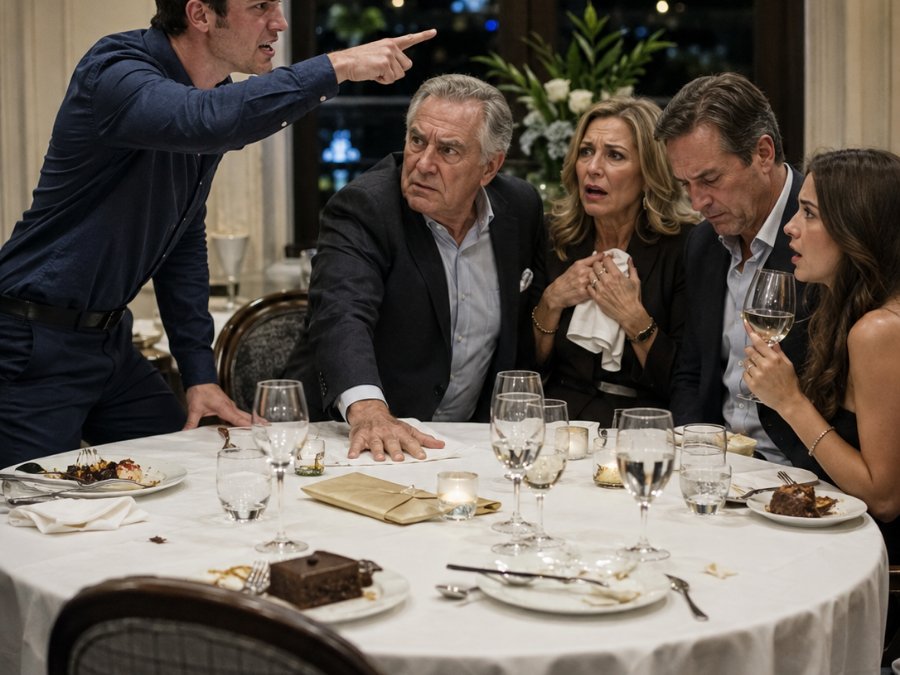
“Did you like the car I bought you last year?”
My grandfather asked the question casually over dessert, smiling at me across a white-tablecloth restaurant while my mother’s fork stopped halfway to her mouth and my father went so pale that even before I answered, I knew something was wrong.
“What car?” I asked.
The smile disappeared from Grandpa Thomas’s face.
For several seconds, no one at the table moved.
My younger sister, Lauren, suddenly became very interested in the condensation running down her water glass.
Grandpa leaned forward.
“The car I had delivered for your twenty-third birthday. Dark blue sedan, brand new, registration paperwork in your name.”
My chest tightened.
“I got a cake.”
Mom laughed too quickly.
“Dad, I think there’s been some confusion.”
Grandpa did not look at her.
“What cake?”
“The little grocery-store cake they said was from you.”
That was when my father finally set down his fork.
The silverware hit the plate with a small, sharp click.
“Thomas,” he began, “this probably isn’t the place—”
“Where is the car?”
Grandpa’s voice was quiet now.
That made it worse.
The restaurant around us continued humming with low conversation, glasses clinking, waiters moving between tables, but our table had become completely still.
Mom’s fingers tightened around her napkin.
“It was complicated.”
Grandpa looked at her.
“What was complicated about giving Evan the car I purchased for him?”
Nobody answered.
I turned toward my parents.
“Where is it?”
Lauren finally looked up.
Her face had lost its usual bored expression.
Dad exhaled heavily.
“We sold it.”
I actually thought I had misheard him.
“You what?”
“We sold it,” he repeated.
My chair scraped backward before I realized I had moved.
“You sold a car that belonged to me?”
“Lower your voice,” Mom hissed.
That sentence did something to me.
Not because it was the cruelest thing she had ever said.
Because it was so familiar.
Whenever my pain embarrassed her, the problem became my reaction.
Grandpa’s jaw hardened.
“How much did you get?”
Dad looked at the table.
“Twenty-eight thousand.”
I stared at him.
At twenty-three, I worked full-time at a local electronics warehouse and picked up weekend shifts at a home-improvement store because I had been paying nearly all my own expenses since high school.
Twenty-eight thousand dollars was more money than I had ever seen at once.
“You sold my car for twenty-eight thousand dollars?”
“We needed the money,” Mom said.
“For what?”
“We had bills.”
Lauren shifted uncomfortably.
I turned toward her.
Then I remembered.
The beach trip.
The designer handbag Mom bought six weeks after my birthday.
Dad’s new watch.
Lauren’s new laptop, new wardrobe, and the deposit on the apartment she never actually moved into because she decided she “wasn’t emotionally ready.”
“You used it on yourselves.”
“That is not fair,” Mom snapped.
“Was I invited on the trip?”
Silence.
“Did any of that money go toward my tuition?”
Silence.
“Did any of it pay my rent?”
Nothing.
Grandpa pushed his chair back.
“This was a gift for Evan.”
Mom’s eyes filled, but I knew those tears.
They appeared whenever accountability entered the room.
“We were struggling.”
Grandpa looked at Lauren.
“She’s wearing a coat that costs more than Evan’s monthly rent.”
Lauren’s face flushed.
“That’s not my fault.”
“No,” I said. “Apparently nothing ever is.”
To understand why that dinner broke something permanent in me, you have to understand how our family worked long before the car existed.
I was the oldest child.
Lauren was two years younger.
And from the time we were children, my parents made it obvious that she was easier to love.
Lauren received praise for average grades because she was “creative.”
I brought home an academic award and Dad told me not to become arrogant.
Lauren cried after losing a school election and Mom took her shopping.
When I tore a ligament playing soccer and needed help getting around for two weeks, Mom complained that I was “turning the whole house upside down.”
At eighteen, I was accepted into two state universities.
My parents said they could not afford to help.
“Lauren will be applying soon,” Dad explained. “We have to think about both children.”
Two years later, when Lauren enrolled in a private cosmetology program, they paid every fee.
I worked.
First in a mall kiosk.
Then in warehouse inventory.
Then wherever the pay was better.
I told myself independence was a virtue.
The truth was simpler.
I had learned not to expect help.
Grandpa Thomas was different.
He had always been different.
When I was little, he took me fishing, taught me how to change brake pads, and never acted bored when I talked about college or business ideas.
After Grandma died, he accepted a consulting position in Ireland and moved overseas.
Before leaving, he called me.
“I’m going to send your parents money every month,” he said. “Some for the household, and some specifically for you. You should not have to give up school because they’re short on cash.”
I never saw any of it.
Mom always told me the money was for “general family expenses.”
I believed her.
Now Grandpa looked at me across that restaurant with devastation replacing anger.
“Evan,” he said slowly, “the car wasn’t the only thing I sent you.”
My stomach dropped.
“What do you mean?”
“For almost four years, I transferred eight hundred dollars every month designated for you. Education, transportation, living expenses. Whatever you needed.”
I stopped breathing for a second.
Eight hundred dollars.
Every month.
Four years.
Nearly forty thousand dollars.
Plus the car.
I turned toward my parents.
Mom was crying now.
Dad looked sick.
“You stole from me.”
“Evan—”
“You stole from me.”
Lauren finally spoke.
“Can you stop being dramatic? The money still helped the family.”
I looked at her.
“No. It helped you.”
She recoiled.
“I didn’t ask them to—”
“You never asked where anything came from either.”
Grandpa placed one hand on my shoulder.
“You are not going back to that house tonight.”
Dad looked up sharply.
“He is our son.”
Grandpa laughed once, without humor.
“Then why have you spent his entire adult life making him pay for the privilege?”
Part 2: The Favorite Child Finally Learned What Her Life Cost
We left the restaurant together.
My parents stayed behind.
So did Lauren.
Grandpa drove me to the house where I had grown up and waited in the driveway while I packed.
I expected Mom to follow me upstairs.
She didn’t.
Dad stood in the hallway with his arms crossed.
“You’re overreacting.”
I stared at him.
“You sold my property.”
“It was sitting there.”
“I didn’t know it existed.”
“We thought the money would be more useful.”
“To who?”
His expression hardened.
“You always do this.”
“Do what?”
“Make everything about fairness.”
That almost made me laugh.
“What should I make theft about?”
Mom appeared behind him.
“Your father means family decisions aren’t always equal.”
“No,” I said. “They’re just always unequal in Lauren’s favor.”
Mom wiped her cheeks.
“She needed more support.”
“For what?”
“She was finding herself.”
“I was working sixty hours a week.”
“That was your choice.”
There it was.
The sentence that summarized my childhood.
Lauren’s needs were needs.
Mine were choices.
I walked past them and entered my room.
There wasn’t much to pack.
Most of what I owned had been purchased with my own money.
Grandpa helped carry two duffel bags downstairs.
As we reached the front door, Lauren stepped out of the living room.
“Are you seriously leaving?”
“Yes.”
“Because of money?”
I looked at her.
“Because none of you think what happened was wrong.”
“That’s not true.”
“Then tell me it was wrong.”
Her mouth opened.
Nothing came out.
I nodded.
“Exactly.”
Grandpa had returned to the United States permanently after selling his share in an overseas consulting venture, and he had already purchased a modest but beautiful home outside Richmond, Virginia.
He asked me to stay with him.
Not indefinitely.
Not as a rescue project.
He simply said, “Come somewhere you are wanted until you decide what you want next.”
That sentence hit harder than anything else that week.
Wanted.
I had spent most of my life trying to become useful enough to deserve affection.
Grandpa treated belonging like it did not require earning.
The first month living with him felt strange.
He asked what I wanted for dinner.
He asked whether I wanted quiet before work.
He asked my opinion about replacing cabinets in the kitchen.
Tiny things.
Ordinary things.
Choices.
I realized how unfamiliar they felt.
Grandpa also insisted on showing me every financial record related to the money he had sent.
The transfers were clear.
Eight hundred dollars monthly into my parents’ joint account, with notes specifically indicating the money was for me.
There were additional transfers before birthdays.
Two thousand dollars when I graduated high school.
Five thousand intended for community-college tuition.
Three thousand labeled “Evan emergency fund.”
I had received none of it.
The total was worse than we thought.
Just over fifty-one thousand dollars in cash support.
Add the car, and my parents had redirected nearly eighty thousand dollars intended for me.
Grandpa sat across from me at his kitchen table.
“I trusted them.”
“So did I.”
He looked down.
“That is what bothers me most.”
I did not immediately pursue legal action.
At first, I simply wanted distance.
But Grandpa’s attorney explained that some of the money had been gifts to me routed through my parents solely because Grandpa believed they were acting as custodians.
The vehicle title was even clearer.
The dealership paperwork showed me as the intended owner.
My parents had signed documents claiming I had authorized the sale.
I had never signed anything.
That changed the situation.
Dad called three days after we discovered the paperwork.
“Your grandfather is threatening us with lawyers.”
“He should.”
“You really want to destroy this family?”
I stared out Grandpa’s kitchen window.
“No. I think I just stopped helping you pretend it was healthy.”
Mom called next.
Her tone was softer.
“Evan, honey, we made mistakes.”
“You forged my authorization.”
“Your father handled that.”
I closed my eyes.
Even now, they were dividing blame.
“What did you spend the money on?”
“We needed things.”
“What things?”
She hesitated.
I waited.
Finally she admitted they had paid off credit cards, financed family vacations, covered Lauren’s program fees, bought her a used SUV, renovated the kitchen, and used some of it to maintain a lifestyle they could not actually afford.
“Why not tell me?”
“Because you were doing fine.”
I laughed quietly.
“I was working two jobs.”
“You were responsible.”
“So you punished me for being responsible.”
“That’s not what happened.”
“That is exactly what happened.”
Lauren sent me a message that night.
You’re blowing up everyone’s life over old money. Grandpa obviously likes you better anyway, so I guess congratulations.
I read it twice.
Then I blocked her.
For the first time, I stopped explaining.
Part 3: The Worst Betrayal Was Not the Car
Grandpa offered me a position at his new consulting office.
I almost refused because I did not want anyone to say I was living off him.
He understood immediately.
“You don’t want charity.”
“No.”
“Good. I’m not offering charity.”
He made me interview.
Three managers questioned me for an hour.
I started as a junior operations coordinator earning an ordinary salary.
And I loved it.
Not because it was glamorous.
Because effort finally had somewhere to go.
Within six months, I had taken night classes in business analytics.
Within a year, I earned a promotion.
Grandpa did not praise everything I did.
Sometimes he told me my reports were weak.
Sometimes he rejected my ideas.
But criticism without contempt felt completely different from the way I had grown up.
Then his attorney called.
The review of my parents’ finances had uncovered something unexpected.
My parents had not simply spent money Grandpa sent.
They had also opened a small credit line in my name when I was nineteen.
Dad had access to my Social Security information and used it to obtain a store credit account.
Later he opened another line.
The balances were eventually paid off, but several late payments damaged my credit.
I sat in the attorney’s conference room staring at the documents.
“This is why I was denied that apartment.”
The attorney nodded.
“And possibly why your auto-loan quote was unusually high.”
I remembered standing in a dealership two years earlier while a salesman explained that my credit history was “thin and messy.”
I thought I had failed.
I had blamed myself.
Meanwhile, my parents had been using my identity to float expenses.
I called Dad.
He answered immediately.
“Evan.”
“Did you open credit cards in my name?”
Silence.
“Dad.”
“We were going to pay them.”
“That is not an answer.”
“We did pay them.”
“You stole my identity.”
“Don’t use dramatic legal language.”
I gripped the edge of my desk.
“You signed my name.”
“We needed temporary flexibility.”
“For Lauren?”
“For the household.”
“Which somehow always means Lauren.”
He exhaled sharply.
“You resent your sister too much.”
“No. I resent what you did for her with things that belonged to me.”
“You were always stronger.”
That sentence stopped me.
He said it like a compliment.
Like stealing from me had been justified because I could survive it.
“You knew I would manage,” he continued. “Lauren needed more help.”
“So you took from the child who worked because the other one didn’t.”
“That’s a cruel way to put it.”
“It’s an accurate way.”
Mom called later and cried.
She said they had been under pressure.
She said Lauren had struggled with anxiety.
She said Dad’s company had cut bonuses.
She said they were embarrassed.
Every explanation had some truth inside it.
That was what made it difficult.
They were not cartoon villains sitting around plotting how to ruin me.
They were ordinary parents who had decided, repeatedly, that my sacrifices were more acceptable than Lauren’s discomfort.
That made the betrayal worse.
At a family mediation two months later, Grandpa attended with me.
My parents sat across the table.
Lauren came too.
She wore a simple sweater and no makeup, looking younger than I remembered.
For the first time, she did not seem smug.
The mediator asked whether my parents disputed taking the funds.
Dad said no.
Whether they disputed selling the car.
No.
Whether they disputed signing documents on my behalf.
Dad looked at his lawyer.
Then said no.
Lauren suddenly spoke.
“I didn’t know about the car.”
Everyone turned toward her.
She looked at me.
“I swear.”
I studied her face.
“I believe you.”
Her eyes filled.
“But you knew they were paying for everything.”
She nodded.
“I thought Grandpa was just sending money to the family.”
“So did I.”
She looked down.
“I was awful to you.”
The room went quiet.
Mom turned sharply.
“Lauren—”
“No.”
It was the first time I ever heard my sister interrupt her.
“I was.”
She looked at me again.
“I made jokes about your job because Mom and Dad did. I thought you were lazy for not going to college. I didn’t know they were taking money meant for you, but I never asked why I got everything and you got nothing.”
I did not forgive her in that room.
But for the first time, she acknowledged the reality without explaining it away.
That mattered.
Mom began crying.
“We loved both of you.”
I looked at her.
“Then why did loving me always cost less?”
She had no answer.
Part 4: My Parents Wanted Forgiveness Only After Consequences Arrived
The financial settlement happened without a dramatic courtroom battle.
My parents agreed to repay a substantial portion of the diverted money over time, transfer the remaining value of an investment account, and accept responsibility for the fraudulent credit activity.
Grandpa refused to send them another dollar.
That was when the panic really began.
Their lifestyle collapsed quickly because it had never been sustainable.
The renovated house carried debt.
Their credit cards were nearly maxed.
Lauren’s expenses had been subsidized for years.
Within months, they sold the house and moved into a smaller rental.
Dad took additional accounting work.
Mom increased her tutoring hours.
Lauren got a full-time administrative job.
None of this made me happy.
But it did teach them what things cost.
About nine months later, Mom asked me to attend Thanksgiving.
I refused.
Grandma Evelyn, my mother’s mother, called me.
“Please come,” she said. “Not for them. For me.”
I went.
The dining room looked different without the expensive furniture my parents had sold.
The old oak table from my childhood was back.
Lauren sat across from me.
Dad barely spoke.
Mom tried too hard.
She complimented my job.
Asked about classes.
Praised my shirt.
It felt like someone performing kindness from instructions.
Halfway through dinner, Dad cleared his throat.
“Your mother and I were hoping we could talk.”
Grandma Evelyn set down her fork.
“Maybe after dinner.”
“No,” I said. “Now is fine.”
Dad looked uncomfortable.
“We’ve had a hard year.”
I waited.
“We’ve lost a lot.”
Grandpa, sitting beside me, said nothing.
Dad continued.
“We understand that we made mistakes.”
“Which ones?”
His jaw tightened.
“Evan.”
“No. Say them.”
Mom’s eyes filled.
“We used money meant for you.”
“And?”
Dad looked at me.
“We sold the car.”
“And?”
Silence.
Lauren shifted in her chair.
Grandma Evelyn looked at Dad.
“Keep going.”
His face reddened.
“We used his identity for credit.”
The room went completely still.
My aunt stopped cutting her turkey.
Dad swallowed.
“We were wrong.”
I nodded.
“Okay.”
Mom leaned forward.
“So maybe we can start being a family again.”
“That depends on what you mean.”
“You’re our son.”
“I know.”
“We miss you.”
I looked at her.
“Do you miss me, or do you miss how things were before consequences?”
Her mouth tightened.
“That’s cruel.”
Grandpa’s hand moved slightly beside his plate, but he let me handle it.
“You called me selfish when I asked where my money went. You called me dramatic when I learned you sold my car. Dad called legal accountability ‘dramatic language.’ Now that your life is harder, you want warmth.”
Dad set his glass down too firmly.
“How long are you going to punish us?”
I met his eyes.
“This is the first honest question you’ve asked.”
He looked stunned.
“I’m not punishing you. I’m not paying your bills. I’m not rescuing you. I’m not pretending trust came back because you apologized.”
“We’re your parents.”
“And that made the betrayal worse, not smaller.”
Lauren looked down.
Mom began crying.
“I don’t know what you want from us.”
“For years, I wanted you to choose me sometimes.”
My voice stayed calm, but my throat hurt.
“I wanted you to come to one awards ceremony without comparing me to Lauren. I wanted you to ask why I was working nights instead of assuming I was unambitious. I wanted one birthday where something meant for me stayed mine.”
No one spoke.
“I don’t want those things anymore.”
Mom covered her mouth.
“I want peace.”
Dad looked at the table.
“So that’s it?”
“For now.”
Grandma Evelyn reached across and squeezed my wrist.
Nobody argued.
That was the first family confrontation I ever left without feeling guilty.
Part 5: I Learned That Distance Is Not the Same as Revenge
The next two years changed all of us.
I finished my degree part-time and became a project manager in Grandpa’s firm.
Eventually, I moved into my own townhouse.
Not a mansion.
Not a luxury fantasy.
Just a place I bought with money I earned.
The first thing I purchased for the living room was a secondhand oak bookshelf.
The second was a framed photograph of Grandpa and me fishing when I was eight.
Lauren and I slowly began speaking again.
Not because Mom pressured us.
Because Lauren changed.
She kept her job.
Paid her own rent.
Stopped asking Dad for money.
One afternoon she called and asked to meet for coffee.
“I used to think you hated me because you were jealous,” she said.
“I did resent you.”
“I know.”
She stirred her coffee.
“But I realize now I liked being the favorite.”
That honesty surprised me.
“I didn’t create it,” she continued, “but I benefited from it, and I helped keep it going.”
I looked at her.
“That’s true.”
She nodded.
“I’m sorry.”
I believed her.
Forgiveness did not arrive instantly.
But resentment became less useful once she stopped denying the past.
Our relationship became something new.
Not the childhood closeness we never had.
Something more careful.
More adult.
My parents changed more slowly.
Dad mailed repayment checks every month.
Never missed one.
Mom stopped calling to ask when I would “get over it.”
Eventually, she began sending simple messages.
Hope work is going well.
Happy birthday.
No guilt.
No pressure.
For almost a year, I did not respond.
Then one Sunday I wrote back:
Thank you.
That was enough.
Grandpa never told me whether I should forgive them.
He only said, “Reconciliation without accountability is just another form of surrender.”
At seventy-two, he retired from daily operations.
He asked whether I wanted to buy a small ownership stake in the company over time.
I said yes.
We signed real contracts.
I paid for it.
That mattered to both of us.
On my twenty-seventh birthday, Grandpa invited me to dinner at the same restaurant where the truth about the car had come out.
I hesitated when I recognized the dining room.
He smiled.
“Thought we might improve the memory.”
Lauren came.
So did Grandma Evelyn.
My parents were not invited.
Not because I hated them.
Because I was not ready.
After dinner, Grandpa slid a small envelope across the table.
I laughed nervously.
“No cars.”
He raised both hands.
“No cars.”
Inside was a photograph.
Me at seven years old sitting on the hood of his old pickup, holding a fishing pole and grinning with two missing front teeth.
On the back, in his handwriting, was one sentence.
You never had to earn your place with me.
I read it twice.
My eyes filled.
Lauren leaned over.
“What does it say?”
I handed it to her.
She read it and went quiet.
Then she looked at me.
“You deserved that from all of us.”
For years, I believed the greatest thing Grandpa gave me was money.
It wasn’t.
It was evidence.
Evidence that I had not imagined the imbalance.
Evidence that being independent did not mean I deserved less.
Evidence that a person can be strong and still deserve care.
The stolen car became almost irrelevant.
The money mattered because it represented choices.
My parents had repeatedly chosen convenience, image, and favoritism over honesty.
What finally healed me was not watching them struggle.
It was no longer needing their struggle to prove that I had been wronged.
By twenty-eight, I had a career I respected, a home I loved, a sister I was slowly learning to know as an adult, and a grandfather who still called every Sunday even though we worked in the same building.
My relationship with my parents remained limited.
Eventually, we met for lunch.
Dad looked older.
Mom seemed nervous.
Neither asked me for money.
That was a good start.
Dad apologized again.
This time he did not mention stress, Lauren, bills, or “family decisions.”
He simply said:
“I stole from you. I betrayed you. And I made you believe you deserved less because you were easier to neglect.”
I looked at him for a long time.
“That is the first apology I believe.”
Mom cried quietly.
I did not rush across the table.
I did not pretend everything was repaired.
But I stayed until lunch ended.
Sometimes healing is not a dramatic reunion.
Sometimes it is simply being able to sit across from the people who hurt you without shrinking back into the child they taught you to be.
When I left the restaurant, Grandpa was waiting outside because we had plans that afternoon.
He glanced toward the building.
“How was it?”
“Better.”
“Good.”
We walked toward his car.
Then he smiled.
“You driving?”
I laughed.
“Only if you promise this one actually exists.”
He shook his head.
“Still holding that against me?”
“Absolutely.”
For once, the joke did not hurt.
That was when I realized I had finally stopped measuring my life by what my parents took.
I was measuring it by what I had built after I learned I was allowed to expect better.
The End. This story is entirely fictional and was created for entertainment purposes. All characters, names, locations, events, and situations depicted in this story are imaginary. Any resemblance to actual people, organizations, places, or events is purely coincidental.








