The Billionaire CEO Who Went Undercover in His Own Company — What He Discovered Changed Everything
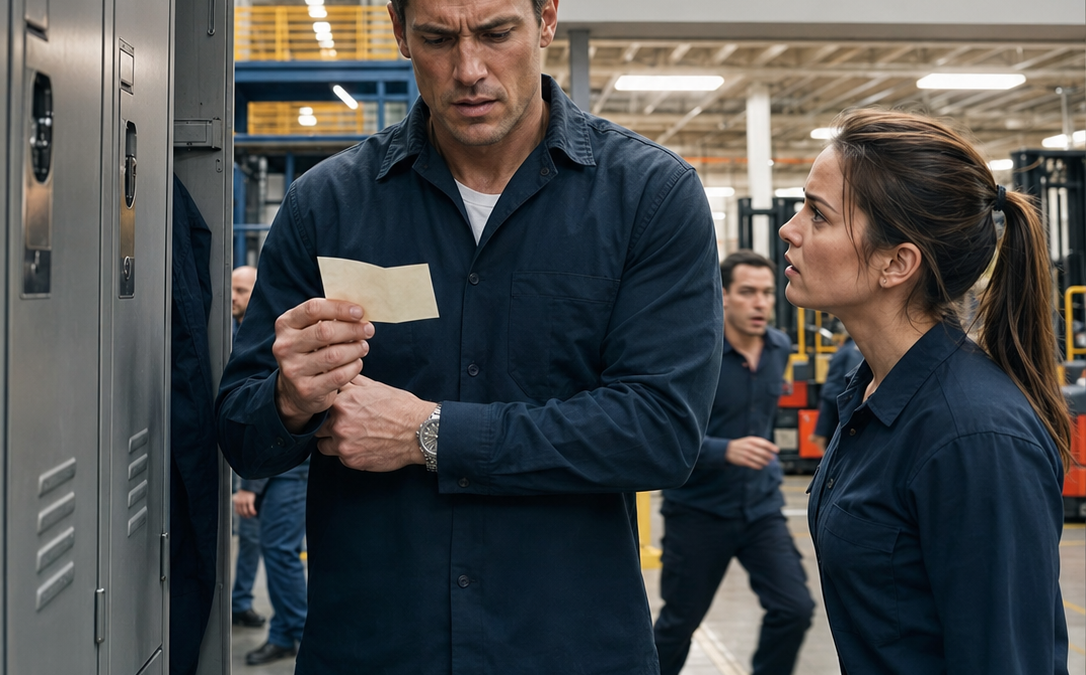
The Billionaire CEO Who Went Undercover in His Own Company — What He Discovered Changed Everything
Part 1
The first sign that something was wrong came from a number everyone else considered good news.
“Record quarterly profit,” Victor Hayes announced, tapping the glowing screen at the end of the conference table. “Up eighteen percent.”
The boardroom smelled of polished walnut, expensive coffee, and the faint lemon oil the cleaning staff used every night. Beyond the glass walls, Chicago glittered beneath a cold November sky. Twelve people around me smiled as if we had just won a war.
I looked at the second report in front of me.
“Then why have eight hundred and twelve employees resigned since January?”
The smiles vanished.
Victor adjusted his silver cuff link. He had helped my father build Reed Logistics and had known me since I was a teenager wandering through warehouses in borrowed steel-toed boots. Gray-haired, patient, and always prepared, he was the closest thing I had to an uncle.
“People leave,” he said. “The labor market is changing.”
“Forty-three employees left the Briarwood distribution center last week.”
“The regional manager says they found better opportunities.”
I turned toward Victor. “All forty-three?”
A soft mechanical hum filled the silence.
My father used to say numbers could be persuaded to lie, but tired people rarely bothered. If I wanted the truth, I had to speak to the people whose names appeared in the smallest print.
The next morning, Jackson Reed disappeared.
My executive assistant told the board I had taken a private leave. My phone was redirected. My tailored suits remained in my penthouse, and the billionaire whose photograph appeared in business magazines became Jack Reed, a temporary warehouse employee with a cheap watch, a rented apartment, and a résumé carefully designed to be forgettable.
At six the following Monday, I stood outside the Briarwood center under lights that turned the rain silver.
Inside, conveyor belts groaned. Forklifts beeped. The air smelled of diesel, wet cardboard, and burnt coffee. Workers in faded orange vests hurried between towering shelves while a supervisor named Logan Mercer shouted production numbers from a metal platform.
“New guy!”
I turned.
Logan was broad-shouldered, clean-shaven, and wearing a white shirt far too crisp for the warehouse floor. He looked me over as if disappointment were part of his job.
“Jack Reed?”
“That’s me.”
“Any relation to the man upstairs?”
I forced a laugh. “If I were related to him, I probably wouldn’t be standing here.”
Several workers smiled. Logan did not.
“Don’t get ambitious,” he said. “We’ve got enough people around here pretending they’re the CEO.”
My first assignment was unloading appliance parts. Ten minutes later, I bent to lift a wooden crate.
“You’re doing that wrong.”
A woman stepped beside me and nudged my boot backward with hers. She was about thirty, with dark hair tied in a loose knot and a small scar above her left eyebrow.
“Keep your back straight,” she said. “Unless you want to spend tomorrow explaining to a doctor why you ignored basic physics.”
“You always welcome new employees this warmly?”
“Only the ones trying to injure themselves before breakfast.”
Her name tag read HANNAH COLE.
She showed me how to position the crate, then moved on without waiting for thanks. Throughout the morning, I watched her quietly help everyone. She covered an older man’s station when his knee stiffened. She divided her lunch with a woman who had forgotten hers. When a nervous teenager entered the wrong inventory code, Hannah corrected it before Logan noticed.
At noon, Logan called us together.
“Starting today, production targets increase by twenty-five percent. Nobody leaves until the daily number is reached.”
A man near the back raised his hand. “Some of us already work twelve-hour shifts.”
“Then work faster.”
“What about overtime?”
Logan smiled without warmth. “If you don’t like the arrangement, the exit is behind you.”
No one argued again.
That evening, Hannah and I sat on overturned buckets near the loading doors. Rain rattled against the metal roof.
“Does headquarters know about this?” I asked.
She peeled the label from her water bottle. “Headquarters knows whatever Logan tells them.”
“What if the CEO came here?”
“Jackson Reed?” She gave a tired laugh. “Men with private elevators don’t smell the air down here.”
Her words landed harder than I expected.
At 11:40 p.m., after the final shift ended, I returned to the inventory office and searched the day’s manifests. One shipment caught my attention. It contained high-value electronics, but no destination, customer number, or insurance code appeared in the system.
There was only a handwritten blue mark in the corner.
I had seen that symbol before—on a confidential acquisition file in Victor’s office.
Then I turned the page and felt the blood drain from my face.
The shipment had been authorized with my private digital signature.
Someone inside Reed Logistics had learned how to approve illegal shipments in my name—and judging by the dates, they had been doing it for years.
Part 2
I photographed the manifest and returned it exactly where I had found it.
The next morning, Logan was waiting beside my station.
“Sleep well, new guy?”
“Not really.”
“Funny. Neither did I.”
His cologne was sharp enough to cut through the smell of machinery. He stared at my hands, then at the inventory office across the floor.
For one second, I wondered whether a camera had caught me.
Then he pointed toward the loading bay. “Truck seventeen. Move.”
Hannah joined me ten minutes later. The skin beneath her eyes looked bruised with exhaustion.
“You all right?” I asked.
“My father is having heart surgery on Thursday.”
“I’m sorry.”
“He’ll be fine.” She said it too quickly.
A supervisor called her name and reminded her that she had been assigned overtime Thursday night. Hannah explained about the operation. He shrugged.
“Find someone to cover you.”
“No one is allowed to trade shifts anymore.”
“Then choose what matters more.”
The scanner in Hannah’s hand trembled, but her voice remained level. “You know that isn’t a choice.”
“It is from where I’m standing.”
I wanted to tell him who I was. I wanted to stop the conveyor belts, summon security, and fire every manager who treated fear as a leadership strategy.
Instead, I forced myself to remain Jack.
Removing one cruel supervisor would not explain how the cruelty had survived inspections, audits, and monthly reports. I needed to find the system protecting him.
At lunch, I asked an older worker named Eli about his knee. It was badly swollen beneath his work pants.
“If I take medical leave, they’ll replace me,” he said.
“The company has disability coverage.”
“On paper.” He gave me a humorless smile. “On paper, this place is paradise.”
He showed me three denied benefit claims. Each had been rejected by the same third-party administrator, Northstar Employee Solutions. I recognized the name immediately. Victor had personally recommended Northstar to the board two years earlier.
That afternoon, I called my executive assistant, Maya, from a gas station three blocks away.
“I need everything on Northstar,” I told her. “Ownership records, payments, directors.”
“Jackson, the board is demanding to know where you are.”
“Tell them I’m still reviewing operations.”
“They think you’re on an island.”
“Let them.”
Her voice softened. “Are you safe?”
I looked across the street. A black sedan was parked beside the warehouse entrance, its windows dark.
“I’m not sure.”
Thursday evening, I went to the hospital.
Hannah sat alone outside the surgical unit, twisting a paper coffee cup between her hands. The corridor smelled of antiseptic and overcooked vegetables. Fluorescent lights washed the color from her face.
“What are you doing here?” she asked.
“You said no one should feel alone.”
For the first time since we met, Hannah had no quick reply.
Her father’s surgery lasted four hours. We talked in fragments between long stretches of silence. She told me she had studied computer systems at a community college before medical bills forced her to quit. I told her my father had taught me more about work than comfort, which was true, though incomplete.
“Where is your family now?” she asked.
“Far away.”
“Emotionally or geographically?”
“Both.”
She studied me over the rim of her cup. “You answer half of every question.”
“Maybe my whole answers aren’t very flattering.”
“Everyone has an unflattering chapter.”
The doctor finally emerged and said the surgery had gone well. Hannah closed her eyes, her shoulders shaking once before she regained control.
When we left the hospital near dawn, rain streaked the parking-lot lights. Hannah walked toward the curb while I climbed into my old company van.
I pressed the brake pedal.
It sank to the floor.
The van rolled forward.
“Hannah!” I shouted.
She turned as the vehicle jumped the curb. I yanked the emergency brake and twisted the wheel, missing her by inches before crashing into a concrete barrier.
For several seconds, there was only the hiss of the damaged radiator and Hannah pounding on my window.
A mechanic examined the van later that morning. His face tightened as he stood.
“This wasn’t wear,” he said. “Someone deliberately damaged the brake line.”
Inside my jacket pocket, I found a folded piece of paper I had never seen before.
IF YOU WANT TO STAY ALIVE, STOP PRETENDING TO BE SOMEONE YOU’RE NOT.
Someone at Briarwood knew my real identity—and now Hannah was standing close enough to become a target.
Part 3
I told Hannah the brake failure had been an accident.
She did not believe me.
“You looked terrified before the van even hit the barrier,” she said.
“I nearly ran you over.”
“No. You looked like you had just recognized an enemy.”
We were standing outside her father’s hospital room. Morning light slipped through the blinds and painted narrow stripes across the floor. Her father slept beneath a thin blue blanket, a heart monitor marking time with quiet electronic beeps.
“I don’t have enemies,” I said.
Hannah folded her arms. “People without enemies don’t receive anonymous notes.”
I had forgotten she had picked up my jacket after the crash.
“What did it mean, Jack?”
“I don’t know.”
“That’s a lie.”
The disappointment in her voice hurt more than the accusation.
Before I could answer, her father woke and asked for water. The moment passed, but the distance it created remained.
Back at Briarwood, I concentrated on the hidden shipments. They always left after midnight. Their identification numbers vanished from the inventory system by morning, yet the warehouse’s production figures increased as if the goods had been delivered to legitimate customers.
Someone was selling company inventory through a parallel network and covering the losses with fabricated orders.
I needed proof connecting the operation to Northstar and the unpaid overtime.
Near the end of my shift, I followed Logan into a locked storage corridor. Through the door, I heard him speaking on the phone.
“The new employee is asking questions.”
A pause.
“No, I don’t think he’s ordinary.”
Another pause, longer this time.
“I understand, Mr. Hayes.”
My stomach tightened.
There were several men named Hayes in company leadership, but only one controlled corporate compliance, insurance contracts, and internal investigations.
Victor.
I wanted the voice on the other end to be someone else. For twenty years, Victor had attended my birthdays, stood beside me at my father’s funeral, and advised me through every major decision. When I became CEO at twenty-nine, he told the board I was ready before I believed it myself.
That night I called him.
“Jackson,” he said warmly. “You finally remembered your telephone.”
“I’ve been busy.”
“The board is becoming restless. Where are you?”
“Looking into Briarwood.”
Silence lasted half a beat too long.
“That center has always been difficult,” he said. “Its manager is aggressive, but profitable.”
“Do you know Logan Mercer personally?”
“Only through reports.”
He sounded calm. Almost too calm.
“I’ll send an audit team,” Victor continued. “You’ve done enough. Come home.”
It was exactly what an innocent mentor would offer—and exactly what a guilty man would need.
“No audit yet,” I said.
“Why?”
“Because whoever is responsible has access to internal records.”
When Victor answered, concern had entered his voice. “Then be careful who you trust.”
The following evening, a suspended pallet broke loose above the loading floor.
I heard metal snap, then Hannah screamed.
Eli stood directly beneath the swaying load, frozen beside his cart. I ran, grabbed the back of his vest, and pulled him away as the pallet slammed down. Boxes burst open around us, scattering broken plastic across the concrete.
One piece struck my shoulder. Pain flashed down my arm.
Later, a safety inspector found that the locking pin had been removed.
Two equipment failures in four days.
Neither was accidental.
As the paramedics checked Eli, Hannah crouched beside me. Dust clung to her hair. Her fingers were cold against my wrist.
“Why do you keep risking yourself for people you barely know?”
“Because I spent years believing reports instead of seeing people.”
“What does that mean?”
Before I could answer, Logan shouted that everyone should return to work.
Hannah stood slowly. Something in her expression had changed.
That night, Maya sent me the Northstar ownership files. The company belonged to three shell corporations, but each eventually led to an old warehouse outside Chicago. More troubling was the name on its original deed: Hayes Industrial Holdings.
Then a photograph arrived from an unknown number.
It showed Hannah and me outside the hospital.
Below it was a message.
WE KNOW WHO MATTERS TO YOU, MR. REED.
I had gone undercover to expose corruption. Instead, I had led the people behind it straight to the one person I could no longer pretend meant nothing to me.
Part 4
My first instinct was to make Hannah leave Briarwood.
My second was to realize I had no right to control her life with half a truth.
So I did what frightened men often do. I became distant and called it protection.
I stopped eating lunch with her. I changed stations whenever she worked nearby. When she asked whether her father could thank me for visiting, I claimed I was busy.
By the third day, she cornered me between two rows of packaged refrigerators.
“If you regret being kind to me, just say it.”
“I don’t.”
“Then stop acting like I’ve become a problem.”
A forklift passed, throwing amber light across her face.
“You haven’t,” I said. “That’s the problem.”
Her anger softened into confusion, making everything harder.
Before she could question me, the warehouse speakers crackled. Logan announced an immediate corporate audit. Workers groaned. People began whispering that layoffs were coming.
The timing confirmed my fear. Victor had ignored my request and sent auditors anyway.
Except the people who arrived were not from our corporate audit department.
Their identification cards looked correct, but the lead investigator wore a security badge with last year’s color stripe. They collected payroll documents, overtime sheets, and benefit appeals—the exact records I needed—then loaded them into gray destruction bins.
This was not an audit.
It was evidence removal.
I waited until the warehouse quieted and followed the bins to a locked records room. Hannah appeared behind me while I was copying files onto a small encrypted drive.
“Inventory clerk during the day,” she said, “corporate spy at night?”
I closed the drawer. “You shouldn’t be here.”
“That sounds familiar.”
“Hannah, go home.”
“No. You disappeared after someone damaged your van. Then a pallet nearly fell on Eli. Now fake auditors are taking our payroll records, and you’re searching their files.”
She stepped closer.
“Sometimes you speak like a man who has never had enough money for lunch. Other times, you speak like someone who expects the entire building to obey him. Which one is real?”
“Both.”
“That isn’t an answer.”
Footsteps echoed outside.
I pulled her behind a cabinet as Logan entered with two security guards. Through the gap between boxes, we watched him pour clear liquid over stacks of overtime records and drop them into an industrial disposal drum. The smell of chemicals burned my nose.
“They want every document gone before morning,” he told the guards. “Mr. Hayes says the emergency meeting is already arranged.”
Hannah’s eyes found mine.
She had heard the name.
When Logan left, we searched the remaining drawers. Most were empty, but Hannah found an old routing ledger wedged beneath a cabinet. The blue-marked shipments all traveled through the same abandoned warehouse owned by Hayes Industrial Holdings.
She ran her finger down the dates.
“These shipments happen on nights when the employee system goes offline.”
“You noticed that?”
“I used to report the outages. Logan told me they were routine.”
Hannah looked at the drive in my hand.
“Whoever you are, you need help.”
“I’m trying to keep you safe.”
“You don’t keep people safe by making decisions for them.”
Her words carried more force than her anger.
We left through separate doors. I reached the employee parking lot first and found a black vehicle waiting near my van. Two men stepped out.
“Mr. Hayes wants to see you,” one said.
“And if I refuse?”
His hand closed around my arm.
I twisted free and ran between parked trailers. Their footsteps hammered behind me. I climbed a maintenance ladder, crossed an elevated walkway, and dropped onto the far loading platform. By the time they reached the gate, I was gone.
I spent the night in Maya’s apartment, reviewing the files Hannah had saved. They proved millions had been stolen, but Victor had hidden each transaction beneath authorizations carrying my credentials.
At dawn, I returned to Briarwood to tell Hannah everything.
She was already standing in Logan’s office.
On his computer screen was a news photograph of me speaking at a shareholders’ conference.
Logan looked from the photograph to my face.
“You’re not Jack Reed,” he whispered.
Hannah turned toward me as he said my full name.
“You’re Jackson Reed—the billionaire CEO who owns this company.”
And in her eyes, I saw the precise moment every kindness I had shown her began to look like part of a lie.
Part 5
No one spoke for several seconds.
Outside the office, conveyor belts continued moving. Scanners beeped. A worker laughed somewhere near the shipping docks, unaware that my borrowed life had just ended.
Hannah looked at my faded vest, my scuffed boots, then the photograph on Logan’s screen.
“You watched us,” she said.
“I worked beside you.”
“That isn’t what I asked.”
“I came here because people were disappearing from the payroll faster than anyone could explain.”
“You could have told me.”
“If I had, I would have put you in danger.”
Her face hardened. “You did put me in danger. You just didn’t give me the truth needed to understand it.”
There was no defense against that.
Logan reached for the office telephone. I placed the encrypted drive on his desk.
“If anything happens to me, copies of these records go to federal investigators, the board, and every major newspaper in the country.”
His hand stopped.
“You think you understand what you found?” he asked.
“I understand enough.”
“No, you don’t.” Fear flickered behind his arrogance. “I altered schedules and moved shipments. Victor controlled everything else.”
“So you destroyed people’s lives because he ordered you to?”
“He said the company would collapse if I refused.”
“You were paid half a million dollars last year.”
Logan looked away.
Hannah gave me one final glance. “I need time.”
Then she walked out.
By noon, news of my identity had spread through Briarwood. Some workers stared. Others refused to meet my eyes. Eli approached me near the loading doors.
“You really are him?”
“Yes.”
“You carried boxes with us.”
“I should have done it years ago.”
He nodded, but there was no admiration in his expression. “Yes, you should have.”
That sentence followed me back to headquarters.
The boardroom was packed when I entered. Reporters crowded the lobby downstairs, and Reed Logistics shares had fallen eleven percent since morning. Victor sat in my father’s old chair, looking disappointed rather than frightened.
“You’ve created a crisis,” he said.
“The crisis already existed.”
I projected the records Hannah and I had recovered: stolen shipments, shell corporations, falsified overtime, blocked medical claims, and private payments to Logan.
Victor barely reacted.
“These files can be manufactured.”
“So can my signature, apparently.”
Several directors exchanged worried looks.
Victor leaned back. “You disappeared without informing the board, impersonated a worker, and stole confidential records. If anyone has damaged this company, Jackson, it is you.”
For one dangerous moment, his confidence almost worked. Every transaction carried my authorization. Every false report had passed through departments I controlled. Even if Victor was guilty, I had been absent enough to make his crimes possible.
“I failed to see what was happening,” I said. “I will answer for that. But first, the truth comes out.”
I released the evidence publicly that afternoon.
Cameras flashed as I admitted I had entered Briarwood under a false name. I described the illegal labor practices, fraudulent benefit denials, and missing inventory. I did not call myself a hero. I told the world that ordinary employees had protected the company while its executives ignored them.
Afterward, I found Hannah waiting in an empty hallway.
“I’m still angry,” she said.
“I know.”
“But I heard you accept responsibility.”
“It belongs to me.”
“That doesn’t erase the lie.”
“I know that, too.”
Before she could reply, her phone rang. It was a former warehouse technician who had been dismissed after discovering an off-site server. He had heard the press conference and wanted to warn us.
Victor had a final system hidden in the abandoned warehouse.
At midnight, it would erase thousands of orders, corrupt customer accounts, and make it appear that I had destroyed the network to conceal my theft. The company would collapse before investigators could separate truth from fiction.
Hannah ended the call and looked at the clock.
11:08 p.m.
Then every light in headquarters flickered.
My phone filled with security alerts as one system after another began rejecting our access codes.
Victor had not waited until midnight.
Project Blackout had already started—and the only person who knew how to reach its hidden controls was the woman who no longer trusted me.
Part 6
“I can get us inside the server,” Hannah said, “but that doesn’t mean I forgive you.”
“I’m not asking you to.”
“That may be the first completely honest thing you’ve said to me.”
We took a secure vehicle to the old warehouse while Maya coordinated with federal investigators and the company’s cybersecurity team. Cold rain swept across the highway. In the distance, Chicago’s lights blurred into yellow streaks.
Hannah sat beside me with the routing ledger on her knees.
“Every hidden shipment used a six-digit code,” she said. “I thought they were delivery references. They’re access keys.”
“How did you recognize that?”
“Because Logan always entered them backward when the inventory system crashed.”
Despite everything, I smiled. “I was right about you being the smartest person in Briarwood.”
“This is not the time to flirt with the employee you deceived.”
“I wasn’t—”
“You were.”
The smallest trace of warmth touched her voice and vanished.
The warehouse stood beyond a chain-link fence at the edge of an abandoned rail yard. Its windows were black, but power lines hummed overhead. Investigators surrounded the property, waiting for a digital warrant to clear. We did not rush in alone. I had already risked Hannah’s safety too many times.
At 11:31, authorization arrived.
We entered with officers and two cybersecurity specialists. Dust floated through the beams of our flashlights. The building smelled of rust, damp concrete, and overheated wiring. Behind a wall of empty shelves, Hannah found a keypad.
She entered one of the reversed shipment codes.
The wall unlocked.
Beyond it lay a spotless server room glowing blue and green. Rows of machines pulsed beneath cooling vents. Large monitors displayed maps of every Reed Logistics distribution center.
A red countdown showed twenty-four minutes.
“This system has been copying our network for years,” one specialist said. “It can replace live data with fabricated records.”
A speaker crackled overhead.
“I knew you would come, Jackson.”
Victor’s voice filled the room.
He appeared behind a glass partition at the far end, dressed in the same charcoal suit he had worn at the board meeting. Logan stood beside him, pale and sweating.
“You should have stayed in your tower,” Victor said.
“You should have remembered whose company you were stealing from.”
His smile sharpened. “Your company? I built it with your father. I negotiated the first contracts. I slept in warehouses while he shook hands in photographs. When Reed Logistics became successful, he gave you the name, the shares, and the future.”
“So this is revenge?”
“This is correction.”
“You stole from workers who never met my father.”
“I used what was available.”
Hannah stepped forward. “You denied my father’s medical claim.”
Victor barely looked at her. “Collateral decisions are necessary in business.”
The room became very still.
I had spent weeks gathering proof of fraud, but that single sentence showed me the man beneath it. Employees were not people to Victor. They were numbers he could subtract.
Logan suddenly moved toward the control console.
“I did what you asked,” he told Victor. “You promised protection.”
Victor pressed a button.
The glass partition sealed, trapping Logan on the opposite side.
“You were always temporary,” he said.
That was the moment Logan understood loyalty had never existed between them. He grabbed a desk phone and called the investigators outside, giving them the code to Victor’s private exit.
Hannah and the specialists worked at the main terminal. The countdown reached fifteen minutes.
“We can disconnect the server,” I said.
“No,” Hannah replied. “It has already attached itself to the live network. If we pull it now, distribution shuts down nationwide.”
“What about the backup network?”
She stared at the routing ledger. “There may be a mirrored access path.”
Victor heard her.
For the first time, his expression changed.
He stepped from behind the partition holding a portable control device.
“Hannah,” I warned.
She entered the final code as Victor raised his hand over the activation key.
The monitors turned red.
Thousands of orders began disappearing from the screen.
A steel security door dropped between us and the officers, and Victor’s voice came through the speakers one last time.
“You wanted the truth, Jackson. Now you can watch it bury you.”
The countdown jumped from fourteen minutes to sixty seconds.
Part 7
The room erupted with alarms.
Red light swept across the servers. Cooling fans screamed. On the monitors, delivery routes vanished one state at a time.
Fifty-six seconds.
“Hannah?” I said.
“I need silence.”
Her fingers moved across the keyboard. The system rejected her first code.
Forty-eight seconds.
A cybersecurity specialist opened a floor panel and traced cables beneath the terminal. “The backup network is isolated. We can’t reach it from here.”
“Yes, we can,” Hannah said. “The shipment scanners used a maintenance channel whenever the main inventory system failed.”
She connected the handheld scanner she had carried from Briarwood.
Victor laughed through the speaker. “A warehouse employee against a network designed by the best engineers money could buy.”
Hannah did not look up. “Those engineers never spent twelve hours a day using the broken system.”
Thirty-seven seconds.
I moved toward Victor, but he held the portable control device above a server rack.
“One step and I trigger the deletion manually.”
“You’ve lost,” I said.
“I have nothing left to lose.”
“That isn’t true. You still have the chance to stop.”
“You sound like your father. He offered me dignity after taking everything else.”
“No. You chose to punish thousands of innocent people because one dead man could no longer hear your anger.”
His face twisted.
Behind him, Logan appeared in the corridor. He had opened the private exit and led officers toward the control room.
Victor saw their reflection in the glass.
That one distracted second was enough.
Hannah pressed ENTER.
The screens went black.
For a heartbeat, no machine made a sound.
Then green text appeared across the central monitor.
BACKUP NETWORK ACTIVE. LIVE RECORDS SECURED.
The erased orders returned row by row.
Victor slammed the portable device against the console, but officers entered before he reached the emergency controls. They placed him under arrest for fraud, conspiracy, cybercrime, and endangering employees. Logan surrendered and offered full cooperation.
As Victor was led past me, rainwater glistened on his shoulders.
“Your father would be ashamed of what you let happen,” he said.
The words were meant to wound me.
They did.
But pain did not make them false.
By sunrise, Project Blackout had been stopped. Federal agents seized the hidden servers, financial records, and years of communications. Victor had designed the conspiracy, but executives, contractors, and managers across the company had helped him hide it.
I returned to headquarters and faced the cameras again.
“This company was not saved by its CEO,” I said. “It was saved by employees who kept telling the truth after leadership stopped listening.”
I announced immediate payment of all stolen overtime, full review of rejected medical claims, independent safety inspections, and protection for whistleblowers. Logan and every manager involved were suspended. Northstar’s contract was terminated.
Then I announced something the board had not expected.
I would temporarily surrender executive control during an independent investigation of my own failures.
The room exploded with questions.
I answered only one.
“Why step aside when you exposed the crime?”
“Because discovering corruption does not erase the years I failed to notice it.”
Outside the press room, Hannah waited beside a window. Dawn had turned the city pale gold.
“You did the right thing,” she said.
“Too late.”
“Late is not the same as never. But it isn’t the same as enough, either.”
She handed me an envelope.
Inside was her resignation from Reed Logistics.
My chest tightened. “You’re leaving.”
“I can’t go back to loading trucks as if none of this happened.”
“I understand.”
“No, you don’t.” She gave me a long, unreadable look. “Read the second page.”
It was a proposal for an independent employee council with authority to inspect payroll, benefits, safety reports, and executive decisions. Hannah wanted its director to be elected by workers, not appointed by me.
At the bottom, she had added one condition.
Jackson Reed must sign away the CEO’s power to dissolve the council.
“If you meant what you said in there,” she told me, “prove it when there are no cameras.”
She placed a pen on the envelope, then waited to see whether I wanted reform—or merely redemption.
Part 8
I signed.
Not after consulting the board. Not after asking what it might cost me. I signed while Hannah watched, then handed her the pen.
“That was the easy part,” she said.
“I know.”
“The hard part begins when the council disagrees with you.”
“I’m beginning to suspect you plan to make that happen often.”
“For the good of the company.”
“Naturally.”
Six months later, Victor Hayes pleaded guilty after Logan’s testimony and the warehouse records made denial impossible. The stolen money was recovered from accounts scattered across several states. Logan received a reduced sentence for cooperating, but he did not keep his job, his title, or the wealth he had accepted in exchange for other people’s suffering.
I never visited Victor.
He sent three letters from prison. The first blamed my father. The second blamed me. The third asked for forgiveness.
I returned all three unopened.
Some betrayals are not misunderstandings waiting to be healed. They are choices made repeatedly, with full knowledge of who will be hurt. Forgiveness was not something Victor could demand simply because consequences had finally reached him.
Reed Logistics survived.
The stock recovered slowly, but I stopped treating the daily price as a measure of our health. The numbers that mattered were different now: unpaid overtime reduced to zero, workplace injuries down forty percent, medical appeals resolved within seven days, employee departures cut by more than half.
Hannah’s father recovered enough to walk every morning through the hospital garden. Eli received surgery for his knee and returned as a safety trainer, though he enjoyed reminding me that he had once taught a billionaire how to use a pallet jack.
The independent investigation found no evidence that I had participated in Victor’s crimes. It also concluded that my distant leadership had allowed warning signs to be ignored.
The board offered me the CEO position again.
I accepted under a revised charter that gave the employee council permanent oversight. Several directors called it a surrender of authority.
I called it learning.
On my first day back, I did not enter through the private garage. I walked through the main lobby, rode to Briarwood, and stood beneath the same harsh lights where I had once introduced myself as Jack.
The warehouse smelled the same—coffee, cardboard, machine oil—but it sounded different. No supervisor was shouting. Shift schedules were posted openly. Workers could report safety problems without using a manager’s chain of command.
Hannah had been elected the first director of the employee council.
Her office was a converted storage room with two windows and an old wooden desk. When I entered, she was reviewing benefit appeals.
“Mr. Reed,” she said.
“That sounds ominous.”
“You missed the nine o’clock council meeting.”
“I was speaking with the board.”
“The people in this building are also your board now.”
I sat across from her. “Then I apologize.”
She studied me, as if checking for resistance.
“Accepted,” she said. “Don’t make it a habit.”
That was how we rebuilt trust: not through grand gestures, but through ordinary moments in which I told the truth when lying would have been easier. I answered questions completely. I stopped using protection as an excuse for secrecy. When Hannah challenged me, I listened before defending myself.
For months, we kept our relationship professional.
She needed to know that her position did not depend on my affection. I needed to know the difference between wanting her and respecting her freedom.
One evening, nearly a year after Project Blackout, we left Briarwood together. Snow drifted through the parking-lot lights. Hannah wore the same dark coat she had worn at the hospital, though the torn pocket had been neatly repaired.
“My father wants to know why you haven’t visited lately,” she said.
“I didn’t want to assume I was welcome.”
“He likes you.”
“I like him.”
“He thinks you care about me.”
I stopped beside my car.
“He’s right.”
Hannah looked toward the warehouse. “The first man I met was Jack. He listened. He noticed people. He carried boxes even when no one was watching.”
“Jack was still a lie.”
“The name was. Not everything else.”
I waited. The old version of me would have filled the silence with promises. I had learned that silence could be a form of respect.
“I can’t forget what happened,” she said.
“I would never ask you to.”
“And I won’t become a beautiful ending to a story about a billionaire saving his company.”
“You saved it. I nearly lost it.”
A small smile touched her mouth.
“Dinner,” she said. “One dinner. No private restaurants, no drivers, no mysterious answers.”
“There’s a place near the hospital with terrible coffee.”
“The coffee is awful.”
“So you know it?”
“My father loves it.”
We walked there through the snow.
Two years later, Hannah still ran the employee council. I remained CEO, though the title no longer felt like a throne. We argued about budgets, policy, and whether my habit of answering emails at three in the morning counted as dedication or poor judgment.
We also built a life together—slowly, honestly, and without pretending love could erase accountability.
I had entered my own company searching for a criminal. I found Victor, exposed the fraud, and saved Reed Logistics from destruction.
But that was not what changed everything.
What changed me was discovering how easily a leader could admire a company from above while failing the people holding it up from below. Hannah did not rescue me from that truth. She made certain I faced it.
Success had once given me money, influence, and rooms full of people willing to agree with me.
Then an ordinary employee taught me that none of those things mattered if I could not be trusted when no one knew my name.
I went undercover to learn who was destroying my company.
In the end, I discovered the man I had to change first was me.
You Might Also Enjoy

Dad Told Me To Leave Forever After My Sister’s Kid Threw My Son’s Lunch — By 6AM He Was Begging At M

My Nephew Shut Down My Daughter’s Birthday Party For A BMX Bike — The Venue Owner’s Photo Made My Si

At 11:30 P.M., My Brother Took The Marina Keys. By Sunrise, The $92,000 Speedboat Was Smashed Agains

My Niece Took My Son’s $1,800 Scooter And Dad Called Him A Nobody — By 6AM A Locksmith Blocked My…




