My Stepmother Gave My SUV to Her Daughter While I Was in Army Training
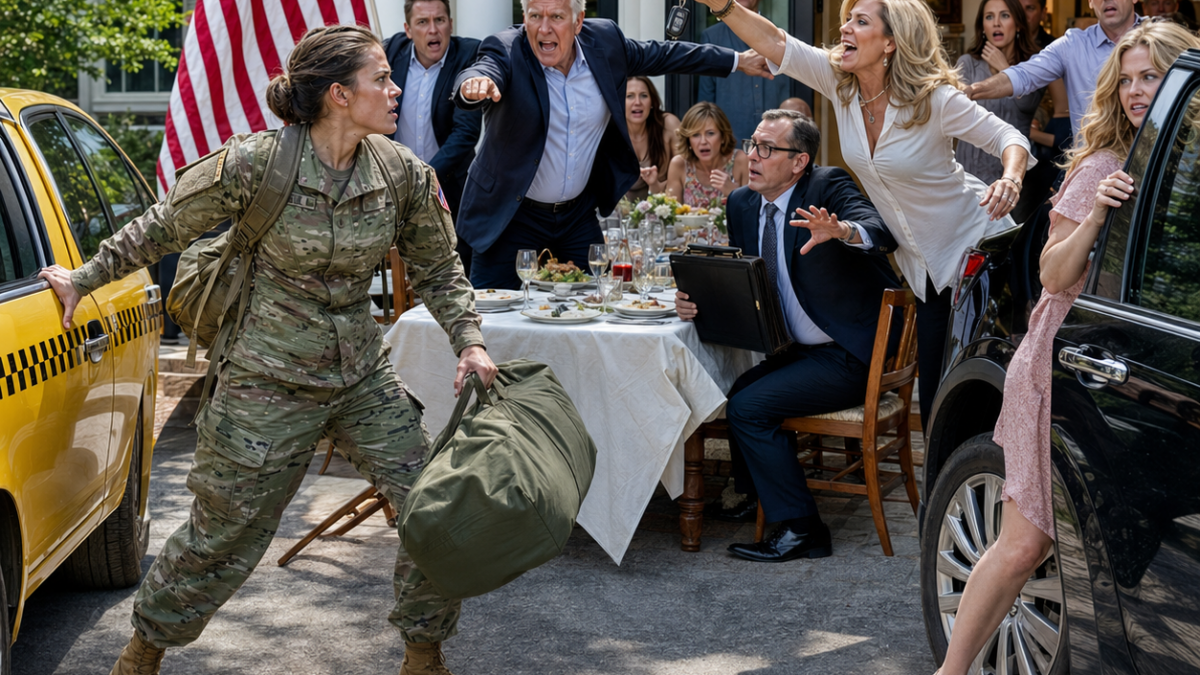
After Six Months Of Training, I Took A Taxi To The Family Dinner. Grandpa Asked: “Where’s The SUV I Gave You Before You Left?” Before I Could Answer, My Stepmother Gave A Cold Smile: “She Doesn’t Need A Car. She’s In The Army All The Time. My Daughter Is The One Who Needs It.” Grandpa Fell Silent, Then Looked At His Attorney. “Who Signed The SUV Over To Her?”
### Part 1
“No,” I said, staring at the signature on the title transfer form. “I never signed that.”
The dining room went so quiet I could hear the old refrigerator humming from the kitchen.
My stepsister, Brooke Hayes, slowly lowered my SUV keys onto the oak table. My stepmother, Denise, didn’t look embarrassed. She didn’t even look surprised.
She folded her arms.
“Don’t make this ugly, Claire. You’re in the Army. You’re gone all the time. Brooke has two children. She needs that vehicle more than you do.”
My grandfather, Walter Bennett, turned toward the attorney sitting beside him.
His voice was almost frighteningly calm.
“Then who signed my granddaughter’s SUV out of her name?”
That question had begun six hours earlier, when I was sitting in the back of a taxi watching the streets of my hometown slide past the window.
I had been away for six months of Army training.
For weeks, I’d pictured coming home to Grandpa Walter’s Sunday dinner—roast chicken, buttered rolls, too many vegetables, and Grandpa insisting I needed “one more scoop” of everything.
Instead, I felt hollow from travel.
My uniform was pressed, my duffel bag was wedged against my boots, and all I wanted was a hot shower and one evening where nobody asked me why I had enlisted.
The taxi stopped outside Grandpa’s house.
Before I reached the porch, the front door opened.
Denise stood there in a cream blouse, one hand resting on the frame.
“Well,” she said, glancing behind me at the taxi. “Six months in the Army and you still can’t manage your own transportation.”
I stopped.
I had texted Brooke twice after landing. No response.
I’d called Denise. She let it ring.
I could have said that.
Instead, I picked up my bag.
“Nice to see you too.”
She moved aside.
The smell hit me immediately—rosemary, coffee, warm bread.
For one painful second, I was eighteen again, walking into this same house while Dad shouted from the kitchen that Grandpa had overcooked something.
Dad had been gone four years.
Some days grief arrived like a wave.
That evening, it arrived like a smell.
“There’s my girl.”
Grandpa stood near the dining room window.
At seventy-eight, Walter Bennett still had the straight-backed posture of the construction foreman he’d been most of his life. His hair was almost completely silver now, but his handshake could still crush mine.
I hugged him.
He held me longer than usual.
“You look thinner.”
“I’m fine.”
“That’s what every Bennett says five minutes before needing mashed potatoes.”
I laughed.
A real laugh.
Then I noticed Brooke.
She sat near the other end of the room with her children, Owen and Sophie. She waved once, quickly, then looked at her phone.
Something about her expression bothered me.
Guilt, maybe.
Fear.
I didn’t know yet.
Then I glanced through the front window.
And saw my dark blue SUV parked at the curb.
I froze.
Grandpa had given me that SUV after my old sedan finally died on the interstate. It wasn’t extravagant, but it was safe, reliable, and mine.
Brooke’s pink water bottle was sitting in the cup holder.
A child’s backpack rested against the rear window.
I turned.
“Why is Brooke driving my SUV?”
Denise sighed as though I’d complained about someone borrowing a casserole dish.
“Because she needs it.”
“That wasn’t my question.”
Grandpa followed my stare toward the street.
“Claire,” he said slowly, “why did you take a taxi? Where are your keys?”
Before I could answer, Denise laughed.
“Oh, Walter. Claire doesn’t need that thing. She’s in the Army now.”
I looked at Brooke.
She wouldn’t meet my eyes.
“Brooke?”
Her face tightened.
“Mom said you knew.”
My stomach dropped.
“Knew what?”
Denise reached for her wineglass.
“That we transferred the SUV to Brooke.”
For a second, I genuinely thought I had misunderstood her.
“You did what?”
Grandpa’s chair scraped across the floor.
And suddenly, Sunday dinner didn’t smell like home anymore.
It smelled like something had been burning for months, and I had just walked through the door in time to see the smoke.
### Part 2
“You transferred my SUV?”
I heard my own voice, but it sounded distant.
Denise lifted her chin.
“Brooke’s car was falling apart. She has children to get to school, appointments, work. You were gone for months.”
“I was training.”
“Yes, Claire. We know.”
The way she said it made my uniform feel like an accusation.
Brooke finally looked at me.
“Mom told me you said it was okay.”
“I never said that.”
Her expression shifted.
“Never?”
“Not once.”
Denise made an impatient sound.
“This is ridiculous. Families help each other.”
“By giving away property that doesn’t belong to them?”
“You weren’t using it.”
Something hot rose behind my ribs.
That sentence was familiar.
Not the exact words.
The meaning.
Brooke was present, so Brooke mattered.
Brooke had children, so Brooke mattered.
Brooke’s problems were visible, so Brooke mattered.
I had enlisted, left town, and built a life Denise didn’t understand.
Somehow that made everything I owned negotiable.
Grandpa put down his fork.
“Claire, did you give Brooke permission to keep the SUV?”
“No.”
“Did you sign the title over?”
“No.”
Brooke looked at Denise.
“Mom?”
Denise’s fingers tightened around her glass.
“I handled the paperwork while Claire was away.”
“What paperwork?” Grandpa asked.
“I had authority.”
My stomach tightened.
Two days before I left for training, Denise had put several documents on her kitchen counter.
A windstorm had damaged the roof of the small house Dad left me. An insurance claim was still open, and Denise had offered to deal with phone calls and mail if something came up while I was unavailable.
“You’re authorizing me to speak to the insurance company and receive claim-related mail,” she had said.
I remembered asking twice.
“Nothing else?”
“Nothing else.”
At twenty-five, nervous about leaving home for the first time in years, I had believed her.
I turned toward Denise.
“That authorization was for the insurance claim.”
“And your mail,” she replied.
“Not my SUV.”
She rolled her eyes.
“Same principle.”
“No,” Grandpa said.
It was the first time he’d interrupted.
His voice was quiet.
“No, Denise. It is not.”
She gave him a hard look.
“Walter, please don’t encourage this.”
Grandpa stood, walked into the living room, and picked up his phone.
“Who are you calling?” Denise asked.
“My attorney.”
Her mouth dropped open.
“Over a car?”
He looked at her.
“No. Over a signature.”
Brooke pushed back from the table.
“Wait. What signature?”
Grandpa ignored her.
“Evan? Walter Bennett. I need you to come over.”
Denise laughed sharply.
“You’re turning a family disagreement into a legal issue.”
Grandpa ended the call.
“You did that when you said you transferred something Claire owns without her permission.”
Twenty minutes later, Evan Mercer arrived carrying a worn leather portfolio.
He had handled Grandpa’s contracts and estate planning for years. He was in his early fifties, soft-spoken, and so methodical that I’d once watched him spend ten minutes correcting the date on a receipt.
He listened while Grandpa explained.
Denise interrupted twice.
Brooke interrupted once.
I didn’t.
Then Evan opened a folder Denise had apparently given Grandpa earlier that evening.
He slid a document toward me.
“Claire, I need you to look at this.”
My name was typed across the top.
Claire Bennett.
Vehicle transfer.
My eyes moved down the page.
Then stopped.
There it was.
My signature.
Except it wasn’t.
The letters were close enough to fool a stranger.
Whoever had written it knew I looped the C in Claire.
They knew the way my B leaned backward.
But my father had drilled one habit into me when I was a teenager.
“If your name goes on something official,” he used to say, “slow down.”
I always did.
This signature had been rushed.
Practiced.
Copied.
Evan watched my face.
“Is that yours?”
My fingertips went cold.
“No.”
Brooke slowly lowered the keys onto the table.
Denise said nothing.
I looked directly at her.
“I never signed that.”
Grandpa turned toward Evan.
“So,” he said quietly, “who signed my granddaughter’s SUV out of her name?”
For the first time since I’d come through the door, Denise looked afraid.
### Part 3
Evan didn’t accuse anyone.
That made the room feel even more serious.
He placed both hands flat beside the folder.
“Denise, where did this document come from?”
“The DMV.”
“That isn’t what I asked.”
Her jaw tightened.
“I submitted the paperwork.”
“With Claire present?”
“No.”
“With her authorization to transfer the vehicle?”
“I had power of attorney.”
Evan held out his hand.
“May I see it?”
Denise disappeared into the hallway and returned with another folder.
She dropped it onto the table harder than necessary.
“There.”
Evan read the document in silence.
Grandpa stood behind him.
Brooke was twisting one of her rings around her finger.
I stared at the SUV keys.
Mine.
Apparently not mine.
Maybe mine again.
My head hurt trying to understand how something could be stolen without ever leaving the family driveway.
Finally, Evan pushed the document toward me.
“It’s limited.”
I read it.
Insurance communication.
Claim correspondence.
Mail relating to the damaged property.
That was it.
Nothing about vehicles.
Nothing about transferring ownership.
Nothing about giving Denise authority over my property in general.
I looked up.
“So how did she transfer it?”
Evan’s expression didn’t change.
“That’s what we need to establish.”
Denise laughed.
“You’re acting like I sold it to a stranger.”
“You gave it to your daughter,” Grandpa said.
“She needed it.”
“It wasn’t yours.”
“She has children!”
Grandpa’s face hardened.
“And Claire stopped being my granddaughter because she joined the Army?”
“No one said that.”
“You didn’t have to.”
The words landed heavily.
Brooke stood.
“I didn’t know any signature was fake.”
Denise turned toward her.
“No one said fake.”
“I heard Claire.”
“She’s upset.”
“I said it isn’t mine,” I told Brooke.
Brooke looked pale.
“Mom told me you signed everything before you left.”
Denise touched her arm.
“Brooke, stop.”
Brooke pulled away.
“Did Claire know?”
“You needed a vehicle.”
“That isn’t what I asked.”
Something in Denise cracked.
“Fine! She was gone. You were drowning. Your car barely ran. Your husband walked out and left you with two kids. Claire had the Army, insurance, a paycheck, benefits, a future. You had nothing.”
“I had a car,” I said.
Denise looked at me.
“You had everything.”
The bitterness in her voice startled me more than the forged signature had.
“You got Walter paying for school. You got your father’s house. You got everyone telling you how brave you were when you enlisted. You got this SUV because Walter felt sorry for you after Michael died.”
My chair scraped backward.
“My father dying wasn’t some prize I won.”
Nobody spoke.
I could hear Sophie whispering to Owen in the next room.
Grandpa had wisely sent them away from the table once Evan arrived.
Denise’s face flushed.
“That’s not what I meant.”
“It’s exactly what you meant.”
Brooke stared at her mother.
“Did Claire ever say I could have it?”
Denise hesitated.
That hesitation answered everything.
Brooke’s face changed.
Not dramatically.
Just a tiny collapse around the eyes.
“Oh my God.”
“Brooke—”
“You lied to me.”
“I helped you.”
“You told me Claire agreed.”
“I told you what you needed to hear because otherwise you would have refused.”
Brooke stepped backward.
And that was when I understood something ugly.
Denise hadn’t just used my absence.
She had used Brooke’s desperation too.
Evan began gathering the paperwork.
“The vehicle should remain where it is. No sale. No attempt to remove it from the state. No additional title changes.”
Denise crossed her arms again.
“Are you threatening me?”
“No. I’m telling you this is no longer just an argument about who needed a car.”
Grandpa looked toward me.
“We’ll go to Evan’s office tomorrow.”
I nodded.
Then Brooke whispered something.
“I can’t give it back.”
I turned.
She looked at the keys on the table.
“My job is across town. Owen has school. Sophie has appointments. I need that SUV.”
I felt sympathy.
And then I remembered that she’d driven it for months without calling me once.
“You needed help,” I said. “That doesn’t mean you needed my property.”
Her eyes filled.
She still didn’t apologize.
And somehow that hurt almost as much as Denise’s lie.
### Part 4
I barely slept.
Every time I closed my eyes, I heard the same sentence.
You were gone.
By morning, I understood why it bothered me so much.
Denise hadn’t meant geographically gone.
She meant irrelevant.
Grandpa picked me up after breakfast.
We drove downtown mostly in silence.
Finally, he said, “I should have noticed.”
“Noticed what?”
“The way she treated you.”
I looked out the passenger window.
People were walking dogs. A delivery truck blocked half an intersection. Somewhere, life was happening normally.
Grandpa continued.
“After Michael died, I thought avoiding fights was protecting everybody.”
Dad’s name still tightened something inside me.
“You were grieving too.”
“That doesn’t excuse cowardice.”
“You weren’t a coward.”
“I saw little things and called them little because that was easier.”
He gripped the steering wheel.
“Things grow roots when nobody pulls them out.”
At Evan’s office, copies of the DMV records were spread across a conference table.
The replacement title had been requested while I was still training.
The mailing address had been temporarily changed from mine to a post office box Denise controlled.
My stomach turned.
That part hurt differently.
A forged signature might have happened in one reckless moment.
Redirecting my mail meant planning.
“She knew I wouldn’t see the paperwork,” I said.
Evan nodded.
“That appears to be why the address change matters.”
There were also electronic notices I’d missed.
I remembered seeing subject lines during training—vehicle record updates, title processing—but our access to personal phones had been limited, and whenever I finally got a chance to look, I had messages from Grandpa, travel information, Army paperwork, and dozens of other things demanding attention.
Denise knew that too.
“Can I get it back?”
“Yes,” Evan said. “The priority is correcting ownership and restoring possession. Brooke’s cooperation will make that easier.”
“And Denise?”
His answer was careful.
“She may face consequences beyond the civil issues, but neither you nor I control how any outside authority chooses to handle that. What you control is whether you protect yourself now.”
He slid another folder toward me.
“There’s something else.”
Inside were screenshots of messages between Denise and Brooke.
My hands tightened.
Brooke: Did Claire actually say I can use it?
Denise: Yes. Stop worrying.
Another.
Brooke: The paperwork says owner transfer. Does Claire know about that?
Denise: Claire is gone until fall. She’ll understand.
Then another.
Brooke: I don’t want her thinking I stole it.
Denise: Walter only gave it to her because Michael died. You have children. You need it more.
I stared at the screen.
Brooke had questioned it.
More than once.
But she had never questioned it enough to call me.
That afternoon, Evan asked her to come in alone.
She arrived wearing a gray sweatshirt, her hair tied back carelessly.
She looked like she hadn’t slept either.
Evan explained the documents, the disputed signature, and the immediate need to return the SUV.
Brooke went pale.
“I can’t lose the car.”
“It isn’t your car,” I said.
Her head snapped toward me.
“You have no idea what my life is like.”
“I know you’re struggling.”
“No, you don’t. You have the Army. You have a paycheck. A career. Everyone claps for Claire because Claire has a plan.”
I felt the old family comparison trying to pull me into a fight.
I refused.
“This isn’t about who suffers more.”
Her mouth trembled.
“My old car left me stranded twice.”
“You could have called me.”
“I was embarrassed.”
“You could’ve called Grandpa.”
“I didn’t want him looking at me like I failed.”
“He wouldn’t.”
“Mom said he did.”
That stopped me.
Brooke wiped angrily at her eyes.
“She spent years telling me Grandpa respected you more. That Dad loved you more. That everyone expected me to mess up.”
My anger shifted.
Not away from Brooke.
Just wider.
“And when you realized the title was being transferred?”
She looked at the table.
“I wanted to believe Mom.”
“Why?”
“Because I needed the car.”
Finally.
The truth.
Not innocence.
Not an excuse.
Just truth.
I leaned forward.
“Then say it clearly.”
She looked up.
“I knew enough to know I should have called you.”
The room went still.
“And I didn’t.”
That was the first apology she gave me.
Not the word sorry.
Something better.
Responsibility.
### Part 5
Late that night, someone knocked on my apartment door.
When I opened it, Brooke stood in the hallway.
My SUV was parked behind her beneath the streetlight.
She held the keys in her palm.
“I brought it back.”
I stared past her.
Dark blue paint.
Familiar shape.
Mine.
For months, I had thought of that SUV as transportation.
Seeing it again felt strangely personal.
Grandpa had bought it after Dad died, when my old sedan started breaking down every few weeks.
The day he gave me the keys, he’d said, “It’s in your name, Claire. Yours means yours.”
Apparently our family had needed a refresher.
I took the keys.
“Are the kids okay?”
“They’re with their dad.”
“How are you getting to work?”
“A coworker.”
She swallowed.
“You don’t have to pity me.”
“I don’t.”
She blinked.
“But I don’t want Owen and Sophie paying for decisions adults made.”
Her eyes filled.
“I didn’t forge your signature.”
“I believe you.”
She exhaled.
Then shook her head.
“That doesn’t make me innocent.”
I said nothing.
“I knew something was wrong.”
The hallway smelled faintly of laundry detergent from the apartment next door.
Brooke looked toward the SUV.
“When Mom first said you were letting me borrow it, I believed her immediately because I wanted to. My car had broken down again. Rent was late. My hours were getting cut.”
She rubbed her thumb against her palm.
“Then she said the title was being transferred.”
“That should have been the moment you called.”
“I know.”
“But you didn’t.”
“No.”
“Why?”
She closed her eyes.
“Because I liked having it.”
The answer hurt.
But I respected it.
“I liked knowing the car would start. I liked not worrying about breaking down with the kids inside. And every time I asked Mom whether you really agreed, she told me I deserved one thing that worked.”
Her voice cracked.
“I started telling myself you’d be fine.”
I looked at her.
“I’m not always fine.”
“I know that now.”
I walked outside and opened the driver’s door.
The seat had been pushed back.
Cracker crumbs dotted the floor.
A child’s mitten sat beneath the passenger seat.
There was a shallow dent near the rear bumper.
The odometer showed thousands of miles I hadn’t driven.
Brooke had built part of her life inside something that belonged to me.
“Evan will document everything tomorrow,” I said. “Mileage. Repairs. Maintenance. Insurance costs.”
“I understand.”
“And returning it doesn’t erase what happened.”
“I know.”
I expected her to leave.
Instead she said, “Claire?”
“What?”
“I’m sorry.”
Simple.
No explanation attached.
No “but.”
That mattered.
I let her inside long enough to eat a bowl of soup because she admitted she hadn’t eaten all day.
We sat across from each other at my tiny kitchen table.
We were not healed.
We weren’t even close.
But for the first time, Brooke stopped defending herself.
She told me her separation had become worse than she had admitted. Her husband missed payments. She was taking whatever shifts she could get at an assisted-living center.
“Why didn’t you ask Grandpa?” I said.
“I thought he’d compare me to you.”
“He wouldn’t.”
“I know.”
She stared into her soup.
“I think Mom needed me to believe he would.”
The next morning, a mechanic Evan trusted inspected the SUV.
Minor bumper damage.
Overdue maintenance.
Several thousand additional miles.
Nothing catastrophic.
But nothing imaginary either.
Brooke stood beside me while Evan wrote everything down.
Her phone buzzed.
She read the message, then turned the screen toward me.
Denise.
Do not let Claire humiliate you. She is enjoying making you suffer.
Brooke stared at it for several seconds.
Then typed:
No. I am facing what I did.
She pressed send.
And for the first time, I saw my stepsister choose accountability over our mother’s version of reality.
Denise did not take it well.
### Part 6
Denise called me before noon.
I almost didn’t answer.
Then I remembered how many years I had spent avoiding uncomfortable conversations just so she could later claim they never happened.
I picked up.
“You’re turning Brooke against me.”
No hello.
No apology.
Just accusation.
“She returned my SUV.”
“Because you frightened her.”
“She returned property that wasn’t hers.”
“You have no compassion.”
I looked out the window of Evan’s office.
“My compassion isn’t the issue.”
“You’re punishing a single mother.”
“I didn’t create Brooke’s problems.”
“You could solve one of them.”
“With my property?”
Silence.
Then her voice became colder.
“You’ve changed.”
“I hope so.”
She hung up.
That afternoon Brooke arrived with a white envelope.
Inside was one hundred eighty dollars.
“I picked up an overnight shift.”
I stared at the money.
“You don’t have to pay everything immediately.”
“I know. But I need to start.”
She told us she planned to sell her broken-down car for parts, take extra shifts, and repay only the actual costs tied to the SUV.
Evan looked at me.
I knew what he was asking without words.
“How much do you want to pursue?”
“Only what it costs to make me whole.”
Brooke nodded.
No celebration.
No hug.
Accountability wasn’t supposed to feel comfortable.
Denise was different.
When Evan presented her with a civil agreement requiring her to cooperate with correcting the title, reimburse documented costs, acknowledge that she lacked authority to transfer my SUV, and stop accessing my mail or property, she shoved the papers away.
“This is insane.”
Grandpa sat beside me.
“You’re going to sign it.”
She looked at him in disbelief.
“You’re choosing her?”
Grandpa’s expression changed.
“I am choosing right over wrong.”
“I was helping my daughter.”
“You were hurting my granddaughter.”
“Claire always gets everything!”
I almost laughed.
Not because it was funny.
Because I had finally heard that sentence enough times to understand it had never been about a vehicle.
Denise had spent years treating affection like a limited supply.
Dad loving me meant Brooke got less.
Grandpa helping me meant Brooke had been cheated.
People being proud of my service meant Denise had somehow been humiliated.
She had turned love into bookkeeping.
I leaned forward.
“You know what I got, Denise?”
She stared at me.
“I got a father who died before I was ready to lose him. I got a house I didn’t want because owning it meant he would never walk through the door again. I got an SUV because Grandpa was scared my old car would leave me stranded.”
Her mouth opened.
I didn’t let her interrupt.
“And I got years of you pretending every kindness anyone showed me was something stolen from Brooke.”
Grandpa looked down.
Brooke’s eyes filled.
Denise went still.
“You don’t get to rewrite my losses as advantages because it makes what you did easier to justify.”
Evan pushed the agreement back toward her.
“Sign it.”
She did.
But not before reading every line like each sentence personally offended her.
At the bottom, she signed her full name.
Denise Bennett.
Real signature.
No imitation required.
Afterward, Grandpa asked me to walk outside with him.
The air smelled like rain.
“I’m changing some things,” he said.
“What things?”
“My estate documents.”
My stomach tightened.
“Grandpa, don’t do anything because you’re angry.”
“I’m not.”
He looked toward the office windows.
“I’m doing it because I finally understand that vague arrangements create opportunities for people who think boundaries are suggestions.”
He planned to make his wishes explicit.
No informal authority over my property.
No assumption that Denise could make decisions for me.
No family member acting on another’s behalf without clear written permission.
Then he said something I didn’t expect.
“I also told Denise she needs to move out of my house.”
I stared at him.
“What?”
“She has another place available. I gave her time to arrange it.”
“Grandpa…”
“She used my home as a stage to steal from you and then expected me to call it family peace.”
His voice trembled.
“I won’t do that anymore.”
That was when I realized the SUV had not simply exposed Denise.
It had forced all of us to decide what we were willing to keep tolerating.
And some things, once seen clearly, could never be unseen.
### Part 7
I returned to duty with my SUV back in my possession and my relationship with my family permanently altered.
For a while, I thought distance would make everything easier.
It didn’t.
Distance only made the truth quieter.
Brooke sent payments every month.
Some were small.
Some were larger when she picked up extra shifts.
Every payment came with a note.
This is what I can do this month.
No excuses.
No demands.
Once she wrote:
I understand if you never trust me the same way again.
That was probably the moment I began believing she really had changed.
Not because she begged me to forgive her.
Because she stopped asking forgiveness to erase consequences.
She bought an old used sedan after saving for several months.
Nothing impressive.
One headlight was slightly cloudy and the passenger window needed help rolling up.
But she paid for it herself.
When she sent me a photo, she wrote:
Not glamorous. Starts every morning. Mine.
I smiled.
Then put my phone away.
Our relationship wasn’t restored.
It was being rebuilt one honest action at a time.
Denise tried a different strategy.
At first, angry messages.
Then guilt.
Then silence.
Then suddenly:
I miss you.
I didn’t answer.
A week later:
Your father would hate seeing this family divided.
That one made me furious.
I stared at the message until my hands shook.
Then I typed:
Do not use Dad to pressure me into giving you access to me.
She responded immediately.
That isn’t what I meant.
I wrote one final message.
What you meant matters less to me now than what you repeatedly do.
Then I blocked her.
For three months.
Some people in the family thought that was harsh.
An aunt called and said, “Denise made a terrible mistake, but she’s still family.”
I asked, “Would you call forging someone’s signature and taking their vehicle a mistake if we weren’t related?”
She went quiet.
That became my test.
If someone had to use the word family before explaining why I should tolerate something, I stopped listening.
Grandpa never pressured me.
That surprised me.
The old Walter Bennett would have said, “Come on, kiddo. Life’s short.”
The new version said, “You decide what access people earn.”
He apologized more than once for not seeing the pattern earlier.
Eventually, I told him to stop.
“You didn’t forge anything.”
“No. But I taught Denise silence would protect her.”
“And now you’re not.”
That was enough.
Months passed.
Training turned into my first real assignment.
I learned a new routine.
Early mornings.
Boots by the door.
Coffee that tasted terrible but worked.
Calling Grandpa on Sundays.
Driving my own SUV to work without thinking much about it.
That was the strange part.
The object at the center of the explosion gradually became ordinary again.
A vehicle.
Something with grocery bags in the back.
Dust on the dashboard.
A coffee stain near the console.
Mine.
That mattered.
But something else mattered more.
I stopped explaining my decisions to people committed to misunderstanding them.
I stopped apologizing for boundaries.
I stopped believing being the “strong one” meant volunteering to be treated badly.
Then, nearly six months after I came home from training, Grandpa invited me to Sunday dinner.
Brooke would be there.
The children too.
Denise had also asked to come.
I sat in the driver’s seat outside my apartment for a long time after reading his message.
My first instinct was no.
Then Grandpa sent another.
You do not owe anyone reconciliation. She says she wants to apologize. You can leave whenever you want.
That changed my answer.
Not because I wanted Denise back in my life.
I didn’t.
But I wanted to hear what someone said when excuses were no longer available.
So that Sunday, I drove the blue SUV back toward Grandpa’s house.
The same road.
The same driveway.
The same oak dining table waiting inside.
Only this time, I wasn’t coming home wondering whether I still mattered.
I already knew I did.
### Part 8
Grandpa opened the door before I reached the porch.
“There’s my girl.”
I hugged him.
“You’re still thinner than you should be.”
“You say that every time.”
“And I remain correct every time.”
I laughed.
Inside, Owen and Sophie were setting napkins on the table.
Brooke looked up from the kitchen.
Her hair was shorter. There were still tired shadows under her eyes, but she seemed steadier.
“Hey.”
“Hey.”
No dramatic hug.
No pretending.
Then Owen ran over and wrapped his arms around my waist.
Sophie followed holding a picture.
It showed a dark blue SUV with crooked wheels and a woman in an Army uniform standing beside it.
At the top, in purple crayon, she had written:
AUNT CLAIRE COMES HOME.
“That’s me?”
Sophie nodded proudly.
“And that’s your car.”
Brooke’s cheeks reddened.
Then Sophie added, “Mom says you have to ask before you use stuff that isn’t yours.”
I glanced at Brooke.
She didn’t change the subject.
“She’s right,” Brooke said. “You do.”
That meant more than a polished apology ever could.
Brooke had nearly finished repaying what she owed.
She had never missed a payment without telling me beforehand.
She had stopped using Denise as an excuse.
We were not the sisters we might have been.
Maybe we never would be.
But when I looked at her, I no longer saw someone demanding my forgiveness.
I saw somebody learning how expensive honesty could be—and paying anyway.
Then Denise appeared in the kitchen doorway.
The room changed.
She looked smaller somehow.
Not physically.
Just less powerful.
“Claire,” she said. “Can we talk privately?”
Grandpa looked at me.
My decision.
That mattered too.
“Five minutes.”
Denise led me into Dad’s old sitting room.
For years, he had read there beside the window. The shelves still held some of his books.
Denise clasped her hands.
“I’ve rehearsed this.”
I waited.
“I was jealous of you.”
No excuse followed.
“At first I told myself it was because Walter favored you. Then because Michael protected you. After he died, I told myself everyone’s sympathy toward you was unfair to Brooke.”
Her eyes filled.
“I turned your grief into something I resented.”
I swallowed.
She continued.
“When Brooke started struggling, I saw a way to even things out.”
There it was.
Not help.
Not misunderstanding.
A choice.
“I told myself you didn’t need the SUV. That you had the Army. That you would recover faster than Brooke.”
She looked at me.
“But the truth is, I wanted to take something from you.”
I appreciated that sentence because it was honest.
It also ensured I would never trust her again.
“I’m sorry,” she whispered. “For the signature. The mail. The lies. For convincing Brooke that loving you meant loving her less.”
I nodded.
“Thank you for finally saying it.”
Hope flickered across her face.
I stopped it before it grew.
“But I’m not forgiving you.”
Her lips parted.
“I understand if you need more time.”
“No. I need you to understand me correctly.”
My voice stayed calm.
“This isn’t about time.”
Her eyes lowered.
“You had years to choose differently. Then you planned something that depended on me being unavailable to stop you.”
A tear slipped down her cheek.
“You apologized. I believe you regret what happened. But regret does not restore trust.”
“So that’s it?”
“For the relationship we had? Yes.”
She looked wounded.
Once, that expression would have made me soften.
Not anymore.
“I’m not going to hate you,” I said. “I’m not going to spend my life angry. But you will never handle my documents, property, finances, mail, or personal decisions again. And you will not have the same access to me you had before.”
“I’m family.”
“So am I.”
She went silent.
I opened the door.
“That should have mattered when I wasn’t in the room.”
Then I walked back to dinner.
### Part 9
Grandpa didn’t ask what Denise and I discussed.
Neither did Brooke.
That was another sign things had changed.
Before dinner, Grandpa stood with his glass in one hand.
“I want to say something.”
Owen groaned.
“Is this a speech?”
Grandpa frowned.
“It is wisdom.”
“That means speech,” Brooke said.
Everyone laughed, even me.
Then Grandpa grew serious.
“For a long time, I thought keeping a family together meant preventing arguments.”
He looked around the table.
“I was wrong.”
Denise stared at her plate.
“Sometimes an argument is what happens when someone finally refuses to keep swallowing a wrong.”
His gaze moved toward me.
“People who leave home for work, school, service, illness, or anything else do not leave behind their rights. And help that requires taking something without permission is not help.”
He paused.
“It is taking.”
Nobody spoke.
Then Grandpa looked directly at me.
“I should have seen more, sooner.”
I touched his hand.
“You saw it when I needed you to.”
“No,” he said. “You handled it when you needed you.”
I smiled.
“That too.”
Dinner wasn’t magical.
Denise didn’t become my mother.
Brooke and I didn’t suddenly recover years of resentment.
Nobody cried into anyone’s arms while sentimental music played in the background.
We ate roast chicken.
Owen complained about green beans.
Sophie spilled water.
Grandpa told the same construction story I had heard approximately fifty times.
And somehow, that ordinary evening felt healthier than years of forced family harmony.
When dinner ended, Brooke walked me outside.
The repaired bumper of my SUV caught the porch light.
“I made the final payment,” she said.
“I saw.”
“So we’re even?”
I looked at her.
“Financially.”
She nodded.
“I figured that was the answer.”
“I don’t want money between us anymore.”
“What do you want?”
“Consistency.”
She shoved her hands into her jacket pockets.
“I can do that.”
“I hope so.”
She looked toward the house.
“Mom keeps asking whether you’ll forgive her eventually.”
“I won’t.”
Brooke nodded slowly.
“I don’t blame you.”
“I’m not saying she can never become a better person.”
“I know.”
“I’m saying her becoming better doesn’t create an obligation for me to restore what she broke.”
Brooke looked at me.
“That makes sense.”
It had taken me months to understand that myself.
Forgiveness was not a debt victims owed people who finally apologized.
Sometimes healing meant reconciliation.
Sometimes it meant distance without hatred.
For me, Denise belonged in the second category.
Brooke was different because she had done the uncomfortable work before asking for closeness.
She admitted what she knew.
Returned the SUV.
Paid what she owed.
Stopped blaming desperation.
She accepted that I might never trust her completely again.
That was why I could imagine trusting her a little more someday.
I opened the driver’s door.
Brooke smiled.
“Drive safe, Army girl.”
I rolled my eyes.
“Don’t start.”
She laughed.
As I pulled away, I saw Grandpa through the front window, collecting plates while Sophie followed him around.
Denise stood farther back in the room.
I felt no urge to turn around.
That surprised me.
For months, I had imagined closure would feel dramatic.
Instead, it felt quiet.
My hands were steady on the steering wheel.
The SUV smelled faintly like the pine air freshener I’d bought at a gas station the week before.
My coffee cup rattled in the holder whenever I hit a rough patch of road.
Ordinary things.
My things.
My life.
Before Army training, I believed strength meant enduring discomfort without complaining.
I thought good daughters kept peace.
Good sisters understood.
Good family members sacrificed.
Training taught me something different.
Strength wasn’t tolerating every burden someone placed on your shoulders.
Sometimes strength was looking at someone you loved and saying, “No. You do not get to do this to me.”
My stepmother took advantage of my absence because she believed distance had weakened my claim to my own life.
She was wrong.
I came home with more than military training behind me.
I came home knowing that love without respect is not enough, that family without boundaries can become another word for entitlement, and that being capable of surviving someone’s betrayal doesn’t mean you owe them another chance to betray you.
Grandpa’s SUV was mine again.
But the more important thing I got back was harder to put on a title document.
I got back the right to decide who had access to my life.
Brooke earned a place in it slowly.
Grandpa had never lost his.
Denise lost hers by choice.
And I finally understood that protecting my peace didn’t make me cruel.
It meant I had stopped abandoning myself just to make other people comfortable.
THE END!
Disclaimer: Our stories are inspired by real-life events but are carefully rewritten for entertainment. Any resemblance to actual people or situations is purely coincidental.








