My Husband Asked for an Open Marriage—Then Panicked When I Stopped Needing Him

My Husband Asked for an Open Marriage—Then Panicked When I Stopped Needing Him
Fourteen years after our wedding, my husband asked me to open our marriage because he had feelings for another woman. He expected tears, jealousy, maybe a desperate attempt to keep him. Instead, I said yes. What Daniel never understood was that every Friday night he spent chasing excitement taught me something I had forgotten: how to exist without him. I stopped doing the invisible work that made his life effortless. I found old pieces of myself. And when he finally panicked, ended the affair, and begged to close the marriage again, the woman waiting at home was no longer the wife he had counted on finding there.
Part 1: My husband asked for freedom, never imagining I might find mine.
My husband asked for an open marriage on a Thursday night, fourteen years after we said our vows.
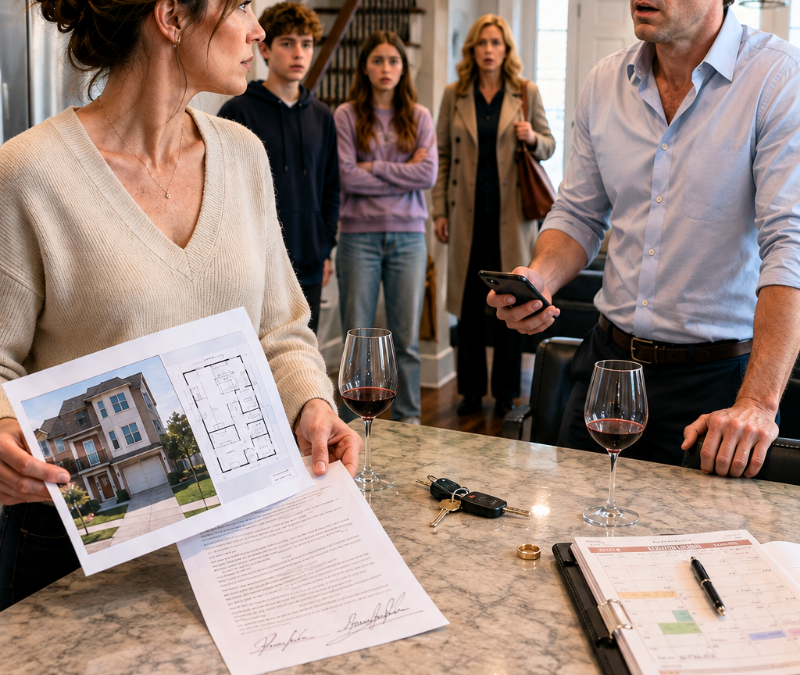
The kids were upstairs. The dishwasher was running. I was at the kitchen island checking the time for our son Noah’s science fair when Daniel poured two glasses of wine and said, “Claire, can we talk?”
He had that careful expression people get when they have already rehearsed a conversation without you.
“What’s wrong?”
“Nothing’s wrong.” He pushed one glass toward me. “I love you. I love our family. I just… I don’t think marriage has to mean ownership.”
I stared at him.
Then came the speech.
Honesty. Freedom. We had gotten together in our twenties. Loving one person did not magically erase attraction to everyone else.
I let him speak for maybe a minute.
Then I asked, “Is this about Sophie?”
His face answered before his mouth did.
Sophie was the marketing director at his company. Thirty-four. Single. Smart. Pretty. Somehow she had become a regular guest in our marriage without ever entering our house.
Sophie knew a wonderful restaurant downtown.
Sophie thought their biggest client was making a terrible decision.
Sophie had backpacked through Iceland.
Sophie had strong opinions about traditional marriage.
Once, after a work trip, Daniel had casually said, “Sophie thinks you’d like her.”
At the time, I had been trying to get pasta sauce out of Noah’s soccer jersey.
Now I wondered how many signs I had missed because I had been too busy keeping our life moving to study my husband’s face.
“Have you slept with her?”
“No.”
“Kissed her?”
“No.”
“Have you told her you have feelings for her?”
He rubbed the back of his neck.
Daniel had done that since we were twenty-seven. Nervous. Cornered.
Sometimes lying.
“We’ve talked,” he admitted.
“About your feelings?”
“Yes.”
“About an open marriage?”
Silence.
Then, “Yes.”
I almost laughed.
Not because it was funny.
Because suddenly everything sounded embarrassingly simple.
Daniel had found a woman he wanted. He had not crossed the physical line yet, and he wanted me to move the line for him.
“How long?”
“Three or four months.”
Three or four months.
While I drove his mother to an orthopedic appointment because he had a meeting, Daniel had been thinking about freedom.
While I renewed our homeowner’s insurance, registered Noah for soccer, bought his father’s birthday gift, handled school forms, washed clothes for his business trips and kept toothpaste in the bathroom.
Freedom.
Daniel leaned toward me.
“I’m not trying to leave you. I don’t want a divorce. I love you. I just think one person can’t be everything forever.”
I looked at the man I had slept beside for fourteen years.
Then I said, “Okay.”
He blinked.
“Okay?”
“Open the marriage.”
For the first time that evening, Daniel looked frightened.
“You’re serious?”
“You asked. I’m answering.”
“That’s it?”
I lifted my wine. “What did you expect?”
Apparently, not that.
He had prepared for crying. Fighting. Hours of convincing me I was insecure or old-fashioned.
Instead, I gave him one word.
Okay.
Daniel eventually slept that night.
I didn’t.
I lay beside him staring at the ceiling while the house settled around us. I was hurt. Furious. I cried once, quietly enough that he never woke.
But sometime around two in the morning, the pain became something colder.
Clearer.
If my husband had already spent months imagining how to make room for another woman without losing me, begging him to choose me would fix nothing.
The next afternoon, I put a printed page on the kitchen island.
Daniel laughed.
“You made a document?”
“I manage operations for a living. What did you think I was going to do?”
No dates inside our home.
No involving the children.
Separate money for dates, gifts and hotels.
Regular testing.
No lying.
No pretending dates were work events.
Dating did not excuse either of us from parenting or normal responsibilities.
Then he reached the final rule.
Either spouse could ask to close the marriage again—but asking did not mean the other person had to return to the marriage that existed before.
Daniel frowned.
“What does that mean?”
“It means this changes things.”
“The rules are supposed to stop things from changing.”
“No. The rules are supposed to stop us from destroying each other while they change.”
He stared at me.
Then shrugged.
“Fair enough.”
He signed the page.
Two weeks later, Daniel went on his first official date with Sophie.
He thought my signature had given him permission to begin something.
He never realized it had also given me permission to stop.
Part 2: While Daniel chased excitement, I stopped carrying his entire life.
The first month went exactly the way Daniel had hoped.
Restaurants. Drinks. Hotels. A concert. A weekend away.
He bought new shirts, became religious about the gym and replaced the cologne he had worn for years. The man who normally grabbed the closest T-shirt now spent twenty minutes checking his hair.
And he was happy.
That matters.
Daniel did not immediately regret Sophie. He did not come crawling home after one disastrous date.
For a while, he believed he had solved marriage.
He had a wife, two children, a comfortable house and fourteen years of stability.
Now he also had a younger woman who thought he was fascinating.
One night, he leaned against the kitchen counter while I made tea.
“I actually think this is making us stronger.”
“Is it?”
“Don’t you?”
I stirred honey into my mug. “I think it’s making things clearer.”
He smiled as if I had agreed with him.
The following Wednesday, I went to a pottery class.
I had wanted to take one for years. There had always been a reason not to.
Soccer. Dance lessons. Laundry. Daniel’s travel schedule. Somebody’s appointment. Something needing booking, buying, fixing or remembering.
That afternoon, I fed the kids, put leftovers away, changed clothes and picked up my purse.
Daniel walked in.
“Where are you going?”
“Pottery class.”
He laughed. “What?”
“I signed up.”
“When?”
“Yesterday.”
He looked toward the kitchen. “What are we doing for dinner?”
“The kids already ate. There’s food in the fridge.”
“I might have plans later.”
“That’s fine.”
“Who has the kids?”
I looked straight at him.
“You do.”
His expression changed.
I checked the time. “I’ll be back around nine-thirty.”
Then I left.
Nothing dramatic happened.
That was the beautiful part.
The house did not collapse.
The children survived an evening with their father.
Daniel heated leftovers.
And I spent three hours with clay under my fingernails, laughing with people who knew nothing about my marriage.
A few days later, Daniel asked where his blue client-meeting shirt was.
“You put it in the laundry room.”
“So you didn’t wash it?”
“No.”
“Why not?”
I looked up from my book.
“Because it’s your shirt.”
A week later came his mother’s birthday.
“Did Mom’s gift arrive?” he asked.
“What gift?”
He stared.
“You didn’t buy one?”
“No.”
“But you always do.”
“That’s true.”
He waited.
I drank my coffee.
Finally, he asked, “So what am I supposed to do?”
“Buy your mother a birthday present.”
For fourteen years, Daniel had believed birthdays simply happened. So did school forms, summer camps, plumbers, groceries, Christmas gifts and the dog’s vaccines.
I did not stop caring for my family.
I simply stopped doing Daniel’s share before he noticed it existed.
And suddenly, I had time.
Pottery.
Coffee with Amy.
Saturday hikes.
An entire movie without checking my phone.
Meanwhile, Daniel and Sophie were discovering something interesting about freedom.
One evening he found me reading.
“Do you think it’s normal for someone in an open relationship to keep dating other people?”
I lowered my book.
“Isn’t that what open means?”
“Sophie is seeing somebody else.”
“Okay.”
“It doesn’t bother you?”
“Why would it?”
He frowned. “It seems casual.”
I stared at him.
“You’re married to me and dating her, but she’s supposed to be exclusive with you?”
“That’s not what I said.”
“It sounded pretty close.”
He walked away irritated.
A few weeks later, Sophie refused to help him prepare for a business trip.
“She actually told me,” Daniel said indignantly, “‘I’m dating you, Daniel. I didn’t apply to be your new wife.’”
I hid my smile.
For the first time, I found myself liking Sophie.
Then came Noah’s science fair.
And that was the night Daniel’s experiment stopped hurting only me.
Part 3: One broken promise showed our son exactly what Daniel chose.
Noah was thirteen.
Old enough to pretend he did not care about much.
Young enough that I still knew when he did.
He had worked on his science project for almost a month.
Daniel promised he would be there.
Not “I’ll try.”
Promised.
At 4:30 that afternoon, my phone buzzed.
Sophie had gotten two last-minute concert tickets.
Daniel could probably attend part of the science fair, but the timing would be tight.
Ten minutes later, another message arrived.
Actually, since I was already at the school, perhaps it made more sense for him to skip the whole thing.
Could I send pictures?
I stared at the screen.
For thirteen years, I had translated Daniel’s disappointments into excuses our children could forgive.
Dad got stuck at work.
Dad really wanted to come.
Dad will make it up to you.
That afternoon, I stopped translating.
I typed four words.
Tell Noah yourself.
Daniel didn’t.
He went to the concert.
During the science fair, Noah’s eyes kept drifting toward the gymnasium doors.
He tried to hide it.
I noticed anyway.
On the drive home, he stayed silent for almost ten minutes.
Then he asked, “Did Dad forget?”
My hands tightened around the steering wheel.
“You should ask Dad.”
“Was he working?”
I kept my eyes on the road.
“You should ask him.”
When we got home, Noah did.
I never learned exactly what Daniel said.
I only knew he stood outside Noah’s closed bedroom door for a long time afterward.
The next morning, he made breakfast and drove both children to school without being asked.
About two and a half months into our open marriage, Daniel asked whether I was seeing anyone.
“No.”
Relief flashed across his face.
“You haven’t gone out with anybody?”
“No.”
“Why?”
“I haven’t wanted to.”
A familiar little smile appeared.
And suddenly I understood the entire arrangement exactly as Daniel had imagined it.
He would explore.
I would stay home.
Stable.
Loyal.
Available.
Then I said, “Honestly, I’ve been enjoying being alone.”
His smile vanished.
“What does that mean?”
“I like having my own plans. I like not knowing where you are and realizing I don’t need to know.”
He said nothing.
A week later, he found the townhouse listing.
Three bedrooms. Small backyard. Fifteen minutes from the kids’ school.
He walked into our bedroom holding the floor plan.
“What is this?”
“A townhouse.”
“I can see that. Why are you looking at townhouses?”
“I was curious.”
“Are you moving out?”
“I don’t know.”
“Are you planning to divorce me?”
“I don’t know.”
The fear on his face arrived so quickly it almost shocked me.
“We agreed this wasn’t about ending the marriage.”
“You said you didn’t want to end it.”
“And you agreed.”
“I agreed to open it.”
Daniel sat on the edge of the bed.
“Claire, why are you looking at somewhere else to live?”
I could have lied.
Instead, I said the truth aloud for the first time.
“Because I realized that if we ever separate, I’ll probably be okay.”
He stared at me as though I had broken our agreement.
That was when I discovered the one rule Daniel had never written down.
I was not supposed to leave.
His entire vision of freedom depended on believing my loyalty was permanent because my dependence was permanent.
One week later, Daniel ended things with Sophie.
That night, he sat across from me at the kitchen table and said the words he had once been certain he would never need.
“I think we should close the marriage.”
But by then, the door he wanted closed had already changed me.
Part 4: Daniel came back to our marriage, but I had changed.
“Why?” I asked.
“Because this isn’t what I want anymore.”
“What do you want?”
“You. Our family. Us.”
Daniel admitted he had loved the attention.
The novelty.
Feeling younger.
He said he had mistaken excitement for something important.
Then his voice broke.
“I never wanted to lose you.”
I looked at him.
“I hear you.”
That surprised him.
Maybe he expected one apology to restore the old rules.
It didn’t.
Still, Daniel changed.
He cooked dinner. Put school events in his calendar. Remembered his mother’s appointments. Scheduled the dog’s vaccines. Took Noah to soccer. Drove Lily to birthday parties.
He packed his own suitcase for Denver.
He started therapy.
Eventually, I agreed to marriage counseling.
That made everything harder.
If Daniel had become cruel, leaving would have been simple.
Instead, he became attentive.
And I remembered why I had loved him.
He had held me in a hospital hallway when my father died.
He had stayed awake with newborn Lily when I was so sick I could barely stand.
When his first business failed and we had less than two months of savings, we sat on the floor of our apartment eating takeout and promised we would figure it out together.
We had loved each other.
That part was real.
For a while, I wondered whether real love should be enough.
Then one evening, after the children went upstairs, Daniel pushed his plate away.
“If I had never asked for the open marriage, would we still be okay?”
I thought about it.
“Probably.”
Hope appeared on his face.
I hated what I had to say next.
“And that’s the problem.”
His brow tightened. “I don’t understand.”
“If you had never asked, we might have continued exactly the same way for another ten years. Maybe twenty.”
“Would that have been so bad?”
“Maybe not for you.”
He went still.
“I wasn’t miserable,” I said. “I loved you. I loved our family. That’s what makes this hard.”
“Then why can’t we go back?”
I looked down at my hands.
“Because I know something now that I didn’t know before.”
“What?”
“I know I can live without you.”
His face changed.
“For years, Daniel, I built my whole life around us. Around what the kids needed. Around what you needed. I didn’t realize how much of myself I had put on hold.”
“I’m changing.”
“I know.”
“Then give me time.”
“This isn’t about laundry.”
He looked away. “Then what is it about?”
“You asked me to get used to Friday nights without you. You asked me not to ask where you were. You asked me to stop expecting you beside me.”
My voice shook.
“You asked me to make room for a life that didn’t center on you.”
I wiped my face.
“And I did.”
Daniel’s eyes filled.
“I told you I never wanted to lose you.”
“I know.”
“Then what do you want me to do?”
I looked at the man I had loved for fourteen years.
“You shouldn’t have asked me to practice living without you.”
He closed his eyes.
For a moment, neither of us spoke.
Then Daniel whispered, “Is there someone else?”
“No.”
“Then what changed?”
I swallowed.
“Me.”
And two months later, we decided to separate.
Part 5: I thought divorce meant losing everything, until quiet felt like freedom.
There was no dramatic courtroom battle.
No secret fortune.
No revenge.
We hired lawyers, worked out custody and sold the house.
The children were angry.
Then sad.
Then angry again.
Some nights Lily cried and asked why we could not simply try harder.
Some mornings I woke and reached toward Daniel’s side of the bed before remembering he had moved into the guest room.
Leaving hurt.
Freedom did not arrive looking glamorous.
Sometimes it looked like paperwork.
Moving boxes.
Custody calendars.
Standing alone in a kitchen wondering whether you had just made the greatest mistake of your life.
Eventually, I moved into the townhouse Daniel had found on my printed listing.
It was smaller than our old house.
The kitchen was narrow.
The backyard drainage was terrible whenever it rained.
I loved it.
The first weekend the children stayed with Daniel, I went grocery shopping.
Halfway down an aisle, I reached automatically for his coffee.
Then stopped.
I did not need to buy Daniel’s coffee.
Noah would not be home until Sunday, so I did not need his cereal.
Lily was with her father, so I did not need her yogurt.
For the first time in years, dinner could be based entirely on what I wanted.
I bought cheese.
Fruit.
Crackers.
A bottle of wine.
Ice cream.
That was dinner.
Back home, I opened the windows and played music.
I sat on the couch with a book.
No one asked where a shirt was.
No one announced at six that people were arriving at seven.
No one asked what we were doing for his mother’s birthday.
The house was quiet.
Not empty.
Quiet.
There was a difference.
Around ten, my phone lit up on the coffee table.
Daniel.
I still miss us.
I stared at those four words.
I missed parts of us too.
I missed the twenty-eight-year-old man who laughed with me over cheap takeout on the floor of our first apartment.
I missed Sunday mornings when the children were babies.
Family vacations.
Private jokes.
The certainty that we would grow old under the same roof.
But missing something does not always mean you should return to it.
I turned the phone facedown.
Then I picked up my book.
Months later, Daniel and I attended Noah’s school event together.
He arrived early.
Noah noticed.
So did I.
Daniel had become a better father. More responsible. More present.
And perhaps someday, he would become a better partner to someone too.
Standing beside him in that crowded school hallway, I finally understood the last truth of our marriage.
Sophie had not destroyed us.
Neither had the open relationship by itself.
The real damage had happened years earlier, quietly, while I carried more and more of our life and Daniel learned to mistake my devotion for something guaranteed.
His request did not create that imbalance.
It exposed it.
Daniel had wanted freedom without loss.
Excitement without consequences.
Another woman without giving up the wife who made everything else possible.
Instead, he gave me something neither of us expected.
Perspective.
One evening, months after our divorce became final, he dropped the children off at my townhouse.
Noah ran inside.
Lily followed with her backpack.
Daniel stayed on the porch.
“You seem happy,” he said.
I thought about the question.
“I am.”
He gave me a sad little smile.
“I wish I’d figured things out sooner.”
“So do I.”
“Do you ever wonder if we could try again?”
There it was.
The final door.
For a second, I saw our entire marriage behind him.
Fourteen years.
Babies.
Hospitals.
Christmas mornings.
Arguments.
Laughter.
The kitchen island where he had asked for freedom.
I loved that life.
Parts of me probably always would.
But love and belonging are not always the same thing.
I shook my head gently.
“No.”
He looked down.
Then nodded.
This time, he did not argue.
He walked to his car.
I closed the door and heard Lily calling me from the kitchen.
“Mom, where are the bowls?”
“Second cabinet!”
I smiled.
Some things would always need remembering.
But now I knew which responsibilities were mine.
And which parts of myself I would never give away again.
Daniel once told me marriage should not be a cage.
He said there was freedom outside the life we had built together.
For a long time, I believed that was the cruelest thing he had ever said to me.
In the end, I realized he had been partly right.
Freedom was out there.
He just never imagined I would be the one who found it.
THE END.
All the characters and events in this story are fictional and created for the purpose of storytelling and entertainment.
If this story brought you a moment of reflection, comfort, or curiosity, then it has truly fulfilled its purpose.
Thank you sincerely for reading. Your feedback and support are always appreciated and inspire me to keep sharing more stories with you.








