I called my husband 31 times from the ER as his mother lay dying. On the 31st ring, his mistress…

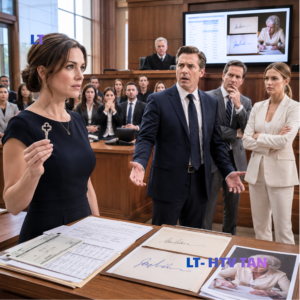
I called my husband 31 times from the ER as his mother lay dying. On the 31st ring, his mistress…
I called my husband thirty-one times from the ER while his mother was dying. On the thirty-first ring, another woman answered over the sound of ocean waves. “He’s in the shower. We’re in Maui. Stop calling, old wife.” She laughed, thinking she had won. What she didn’t know was that before Margaret took her final breath, she pressed a silver key into my hand. That key opened a lockbox containing a letter, a will, insurance papers, and the first pieces of a financial trail my husband never expected anyone to follow. His mistress thought she had found a wealthy man. In reality, she had arrived just in time to watch everything he’d stolen disappear.
Part 1: My thirty-first call exposed an affair—and Margaret’s final secret.
I called Mark thirty times from the emergency room.
Thirty times.
His mother, Margaret, lay beneath a white hospital blanket while machines clicked around her. Her breathing had become shallow. One nurse kept adjusting the oxygen tube beneath her nose, though we both knew there wasn’t much left to adjust.
“Try him again,” Margaret whispered.
So I did.
On call thirty-one, someone answered.
A woman.
“He’s in the shower.”
For one stupid second, I thought I had dialed the wrong number.
“Who is this?”
She laughed softly.
Behind her, I heard waves.
Music.
A sliding glass door opening.
“We’re in Maui,” she said. “Stop calling, old wife.”
Then she hung up.
I stared at Mark’s name on my screen.
Eleven years of marriage disappeared inside four words.
We’re. In. Maui.
Mark had told me he was in Boston for a real estate conference.
His mother was dying three thousand miles away, and he was drinking cocktails beside another woman.
Margaret must have seen something in my face.
“He answered?”
I sat beside her and took her hand.
“No.”
I couldn’t tell her.
Not then.
Her fingers moved weakly against mine. She reached beneath the blanket, struggling until I helped her. From the pocket of her robe, she pulled out a small silver key.
“Desk,” she whispered.
“What desk?”
“My house. Bottom drawer.”
Her eyes sharpened for one strange, final moment.
“Not Mark.”
My throat tightened.
“Margaret—”
“Promise.”
“I promise.”
She died before sunrise.
Three days later, I was in a motel room with her silver key on the nightstand and divorce papers beside it.
The key had opened a metal lockbox hidden inside Margaret’s desk.
Inside were insurance documents, bank records, a newly executed will, and a handwritten letter addressed to me.
Clare,
If you are reading this, I ran out of time.
Please take everything to Robert Harrison.
Do not let Mark tell you I was confused.
I knew exactly what I was doing.
The will left Mark almost nothing.
The life insurance policy was different.
Five hundred thousand dollars.
Mark was still listed as beneficiary.
Harrison moved immediately to freeze disputed accounts and notify the insurance company.
I did one more thing.
After Margaret’s second stroke, I’d installed indoor cameras so I could check on her when I was working. The system still worked.
That evening, Mark returned from Maui.
With Brooke.
The woman who had answered my phone.
I watched them on a fourteen-inch monitor in the motel.
Mark walked into his mother’s house and found an envelope on the table.
My wedding ring.
Divorce papers.
A photocopy of a bank document stamped FROZEN.
His face changed.
Behind him, Brooke crossed her arms.
“Babe?” Mark whispered. “This is a mistake. She can’t freeze that account.”
Brooke’s voice became suddenly careful.
“Which account?”
Mark looked at her.
He had said too much.
“You told me this house was already yours,” she said. “You said your mother signed everything over last year.”
“She did.”
“Then why is something frozen?”
My phone lit beside me.
MARK.
I let it ring.
Again.
MARK.
Again.
I turned it face down.
On the monitor, Brooke picked up the bank photocopy.
Her eyes moved across the numbers.
Then she slowly looked at the man she had flown to Maui with.
That was when I saw it.
Not heartbreak.
Arithmetic.
Brooke hadn’t unpacked her suitcase.
And suddenly, she wanted to know exactly how rich Mark really was.
I turned off the monitor.
The next morning, Robert Harrison slid a spreadsheet across his desk.
“You need to see this,” he said. “Because once we pull this thread, Clare, there’s no putting it back.”
I looked at the first line.
Six transfers.
Two thousand dollars each.
All from Margaret.
All going to a company I had never heard of.
The owner was Mark.
And the first transfer had happened after Margaret’s stroke.
Part 2: A forged signature turned my divorce into something criminal.
Grace Whitfield was a certified fraud examiner with nineteen years of experience tracing money.
She sat across from me in Harrison’s office and opened her laptop.
“Sinclair Realty Holdings,” she said. “Registered nine months ago. Sole member: Mark Sinclair. No employees. No listed properties. No meaningful business activity.”
“That’s not his brokerage.”
“I know.”
She tapped the screen.
“This isn’t a business account. It’s a drain.”
Twelve thousand dollars had moved from Margaret’s checking account in five months.
I wanted an innocent explanation.
I wanted Margaret to have knowingly helped her son.
“Get the signed authorizations,” I said. “If she signed them herself, we stop.”
Four days later, Grace placed three documents on my kitchen table.
The first was Margaret’s signature from 2019.
Strong. Smooth.
The second was the bank transfer authorization.
Also strong.
Too strong.
The third was a card Margaret mailed after her second stroke.
Her writing shook across the page. Letters collapsed into one another. Her hand had barely obeyed her.
I remembered her crying after rehab because she could no longer hold a fork steadily.
I looked back at the bank form.
“She couldn’t have written that.”
Grace’s expression didn’t change.
“I’m not a document examiner. But I know who benefited.”
There was more.
A power-of-attorney amendment had been filed the same week.
It revoked Margaret’s previous arrangement and made Mark sole agent.
The document had been notarized by Danielle Marsh.
“Who is she?”
Harrison looked grim.
“Mark’s college roommate’s younger sister.”
My hands went cold.
Dr. Alan Reyes, a forensic document examiner, compared eleven genuine samples of Margaret’s handwriting with the disputed documents.
He studied them beneath a lightboard.
Finally, he looked up.
“The post-stroke samples all show neuromuscular tremor. The disputed signatures do not.”
“What does that mean?”
“In plain English? Either someone forged them, or someone physically guided her hand while she lacked meaningful capacity.”
There was a name for that.
Elder financial exploitation.
Harrison called financial crimes.
Two days later, Detective Renata Cruz sat across from me in a windowless room.
“Walk me through the day she supposedly signed.”
I remembered.
I had taken Margaret to physical therapy at nine.
Mark volunteered to bring her home because I had work.
When I returned at four, she was exhausted.
“She ever mention paperwork?”
“No.”
Then I remembered something else.
“She used to say Mark rushed her. He would put papers down and say, ‘Just insurance forms, Mom. Sign here.’ She said arguing took more energy than signing.”
Cruz stopped writing.
“That matters.”
She looked directly at me.
“Sometimes exploitation isn’t dramatic. Sometimes it’s exhaustion weaponized.”
But Margaret was gone.
There was no living victim to testify.
Cruz warned me the case could take weeks.
We didn’t have weeks.
Because the insurance company had a deadline.
If we couldn’t produce enough evidence soon, Mark could still receive Margaret’s five-hundred-thousand-dollar life insurance policy.
And then Patricia Odum called.
The hospice social worker had remembered one sentence Margaret said months earlier.
A sentence she had written into Margaret’s medical chart.
Part 3: Margaret left one quiet warning before anyone understood it.
Patricia’s voice shook when she called.
“There was something Margaret told me after Mark visited.”
I stood in my rental kitchen, staring through the window at a gray afternoon.
“What?”
“She said her son brought insurance paperwork. She didn’t like signing things because she couldn’t read properly anymore.”
I gripped the counter.
“What did you do?”
Patricia went quiet.
“I made a note.”
She sounded ashamed.
“Patient reports feeling pressured regarding financial documents. Will monitor.”
That single sentence changed everything.
It had been written months before Margaret died.
Before my divorce.
Before anyone had accused Mark of anything.
Detective Cruz subpoenaed the records immediately.
Then Mark’s younger sister, Lauren, called me.
“Is Mark really in Boston?”
I closed my eyes.
“No.”
“Then tell me everything.”
So I did.
Maui.
Brooke.
The transfers.
The disputed signatures.
Lauren stopped breathing normally somewhere in the middle.
Finally, she whispered, “He asked me for eight thousand dollars in February.”
“For what?”
“A closing-cost shortfall. He promised to repay me.”
She gave a broken laugh.
“I’ve been broke since February because I thought I was helping my brother.”
Then came the older stories.
A college fund Mark drained at twenty-two.
A family wedding gift that vanished.
Money borrowed and never returned.
Small things everyone had excused because Mark was the golden child.
“I used to think you were lucky,” Lauren said. “Married to the good one.”
That night, I called him.
“Did you take your mother to sign those forms knowing she couldn’t read them?”
Silence.
Then Mark sighed.
“You don’t understand the pressure I was under.”
My entire body went still.
“I had debts, Clare. Real debts. She wanted to help me.”
“She told her hospice worker she felt pressured.”
“She was confused.”
“No.”
My voice surprised me with its calmness.
“She knew exactly what she was doing when she put that silver key in my hand instead of yours.”
He hung up.
It was the closest thing to a confession I ever received.
The next morning, Harrison called.
His voice was urgent.
Grand Horizon Mutual’s special investigations unit needed evidence strong enough to open a formal fraud referral.
Otherwise the policy would return to ordinary processing.
Five hundred thousand dollars.
To Mark.
Deadline: Friday, 5:00 p.m.
It was Wednesday.
They wanted Reyes’s professional opinion, Cruz’s case number, Grace’s financial analysis, and my sworn affidavit.
Dr. Reyes hadn’t finished his final report.
Cruz hadn’t filed charges.
My affidavit didn’t exist.
For the next thirty-six hours, none of us stopped.
At 1:53 Thursday morning, Reyes emailed a preliminary four-page opinion.
At 2:40, Grace sent a clean spreadsheet showing every suspicious transfer.
At 3:15, I was still rewriting my affidavit because every sentence sounded angry, and anger was the one thing I was terrified they would use against me.
Harrison stayed on the phone until four.
Then I drove to a twenty-four-hour notary beside an interstate truck stop.
Thursday afternoon, we hand-delivered everything.
Friday, I stared at my phone until my eyes hurt.
4:30.
4:37.
4:40.
At 4:41 p.m., it rang.
Grand Horizon Mutual had accepted the fraud referral.
The claim was suspended.
Mark would receive nothing.
Nineteen minutes before the deadline.
I thought that was the end of his lies.
Then investigators opened Sinclair Realty Holdings.
And discovered Margaret wasn’t the only person whose money had been going into it.
Part 4: Mark’s secret company exposed a much larger pattern of betrayal.
Sterling Realty Group placed Mark on administrative leave the following Monday.
Two of his closed real estate transactions showed unusual commission and client-fund activity routed through Sinclair Realty Holdings.
Small amounts.
Individually explainable.
Together, devastating.
Brooke left him nine days after the freeze.
Detective Cruz told me she had hired a lawyer and offered to cooperate.
Brooke claimed she knew Mark was married.
Obviously.
She knew he liked money and spent beyond his means.
But she insisted she knew nothing about Margaret’s forged documents.
Then Cruz obtained Mark’s messages.
That was the evidence I wish I had never read.
Days before Margaret died, Mark had written to Brooke:
Won’t be long now. Doctor says weeks, not months.
Another message discussed moving their resort dates forward.
That same afternoon, he sent Brooke photographs of a beachfront condominium.
Margaret had suffered a seizure that day.
I had called Mark four times.
He never answered.
I read the messages once.
Then I pushed the folder toward Harrison.
“Never show me those again.”
Six weeks after the account freeze, we entered probate court.
Mark challenged Margaret’s will.
His attorney claimed I had manipulated a dying woman into disinheriting her only son.
For eleven years, I had watched Mark turn every argument into evidence that he was reasonable and I was emotional.
That old fear returned while I sat beneath the fluorescent courtroom lights.
Maybe people would believe him again.
Then Harrison called Patricia.
She read her hospice note aloud.
Margaret had felt pressured by her son.
Not by me.
Dr. Reyes testified next.
He displayed Margaret’s signatures.
One by one.
The tremor after her stroke.
The weakened lines.
Then the disputed signatures.
Smooth.
Controlled.
Impossible.
Grace followed the money.
Six transfers.
The shell LLC.
The suspicious real estate transactions.
Then Harrison called me.
I didn’t cry for the judge.
I didn’t perform grief.
I simply told the truth.
The ER.
Thirty-one calls.
Maui.
The silver key.
Margaret’s letter.
The judge upheld the will without even taking a recess.
Outside the courthouse, Mark caught me on the steps.
He looked smaller without Brooke beside him.
“You destroyed me.”
I studied the man I had once rearranged my entire life to protect.
“No,” I said. “You did that yourself.”
His jaw tightened.
“I just stopped covering for you.”
I walked away.
For the first time in eleven years, I did not look over my shoulder.
Three months later, the district attorney filed charges involving elder financial exploitation and forgery, while separate investigations continued into the insurance claim and client funds.
Mark’s real estate license was suspended.
Brooke eventually testified.
And Margaret’s money stayed out of Mark’s hands.
I thought the greatest surprise was finally seeing him exposed.
I was wrong.
Months later, Brooke mailed me a letter.
And what she admitted changed the meaning of the cruelest thing she had ever said to me.
Part 5: Brooke’s apology revealed why Margaret had truly chosen me.
The envelope arrived eight months after the probate hearing.
Brooke’s name was on the return address.
I almost threw it away.
Instead, I opened it beside my mailbox.
She apologized for Maui.
For the affair.
For answering my phone.
For calling me “old wife.”
She admitted Mark had described me as cold, controlling, practically separated from him already.
He told her Margaret was wealthy.
He told her the house would soon be his.
He talked about inheritance as if his mother’s death were a closing date.
Brooke wrote that she had mistaken confidence for truth.
She had wanted the life Mark advertised.
When the money vanished, so did the man she thought she knew.
I never answered her.
Some apologies are not relationships waiting to be repaired.
Sometimes they are simply things you read once and release.
Mark’s criminal case eventually ended in a plea agreement. He was ordered to pay restitution connected to the financial misconduct, including money owed to former clients, and he was permanently barred from holding a real estate license in the state.
Detective Cruz called me herself.
I thanked her for answering a frightened woman’s case when the evidence was still messy and the easiest response would have been, “Come back when you have more.”
I used part of Margaret’s inheritance to pay her remaining medical bills.
Then I created a modest fund through the hospice organization that cared for her, helping working families afford home-health assistance when they couldn’t stay beside a sick relative every hour.
Patricia cried when I told her.
So did I.
Eleven months after the ER, I moved into a small house.
Nothing grand.
Nothing Mark had ever touched.
Margaret’s urn sits on a shelf where sunlight reaches it around four each afternoon.
That was when she used to wake from her naps and ask me to read the newspaper.
Sometimes I still read aloud.
Habit is another form of love.
The silver key sits beside her.
It opens nothing now.
The lockbox is empty.
Its papers became exhibits, affidavits, expert reports, and courtroom evidence.
For months, I thought Margaret had given me the key because she needed me to protect her money.
Eventually, I understood the final twist.
The money was never the most important thing she entrusted to me.
The truth was.
Mark spent years convincing everyone that Margaret was confused, that I was difficult, that his debts were temporary, that his lies were harmless.
But when Margaret had only enough strength left for one deliberate choice, she didn’t call her son.
She didn’t give him the key.
She gave it to me.
Brooke once called me “old wife” while laughing over Maui’s ocean waves.
She meant discarded.
Used up.
The woman left behind.
I hear those words differently now.
I was the old wife who stayed beside Margaret while her son counted the days until her money became his.
The old wife who read the newspaper when Margaret’s hands could no longer hold it.
The old wife who answered when the hospital called.
The old wife who was still in the room when it mattered.
Mark believed he had lost everything because I exposed him.
That wasn’t true.
He lost everything long before I opened the lockbox.
He lost it each time he chose money over his mother.
Each time he chose a lie over his wife.
Each time he assumed the people who loved him would remain silent forever.
Margaret didn’t leave me a weapon.
She left me evidence.
And that silver key never truly opened a metal box.
It opened the door I had been too afraid to walk through for eleven years.
Once I stepped through it, I never went back.
THE END.
All the characters and events in this story are fictional and created for the purpose of storytelling and entertainment.
If this story brought you a moment of reflection, comfort, or curiosity, then it has truly fulfilled its purpose.
Thank you sincerely for reading. Your feedback and support are always appreciated and inspire me to keep sharing more stories with you.








