My Ex’s Undefeated Bare-Knuckle Fiancé Put My Son On A Ventilator And Went Drinking—Then I Showed Up
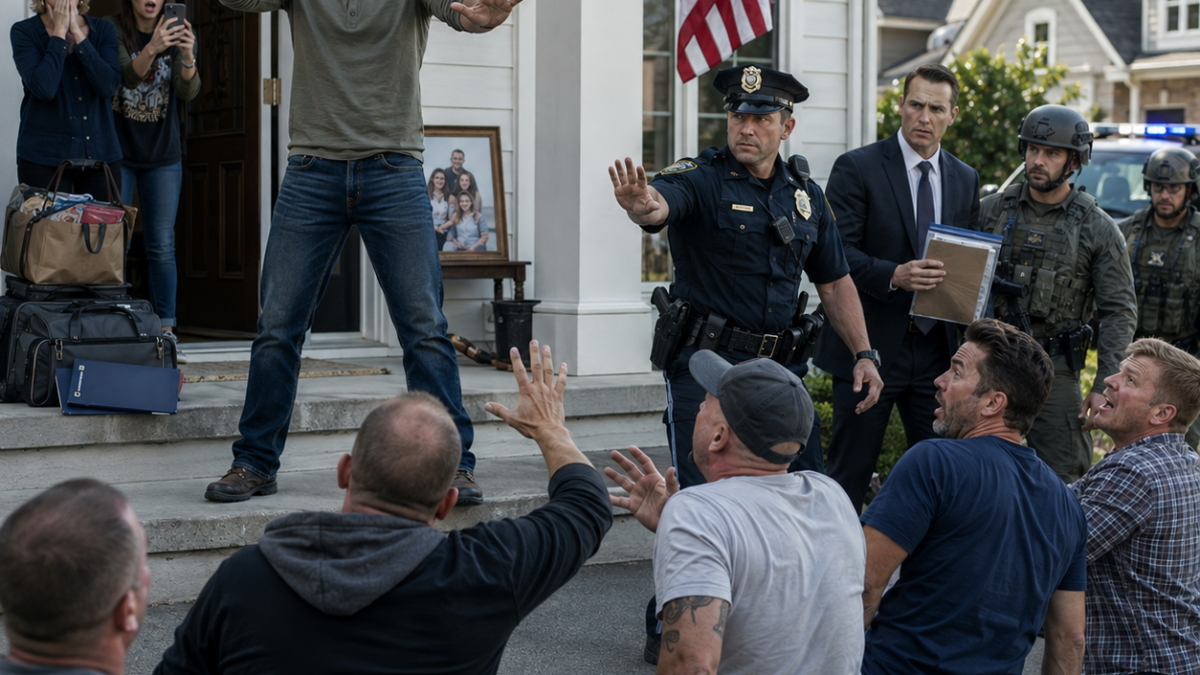
I Spent 22 Years As The Guy Black Ops Sent When There Was No One Else. My Ex-Wife’s Fiancé—A Bare-Knuckle Fighter Who’d Never Lost—Put My Son On A Ventilator And Went Out Drinking To Celebrate. His Friends Filmed It. I Watched The Video Once, Then Drove To The Bar. Four Minutes After He Stepped Into The Alley, His Hands And Legs Were Crushed. He Begged For Mercy. I Put Him In The Same Ventilator As My Son. At Midnight, His Six Friends Showed Up At My Home With Baseball Bats. A Big Mistake…
### Part 1
People in Stavely, Pennsylvania, knew me as the man who took too long cutting down trees.
That was how Mr. Halpern at the hardware store put it, anyway.
“Caleb Mercer can spend three days doing what another crew does by lunch.”
He never mentioned the second half.
Nothing I lowered ever hit a roof, crushed a fence, cracked a headstone, or even flattened one of Mrs. Pritchard’s rosebushes.
I liked ropes more than chains. Counterweights more than brute force. I could hang eighty feet above the ground in an old oak, listen to the fibers complain beneath my boots, and know almost exactly how a limb would move before I touched the saw to it.
Patience had kept me alive long before it paid my mortgage.
Almost nobody in Stavely knew that.
As far as the town was concerned, I had spent twenty-two years “in government service,” retired young, bought eleven acres at the edge of town, and started Mercer Tree & Rigging with a used bucket truck and a bad right shoulder.
That explanation satisfied most people.
My ex-wife, Dana, had known enough to stop asking questions.
We married a year after I came home for good.
She used to tell people she loved how calm I was.
Six years later, that same calm became the reason she left.
“You disappear while you’re sitting right beside me,” she said during our last serious argument.
I couldn’t tell her she was wrong.
There were rooms in my mind I kept locked because opening them never made anyone safer.
Our divorce wasn’t ugly. We divided the furniture, worked out custody without a courtroom fight, and promised our son, Eli, that whatever happened between us had nothing to do with him.
Eli was eight.
He liked baseball cards, grilled cheese cut diagonally, and organizing screws from my workshop by size even though I had told him a dozen times nobody on earth organized screws for fun.
He did.
He was careful.
That mattered later.
The first time he mentioned Trent Vale, we were driving home from his week with Dana.
“Mom has a boyfriend.”
I glanced at him.
“You like him?”
Eli watched the pine trees slide past his window.
“I don’t know.”
That answer sat wrong.
Kids usually know.
“He nice to you?”
“Mostly.”
Mostly sat even worse.
I waited.
After another mile, Eli said, “His hands are really big.”
I kept both of mine on the steering wheel.
Trent Vale was easy to look up.
You didn’t have to search hard.
In three counties, he was practically a folk hero.
Thirty-one underground bare-knuckle fights.
Thirty-one wins.
No sanctioned ring. No official league. Just warehouse floors, converted barns, cash betting, roaring crowds, and shaky videos that disappeared from the internet almost as fast as they appeared.
Trent was six-foot-four and built like somebody had stretched a heavyweight wrestler over a steel frame.
In public, he was almost painfully charming.
He bought breakfast for veterans at the diner.
Helped coach youth wrestling.
Posed for pictures.
Remembered bartenders’ birthdays.
Older guys slapped him on the shoulder and called him “Champ.”
Dana loved noise.
Trent came with his own soundtrack.
At custody exchanges, he would stand behind her with one hand around her waist and that relaxed smile on his face.
“Good to see you, Caleb.”
The first time he said it, I noticed his knuckles.
Heavy scar tissue.
Old fractures.
Hands rebuilt by impact.
I also noticed Dana looked at him before answering simple questions.
Not every time.
Just enough.
Then Eli stopped talking about his weeks there.
That was what worried me most.
Kids who hate something complain.
Kids who are afraid of something learn silence.
In April, I found the first bruise.
We were unloading mulch when Eli reached overhead and his sleeve pulled up.
There were dark marks high on his arm.
Not one.
Several.
Too evenly spaced.
I crouched beside him.
“What happened?”
He looked toward the driveway even though nobody was there.
“I fell.”
“Off what?”
“The trampoline.”
There was no trampoline at Dana’s house the last time I’d been there.
I didn’t correct him.
I took a photograph later while he was changing for bed, then another beside a ruler. I wrote down the date.
The next morning, I called Dana.
She answered after three rings.
“He fell playing,” she said too quickly. “Trent grabbed him so he wouldn’t hit the ground. You’re making something out of nothing.”
In the background, I heard Trent laugh.
Not at me.
At something else.
That somehow made it worse.
I called my family lawyer, Rebecca Sloan.
She listened without interrupting.
Then she said what I already feared.
“A bruise and your instinct aren’t enough, Caleb.”
“So I send him back?”
“If you violate the custody order without an emergency finding, Dana’s attorney will use it against you.”
“He’s eight.”
“I know.”
“You’re telling me to wait.”
“I’m telling you to build something a judge can’t dismiss.”
That night I sat at my kitchen table while Eli slept upstairs.
I opened a black notebook.
On the first page, I wrote:
APRIL 17 — RIGHT UPPER ARM.
Underneath it, I wrote exactly what Eli had said.
Then exactly what Dana had said.
No conclusions.
No anger.
Just facts.
It was an old habit.
The kind I had once depended on in places where one bad assumption could get people killed.
I started taking notes after every custody exchange.
Changes in Eli’s behavior.
Marks.
Things he repeated.
Things he refused to explain.
I hated every page.
But I kept writing.
Six weeks later, on a Friday afternoon, Dana called to say she had been ordered to stay late at work.
“Trent can keep Eli tonight,” she said. “It’s only a few hours.”
Every instinct in me said no.
The custody order said otherwise.
At 4:37 p.m., I watched my son walk through her front door carrying his little blue backpack.
Trent stood behind him, smiling.
“Don’t worry,” he called.
“I’ll take care of him.”
I drove away.
That was the last time I saw Eli standing on his own for almost three weeks.
### Part 2
The call came while I was sixty feet above a storm-damaged maple.
My phone buzzed against the chest pocket of my harness.
Once.
Again.
Then continuously.
There are sounds a man remembers because they split his life cleanly into before and after.
That vibration was one of mine.
I shut down the saw.
“Caleb?” my ground man shouted.
I was already descending.
The number belonged to Saint Anselm Hospital.
A doctor named Dr. Lena Rahman asked if I was Elijah Mercer’s father.
Nobody called him Elijah except doctors and school administrators.
My knees almost stopped working.
“Yes.”
“Your son has been admitted to pediatric intensive care.”
The rest came in controlled pieces.
Serious internal injuries.
Head trauma.
Emergency surgery.
Assisted breathing.
Critical but stable.
I remember staring at bark six inches from my face while the world became very quiet.
“How?”
“We need you here.”
I don’t remember taking off my harness.
I remember driving.
Exactly the speed limit.
That detail bothers people when I tell it.
They expect tires screaming around corners.
I couldn’t afford to crash.
Eli needed one parent who still functioned.
Dana was sitting outside the ICU when I arrived.
Her face was swollen from crying.
Her hair was still clipped up from work.
When she saw me, she stood, but she couldn’t hold my eyes.
“Caleb—”
“Where is he?”
She pointed.
I walked past her.
Eli looked smaller under hospital blankets than he ever had in his own bed.
There were tubes, monitors, tape, wires, numbers glowing green and blue.
A machine breathed beside him with a mechanical rhythm I hated immediately.
In.
Pause.
Out.
In.
Pause.
Out.
I put two fingers against his foot because it was the only place that seemed untouched.
“Hey, buddy.”
Nothing.
“I’m here.”
Dr. Rahman entered a few minutes later.
She explained the injuries carefully.
She never once used language she didn’t need.
That told me enough.
“This was not consistent with a normal accident,” she said.
I looked at Dana.
She folded in on herself.
“Tell him.”
Dana started crying harder.
“Trent said they were fooling around.”
My attention sharpened.
“They?”
“His friends were there.”
“What happened?”
“I wasn’t home.”
“What happened, Dana?”
“I don’t know everything.”
That was a lie.
Not a complete lie.
The kind people tell when the truth feels too large to carry alone.
She held out her phone.
“Someone sent me this.”
I looked at the screen.
A video.
Two minutes and eleven seconds.
I almost didn’t press play.
Then I did.
There was music in the background.
Men laughing.
Trent in a T-shirt, relaxed, grinning.
Eli stood several feet from him.
Someone behind the camera was joking about making him tougher.
Another voice said something I couldn’t make out.
Trent called it a game.
What followed wasn’t a game.
I won’t describe every second.
I don’t need to.
I watched my son try to smile because the adults around him were smiling.
I watched him try to be brave because he thought bravery meant not disappointing grown men.
I watched Trent keep going long after any decent person would have stopped.
The video ended shortly after Eli collapsed.
For several seconds I couldn’t hear anything except the ventilator behind me.
In.
Pause.
Out.
Then Dana whispered, “There’s more.”
I looked at her.
“More?”
Her phone showed photographs from the Brass Rail.
Trent and the same men.
Drinks raised.
One photo had been posted less than an hour after the video ended.
They had left Eli on a couch.
Then gone drinking.
Dana found him when she came home.
I handed her phone back.
She reached for my arm.
“Caleb, please—”
I stepped away.
“Don’t.”
“I didn’t know.”
“No. You didn’t want to know.”
Her face changed.
That landed.
Good.
I bent over Eli and kissed his forehead.
The monitor reflected faintly in the window.
I memorized everything.
The room number.
The doctor’s name.
The ventilator setting glowing on the display.
Then I walked out.
Dana followed me into the corridor.
“Where are you going?”
“To ask a question.”
“Caleb.”
I stopped.
For the first time since I had arrived, I looked directly at her.
“You’re going to stay beside our son.”
Fear moved across her face.
Not fear for Trent.
Fear of me.
She remembered, suddenly, that there had been twenty-two years of my life she had never understood.
“Don’t do something you’ll regret.”
I opened the stairwell door.
“Regret is what happens when you don’t think first.”
Outside, summer air hit my face like wet cloth.
I sat in my truck for thirty seconds.
Then I called Rebecca Sloan.
I told her about the video.
“Send it to me immediately,” she said.
“I need the original if possible. Don’t edit it. Don’t forward it through apps that strip metadata.”
I emailed it.
Then I called the Stavely Police Department and asked whether Detective Mara Finch was on duty.
She wasn’t.
I left my name and said I would be speaking with her soon.
After that, I drove to the Brass Rail.
I did not go inside.
Not yet.
I parked beneath a streetlight and walked the block once.
Front entrance.
Side lot.
Rear alley.
Delivery ramp.
Dumpster.
Back door.
And above that door, angled toward the center of the alley, a security camera.
Clean view.
No blind spot near the dumpster.
I stood beneath it and looked up.
For the first time since the hospital, something inside me settled.
Not because I had decided what I wanted to do.
Because I had decided what I needed recorded.
Then the back door opened.
Laughter spilled into the alley.
And through the gap, I saw Trent Vale at the bar, raising another glass.
### Part 3
I went in through the front.
The Brass Rail smelled like beer, fried onions, and old wood soaked in decades of spilled liquor.
There were maybe forty people inside.
By the time I crossed halfway to the bar, almost all of them had gone quiet.
Small towns don’t need announcements.
They recognize weather.
Trent turned on his stool.
His smile slipped for less than a second.
Then it came back.
“Caleb.”
Six men were around him.
I recognized several from the video.
Tyler Gann had held the phone.
Marcus Holt had been the one laughing closest to Eli.
The youngest, Evan Pryce, stared into his drink and didn’t look at me at all.
Trent stood.
He had almost six inches on me and probably fifty pounds.
He looked pleased by that arithmetic.
“Your boy okay?”
Something changed in the room.
A woman near the jukebox stopped breathing loudly enough for me to notice.
Trent’s friends watched him.
He was performing.
I walked close enough that I didn’t have to raise my voice.
“Outside.”
He laughed.
“Why?”
“Because if I say why in here, everyone gets to hear it.”
That smile tightened.
I turned and walked toward the rear exit.
For three steps, I wasn’t sure he’d follow.
Then pride did what pride always does.
Boots scraped behind me.
His friends came too.
The security camera’s tiny red indicator light was visible above the loading door.
Trent noticed it.
He actually glanced at it and smiled.
He wanted witnesses.
That was the last mistake he made that night.
“What’d you come here for?” he asked.
“An apology?”
“No.”
He stepped closer.
“You think you’re scary because you don’t talk much?”
“No.”
His friends laughed.
I kept my hands open at my sides.
“Where is my son’s backpack?”
Trent blinked.
Of all the questions he had expected, that wasn’t one.
“What?”
“Blue backpack. He had it when I dropped him off.”
“Man, I don’t know.”
“You left him unconscious and went drinking. I want to know where his things are.”
For the first time, the laughter behind him stopped.
Trent leaned close enough that I could smell bourbon.
“You want to blame somebody? Blame yourself. Kid’s soft because you raised him soft.”
Something cold moved through me.
Not rage.
Rage is hot.
This was older.
Quieter.
“You hit an eight-year-old.”
“I was teaching him.”
The alley seemed to narrow.
“You call what happened on that video teaching?”
His eyes flickered.
So he knew the video was out.
Good.
“Kids fall.”
“Not like that.”
“Go cry to a judge.”
“I already sent the video to my attorney.”
There it was.
A tiny crack.
Then I added, “And the police.”
That did it.
His shoulders changed.
He took one step forward.
I didn’t.
His right arm moved.
The camera saw the rest.
Later, lawyers would slow the footage frame by frame.
Trent threw first.
There was no argument about that.
What happened afterward lasted only a few minutes, though it felt much longer from inside my body.
Trent was an extraordinary fighter.
At what he knew.
He had spent years learning how to win in front of crowds.
There were patterns to that kind of combat. Habits. Expectations. Space you assumed would be there because rules, even illegal ones, formed boundaries.
I hadn’t learned violence that way.
I had spent years learning how to stop dangerous men long enough for other people to go home.
Those are different disciplines.
I stayed inside what the camera could understand.
I did not chase anyone.
I did not touch his friends.
I kept moving until Trent could no longer continue coming at me.
When it ended, he was on the ground, shocked more than anything else.
His six friends stood in the doorway.
Not one stepped forward.
I crouched far enough away that the camera could still see both of us.
“You left him there,” I said.
Trent stared up at me.
“You left a child who couldn’t wake up, and you went out for drinks.”
He didn’t answer.
I stood and pulled out my phone.
Tyler Gann finally found his voice.
“Who are you calling?”
“911.”
That scared them more than the fight.
I told dispatch my name.
My location.
That there had been an altercation.
That one man required medical attention.
Then I said, “There is a security camera above the rear door. Please make sure the footage is preserved.”
Trent looked at me differently after that.
Not like a beaten fighter.
Like a man realizing the evening had never been what he thought.
Police arrived within minutes.
Detective Mara Finch came with them.
She was in jeans and a Stavely Police windbreaker, hair pulled into a rushed knot.
She took one look at me.
Then Trent.
Then the camera.
“What happened?”
“He swung first,” I said.
Trent shouted something from the pavement.
Mara held up one hand.
“I’ll get to you.”
I gave her the entire sequence in order.
Hospital.
Video.
Bar.
Alley.
No adjectives.
No excuses.
When I finished, she studied me.
“You understand you’re probably spending tonight with us?”
“Yes.”
“You want a lawyer?”
“Yes.”
She nodded toward one of the officers.
I held out my hands.
By sunrise, I was in a holding room drinking coffee from a paper cup when Mara entered carrying two phones and an expression I couldn’t read.
“You picked the right alley,” she said.
“The footage is clean.”
I waited.
“Trent Vale clearly initiated.”
I said nothing.
She sat across from me.
“But that’s not why I’m here.”
She placed one of the phones on the table.
“Evan Pryce came in voluntarily at four this morning.”
The youngest man from the video.
“He gave us his passcode.”
Mara’s eyes stayed on mine.
“And Caleb, your son’s assault may be the smallest thing we found.”
### Part 4
They released me late that morning pending review.
Rebecca picked me up from the station.
She didn’t say hello.
She waited until I shut the passenger door, then slapped the dashboard with one palm.
“You could have called me before walking into that bar.”
“I did.”
“You emailed evidence. That’s not the same thing.”
“He followed me outside.”
“You knew he would.”
“Yes.”
Rebecca stared through the windshield.
“Sometimes I dislike how calm you are.”
“You and Dana have that in common.”
She turned.
“That wasn’t funny.”
“No.”
She drove me back to Saint Anselm.
Eli was still unconscious.
Dana had not moved from the chair beside him.
She looked smaller than she had the day before.
I sat on the opposite side of the bed.
For two hours, neither of us spoke.
Finally she whispered, “How bad is Trent hurt?”
I looked at her.
She flinched.
“I didn’t mean—”
“You did.”
“Caleb, I don’t love him anymore.”
“That stopped mattering last night.”
Her face crumpled.
“I should’ve seen it.”
“Yes.”
“I swear to you, I never saw him touch Eli.”
“You saw everything before that.”
She stared at me.
I kept my voice low because our son was between us.
“You saw Eli stop talking. You saw him stiffen when Trent came into rooms. You saw the bruise. I called you about it.”
“I believed the explanation.”
“You chose the explanation.”
Tears slid down her cheeks.
I didn’t enjoy it.
That surprised me.
For months, maybe years, I had imagined that if Dana ever realized she had made a catastrophic mistake, I would feel vindicated.
Instead, I felt tired.
She reached for my hand across the blanket.
I moved mine away.
“Caleb—”
“We are not doing that.”
“I just need you to know I’m sorry.”
“I know you’re sorry.”
“Can you forgive me?”
The ventilator breathed.
In.
Pause.
Out.
I looked at Eli.
“No.”
She covered her face.
I didn’t soften it.
Forgiveness is not a first-aid kit.
It does not belong to the person who arrives after the damage asking to feel cleaner.
An hour later, Detective Finch called.
She wanted to see me.
I met her downstairs in a family consultation room.
A man I hadn’t seen in nearly twenty years was waiting inside.
Older.
More gray.
Same left-leg hitch when he stood.
“Caleb.”
I stopped in the doorway.
“Leon Avery.”
Mara looked between us.
“You know each other.”
Leon gave a humorless smile.
“He once carried me a very long way.”
I closed the door.
Leon worked federal organized crime now.
He didn’t waste time.
Evan Pryce’s phone had contained months of group messages connected to the underground fights.
Betting.
Fixed outcomes.
Cash transfers.
Police payoffs in another county.
Names Leon’s task force had already been tracking.
At the center was Silas Crowe, the promoter who had turned Trent’s undefeated reputation into a business.
“He’s been on my board fourteen months,” Leon said.
“You couldn’t reach him?”
“Not cleanly.”
“And now?”
“Now one scared twenty-three-year-old handed us his social circle.”
Mara slid a photograph across the table.
Silas Crowe.
Fifty-ish.
Neat gray beard.
Expensive sweater.
A face so ordinary he could have sold insurance.
“Evan says Crowe is panicking,” she said.
“The scheduled title fight is dead. A lot of money moved based on Vale appearing.”
“How much?”
“Enough that Crowe has people above him asking questions.”
Leon leaned back.
“Your alley footage is spreading.”
“That doesn’t concern me.”
“It concerns them.”
I understood immediately.
Humiliation travels differently than injury.
Trent losing would have been bad for Silas.
Trent being dismantled on camera after a child-abuse video surfaced was ruinous.
A brand collapse.
“You think Crowe blames me.”
“I know he does.”
Leon tapped a second sheet.
One of Trent’s friends had sent a message that morning.
Not to Evan.
To Silas.
The response had been short.
Handle it.
I pushed the paper back.
“That’s vague.”
“Deliberately,” Leon said.
“But there’s more.”
Mara studied me.
“Your house has been watched since yesterday.”
That was new.
“By who?”
“We don’t know yet.”
I thought about my gravel road.
Eleven acres.
Tree line on three sides.
Detached barn.
My mother, Elaine, stayed with me several nights a week because her apartment building was under renovation.
I stood.
“Where’s my mother right now?”
“At home, I assume,” Mara said.
I was already dialing.
Mom answered on the second ring.
“Caleb?”
“Pack a bag.”
“What happened?”
“Go to Aunt June’s in Harrisburg.”
“Why?”
“I’ll explain later.”
There was a pause.
My mother had spent twenty-two years learning when not to ask a second question.
“All right.”
“Leave now.”
When the call ended, Leon said, “We can put a unit outside your property.”
“No.”
Mara frowned.
“That wasn’t a suggestion.”
“A marked unit scares them away.”
“That’s the point.”
“No. It delays them.”
Her face hardened.
“And what exactly are you planning?”
“Nothing illegal.”
“That’s not an answer.”
I looked at Leon.
He understood before she did.
“Caleb.”
“If they come onto my land armed, I want them recorded doing it.”
Mara stood.
“I am not authorizing you to bait anyone.”
“I won’t.”
“Then what are you doing?”
I thought of my ropes.
My trees.
My battery cameras.
The floodlights I used on storm jobs.
“My regular work.”
That afternoon, I drove home.
A gray pickup passed me two miles from my property.
Ten minutes later, it passed again going the other direction.
Same driver.
Same passenger.
Neither looked at me.
I pulled into my driveway.
On the gravel beside the mailbox was a fresh cigarette butt.
I didn’t smoke.
Neither did anyone who belonged there.
I crouched beside it but didn’t touch it.
Then I looked up into the canopy surrounding my house.
For twenty-two years, other people had chosen the ground.
This time, the ground belonged to me.
### Part 5
I spent the next two days trimming trees.
That was what anyone watching from the county road would have seen.
Caleb Mercer climbing.
Caleb Mercer running rope.
Caleb Mercer hauling equipment between the barn and the woods.
Nothing unusual.
That was important.
The farmhouse sat in a shallow bowl surrounded by oak, maple, and pine. My driveway came through the south side. The barn stood thirty yards east of the house. Eli’s half-built treehouse was in the big white oak west of the porch.
I had promised we would finish it in summer.
Every time I looked at the unfinished platform, something inside my chest tightened.
I worked anyway.
I moved four battery cameras into positions no casual observer would notice.
Not hidden to trick police.
Hidden from men stupid enough to think cutting power meant blindness.
I tested the emergency lights I used on nighttime storm removals.
I shifted equipment.
Cleared walking paths.
Rolled unused timber away from the driveway.
Everything I did had a normal purpose.
Almost.
Mara visited at dusk on Wednesday.
She walked the property with her hands on her hips.
“You know I’m trying very hard not to hate this.”
“Nothing here is dangerous unless somebody trespasses.”
“That sentence doesn’t comfort me.”
I pointed toward the porch.
“My phone will be connected to emergency dispatch the moment anyone arrives.”
“You call before engaging.”
“Yes.”
“You do not pursue anyone leaving.”
“Yes.”
“You do not turn this into whatever your old job taught you.”
I met her eyes.
“My old job taught me to keep people alive.”
“Sometimes I’ve noticed former soldiers define that creatively.”
I almost smiled.
“Then watch closely.”
She stopped.
“You really think they’re coming?”
“Yes.”
“Why?”
“Because they’re embarrassed.”
“That simple?”
“Embarrassed men are predictable. Paid embarrassed men are worse.”
At Saint Anselm that evening, Dr. Rahman told me Eli’s swelling had begun to improve.
It was the first good news I’d heard.
“He’s still critically ill,” she warned.
“But we’re seeing things we wanted to see.”
Dana cried.
I didn’t.
Not until I went into the restroom, locked the stall door, and pressed my forehead against the metal divider.
I stayed there maybe thirty seconds.
Then I washed my face and went back to his room.
I told Eli about the treehouse.
About the new pulley system.
About the squirrel that had stolen half a sandwich from my tool bag.
I told him his baseball cards were exactly where he had left them.
At 9:14 p.m., my phone buzzed.
A text from my neighbor.
Gray truck again.
I drove home.
The truck was gone.
By eleven, clouds covered the moon.
At 11:47, I saw headlights slow at the far end of my road.
Then disappear.
I called Mara.
“They’re close.”
“How do you know?”
“I know.”
“I’m dispatching units.”
“Hold them two minutes away.”
“Caleb—”
“Two minutes. If nothing happens, nothing happens.”
She swore.
Then agreed.
At 12:04 a.m., two vehicles turned onto my driveway with their headlights off.
I called 911.
Gave my address.
Told the operator there were multiple unknown men entering my property.
I set the phone on the porch where the microphone would catch the yard.
Six men got out.
I recognized every one.
Tyler Gann.
Marcus Holt.
Three others from Trent’s circle.
And a sixth man I had seen around their gym.
Several carried aluminum bats.
One held a fuel can.
That changed everything.
I said loudly, “You are being recorded. Leave the property.”
Tyler’s answer came from the dark.
“Come out, old man.”
I stood behind the corner of the barn.
The house lights suddenly died.
They had cut power at the exterior box.
One of them laughed.
Another shouted my name.
Then Marcus said something that made my vision narrow.
“Maybe we burn the kid’s treehouse first.”
I heard the emergency operator through the porch phone asking if I was safe.
I didn’t answer.
Not yet.
The men spread out.
Exactly what I had expected.
Crowds feel brave.
Individuals reconsider.
I triggered the work lights.
White light exploded across the lower yard.
Three men threw up their arms.
Tyler stumbled over stacked timber beside the barn.
Marcus swore and swung his bat at a shadow.
I moved behind him, took the bat away, and sent it skidding across the gravel.
No flourish.
No speech.
He went down hard enough to stop advancing.
The others tried to regroup.
That failed.
They didn’t know the property.
They didn’t know the grade changed behind the shed.
They didn’t know where the drainage ditch ran.
They didn’t know which shadows were empty and which contained me.
Most importantly, they couldn’t communicate.
I could.
The open line on the porch heard everything.
“Drop the bat.”
A curse.
“Drop it.”
Metal struck gravel.
Another man rushed me.
Seconds later, he wasn’t rushing anybody.
One tried to run for the truck.
I let him.
Then he turned back after Tyler screamed for help.
That choice cost him.
Eleven minutes after they entered my property, the yard went quiet.
Six men were alive.
Six men were on the ground.
Nobody had been chased beyond the property.
Nobody had been struck after the threat ended.
When police lights finally washed through the trees, I stepped into the open with empty hands.
Mara exited the first cruiser.
She stared at the scene.
Then at me.
“You have got to be kidding.”
Six men sat restrained near the barn.
Their bats were stacked several yards away.
The fuel can sat untouched where its owner had dropped it.
I pointed toward the tree line.
“Four cameras. Battery powered.”
She closed her eyes.
“Of course there are.”
Then one of the officers shouted from near the trucks.
“Detective!”
Mara hurried over.
He held up a phone sealed in an evidence bag.
The screen was still lit.
A message had arrived less than three minutes earlier.
From Silas Crowe.
Mara read it once.
Then again.
She looked at me.
“Well,” she said quietly.
“I think Mr. Crowe just bought himself a federal case.”
### Part 6
By sunrise, my property looked like a crime-scene training exercise.
Evidence markers.
Photographers.
State police.
Federal vehicles.
Two detectives arguing over who had jurisdiction over which phone.
I made coffee.
Nobody wanted any.
Leon Avery arrived just before six wearing the same suit I had seen him in two days earlier.
He surveyed the yard.
“Six?”
“Six.”
“Anybody critical?”
“No.”
He nodded.
“Good.”
That was all he said about it.
Then he pulled on gloves and joined Mara beside the seized phones.
Silas Crowe had been careful for years.
The men he hired were not.
Within hours, investigators found photographs of cash on a gym desk.
Messages discussing what my “lesson” was supposed to look like.
Instructions to make the attack appear personal.
More important, buried underneath that were the same financial trails Evan Pryce had handed over.
Betting accounts.
Fake fight schedules.
Payments to people who were supposed to be neutral.
One message thread reached back years.
Leon wouldn’t tell me exactly what it contained.
His face told me it was worse than gambling.
At 8:20 that morning, nine warrants went out.
Silas Crowe was arrested at a lake house before breakfast.
He had packed luggage in his SUV.
Apparently he had been planning to cross into Canada.
The news stations showed his arrest by lunch.
Not the dignified businessman from the fight circuit.
Not the polished promoter posing beside Trent.
A tired man in sleep clothes with officers walking him down his own dock.
Trent was arrested at the hospital.
His room was only two corridors away from Eli’s.
That detail bothered me so much that I asked the nurses to move one of them.
The hospital moved Trent.
He was charged first over what happened to Eli, then later in connection with the wider criminal investigation.
Dana became a prosecution witness.
She gave detectives access to her house.
Her messages.
Financial records.
Everything Trent had left behind.
People congratulated her for cooperating.
I didn’t.
Cooperation after catastrophe isn’t courage.
It’s the minimum.
Three days after the farmhouse attack, I sat beside Eli when his fingers moved.
At first I thought I imagined it.
Then they moved again.
“Eli?”
His eyelids fluttered.
I stood so fast the chair hit the wall.
A nurse rushed in.
Doctors followed.
Dana arrived twenty minutes later and stood in the doorway crying silently.
When Eli finally opened his eyes, he seemed confused by everything.
The lights.
The tubes.
The voices.
Then he saw me.
His brow tightened.
I leaned close.
“You don’t have to do anything.”
His eyes filled with tears.
“I’ve got you.”
That was all.
I stayed there while they evaluated him.
Hours later, Dr. Rahman came out smiling for the first time since we had met.
“I’m cautiously optimistic.”
It was the nicest sentence anyone had ever said to me.
Recovery wasn’t a movie.
Eli didn’t sit up and ask for pancakes.
He slept.
Woke.
Got frustrated.
Forgot words.
Remembered them.
Hated physical therapy.
Then tried harder because he hated being helped even more.
The first time he stood between parallel bars, he shook so badly I had to look away for half a second.
“Dad.”
I looked back.
“Yeah?”
“Watch.”
So I watched.
Every inch.
Dana came every day.
Eli was polite with her.
He let her sit nearby.
Sometimes he held her hand.
Children love before they understand what love costs.
I never interfered.
But outside his room, Dana kept trying to talk about us.
“Maybe when this is over—”
“No.”
She swallowed.
“I wasn’t asking to get back together.”
“You were about to ask for something.”
“I wanted to know if we’ll ever be okay.”
“We’ll be Eli’s parents.”
Her eyes filled.
“That’s it?”
“Yes.”
“I made one terrible mistake.”
“No.”
She stared at me.
I kept my voice quiet.
“You made fifty small choices before the terrible one. You ignored how he changed. You defended Trent. You told me I was overreacting. You let a man our son feared become more important than our son’s silence.”
“I didn’t know he was afraid.”
“You didn’t ask hard enough.”
She looked away.
That conversation ended something.
Not angrily.
Permanently.
Two weeks after Eli woke, Rebecca filed for primary custody.
Dana didn’t contest it.
She accepted supervised visitation while the court reviewed everything.
I expected to feel victorious.
I felt nothing like victory.
Winning custody because your child nearly died is not winning.
It’s paperwork after failure.
The wider case moved quickly.
Evan Pryce testified.
The six men from my farmhouse started negotiating plea deals.
Trent’s undefeated record became useless overnight.
The same people who once crowded around him at the diner now pretended they had never liked him.
His photograph disappeared from the wall.
The youth wrestling program removed his name from its website.
Even the Brass Rail took down a framed picture from one of his old fights.
Then Leon called me into the federal building.
He closed the door.
“The fight circuit isn’t just shutting down.”
“What does that mean?”
“It means Crowe kept records.”
“Of what?”
“Everybody.”
He slid a thick folder across the table.
School officials.
Business owners.
A deputy.
Promoters in other counties.
Gamblers with political connections.
And one old case involving a fighter who disappeared years earlier after a warehouse event.
I stared at the folder.
“All because Evan gave you his phone?”
Leon shook his head.
“All because they thought nobody would ever make them answer for anything.”
Then he leaned back.
“Your son didn’t just survive something terrible, Caleb.”
He tapped the folder.
“He accidentally exposed an entire machine.”
### Part 7
The trials began in the fall.
By then, Eli was walking without assistance.
Slowly.
Sometimes with a limp when he was tired.
But walking.
He had gone back to sorting baseball cards.
That mattered more to me than any courtroom.
The first time I found him at my kitchen table arranging cards by team, I stood in the doorway too long.
He noticed.
“What?”
“Nothing.”
“You’re being weird.”
“I missed you being annoying.”
He rolled his eyes.
That was another milestone.
Trent Vale never made it to a full trial.
His attorney requested jury questionnaires.
The answers apparently changed his mind.
Too many people had seen the video.
Too many had children.
Too many had watched him raising a glass at the Brass Rail afterward.
He pleaded guilty to serious charges involving Eli and additional counts tied to Silas Crowe’s operation.
At sentencing, Dana sat three rows behind me.
I didn’t look at her.
Trent looked smaller in a courtroom than he had in the alley.
No crowd.
No music.
No friends shouting his name.
Just a suit that didn’t fit quite right and a judge reading facts into the record.
He received eighteen years.
When the judge asked whether I wanted to speak, I stood.
I had written nothing.
“My son spent weeks learning how to trust rooms again,” I said. “He learned that adults can laugh while something wrong is happening. He learned that somebody can call cruelty a lesson.”
Trent stared at the table.
“I don’t care whether Mr. Vale ever understands what he did to me. This isn’t about me.”
I looked at him.
“He taught my son that being brave meant staying quiet while adults hurt him.”
Then I looked at the judge.
“My job now is teaching him the opposite.”
I sat down.
That was all.
Silas Crowe fought every charge.
He had money.
Lawyers.
Experts.
A defense strategy built around pretending everybody else had misunderstood him for years.
It failed.
The farmhouse messages hurt him.
The betting records hurt worse.
The conspiracy evidence destroyed him.
When Evan testified, Silas stared at him like he wanted to burn a hole through the witness stand.
Evan didn’t look away.
He was the one I struggled with.
He had filmed that night.
He had laughed.
He had participated by standing there and doing nothing.
But he was also the one who walked into the police station before anyone forced him.
He gave them his phone.
His passcode.
His testimony.
Without him, much of Crowe’s organization might have survived.
A reporter caught me outside court.
“Mr. Mercer, do you forgive Evan Pryce?”
I disliked the question immediately.
“No.”
She seemed surprised.
“Even after his cooperation?”
“Forgiveness and telling the truth are different things.”
“What do you think of him?”
I considered it.
“He’s the first one in that room who eventually admitted what it was.”
That became the quote newspapers used.
Silas Crowe received twenty-four years in federal prison.
Several others received shorter sentences.
The underground circuit collapsed almost immediately.
Warehouses stopped hosting events.
Burner streams disappeared.
Cash bettors discovered that anonymous usernames were not as anonymous as they had believed.
The newspaper spent weeks publishing names.
Two school board members resigned.
A deputy was charged.
People who had called the fights harmless entertainment suddenly became experts in how terrible the whole thing had always been.
I went back to cutting trees.
That confused reporters.
One drove out to a job site and waited until I came down from a hickory.
“Mr. Mercer, why won’t you tell your side?”
“My side is in the evidence.”
“People want to know who you really are.”
“I cut trees.”
“You know that’s not what I mean.”
I unclipped my harness.
“No, I know exactly what you mean.”
“What did you do before this?”
“Government work.”
“For twenty-two years?”
“Yes.”
“What kind?”
I looked up at the tree.
“The kind I don’t do anymore.”
He gave up.
Good.
At home, Eli and I finished the treehouse.
Not a normal treehouse.
I may have overbuilt it.
Rebecca came by one Sunday and stared upward.
“This thing could survive artillery.”
“It can survive Pennsylvania weather.”
“That’s not what I said.”
Eli leaned over the railing sixty feet up.
“Dad says every anchor needs backup.”
Rebecca looked at me.
“Of course he does.”
Dana’s supervised visits continued.
She followed every rule.
Never complained.
Never asked me for another chance.
That was better.
One evening after she dropped Eli off, she stood beside her car.
“I’m selling the house.”
I nodded.
“Too many memories.”
“I understand.”
She looked toward the porch where Eli was removing his shoes.
“I don’t expect you to forgive me anymore.”
I said nothing.
“I think I kept asking because I wanted you to tell me I wasn’t the person I was afraid I’d become.”
I finally looked at her.
“That’s something you have to decide by what you do next.”
She nodded.
“Do you hate me?”
“No.”
That surprised her.
I meant it.
Hate requires maintenance.
I had other work.
“I just don’t trust you the way I used to.”
Her eyes watered.
“I know.”
“And I won’t pretend we can go back.”
“I know that too.”
For the first time since the hospital, she didn’t ask for anything else.
She got in her car and left.
Later that night, Eli climbed into the treehouse carrying two sandwiches, a flashlight, and his sleeping bag.
We watched the woods go black around us.
Then, after a long silence, he asked the question I had known was coming.
“Dad?”
“Yeah?”
“Are they ever coming back?”
### Part 8
I looked out over the property.
The barn light glowed below us.
Crickets moved through the weeds.
Somewhere beyond the tree line, a truck rolled along the county road and faded into the distance.
For months, darkness had meant something different to Eli.
At the hospital, he wanted lights on constantly.
At home, he slept with the hallway light, bathroom light, and bedside lamp glowing.
Then one night he switched off the lamp himself.
A week later, the hallway.
Now we were sixty feet above the ground with only a small camping lantern between us.
“Are who coming back?” I asked.
He knew what I was doing.
“The men.”
“No.”
“You sure?”
“Yes.”
“How?”
Because one was serving eighteen years.
Because another was serving twenty-four.
Because six more had taken plea deals.
Because a federal task force had torn through what remained of their organization.
Because half the people who once protected them now needed lawyers.
But Eli was nine.
He didn’t need the architecture of consequences.
“They can’t get to you anymore.”
He studied my face.
“You promise?”
“Yes.”
He took another bite of his sandwich.
Then he asked, “Were you scared?”
That one took longer.
“Yes.”
His eyebrows lifted.
I don’t think he had expected that.
“When?”
“When the hospital called.”
“Not when those men came here?”
“No.”
“Why?”
Because I knew what to do with men in the dark.
I had spent too much of my life knowing.
But a hospital room?
A machine breathing for my son?
No skill I possessed could command that.
“The men were a problem I understood,” I said.
“You were something I loved.”
He thought about that.
Then nodded like I had answered correctly.
Months passed.
Physical therapy became less frequent.
Follow-up appointments became boring.
Dr. Rahman finally wrote the words I wanted most in Eli’s chart:
Excellent recovery.
She smiled at me.
“Boring is good.”
“I’ve always liked boring.”
“Really?”
“No.”
She laughed.
Dana eventually moved twenty minutes away.
Her visits remained supervised for a long time, then gradually expanded when Eli’s therapist and the court agreed.
I never fought against what was healthy for him.
That mattered.
Punishing Dana was not my job.
Protecting Eli was.
Those goals weren’t always the same.
She rebuilt their relationship slowly.
Eli forgave her in the easy, complicated way children sometimes do.
I didn’t.
Not because I woke up angry every morning.
I didn’t.
Most days I barely thought about the question.
Forgiveness simply wasn’t necessary for us to function.
We could speak about school schedules.
Doctor appointments.
Baseball.
Birthdays.
We could stand together at a parent-teacher conference without reopening the past.
But when she once said, nearly two years later, “Sometimes I miss what we were,” I answered honestly.
“So do I.”
Hope flashed in her face.
Then I finished.
“But missing something isn’t a reason to rebuild it.”
She looked down.
“I understand.”
And she did.
That was the closest thing we ever had to closure.
I never married again just to prove I had moved on.
I dated eventually.
Nothing dramatic.
A woman named Claire who taught chemistry at the high school and didn’t treat silence like a puzzle she needed to solve.
The first time she met Eli, she spent twenty minutes letting him explain why some baseball cards were objectively better even when the players were worse.
I liked her after that.
We took things slowly.
I had learned enough about rushing.
My old life stayed mostly buried.
Leon called occasionally.
Sometimes for lunch.
Sometimes to tell me another person from Crowe’s network had been convicted.
The disappearance case from years earlier reopened too.
I never asked for details Eli didn’t need connected to his story.
One afternoon, Leon sat on my porch drinking coffee and looked up at the treehouse.
“You built a fortress.”
“Eli designed the railing.”
“That doesn’t answer me.”
“It doesn’t have to.”
He smiled.
“You haven’t changed.”
“Yes, I have.”
He looked over.
“How?”
I watched Eli in the yard teaching Claire’s dog to fetch a baseball.
“For twenty-two years, I was the call people made when everything else had already failed.”
Leon went quiet.
I continued.
“I don’t want to be anybody’s last call anymore.”
That evening, Eli and I climbed into the treehouse again.
The flag he designed snapped lightly above the roof.
It was a ridiculous flag.
Blue background.
White oak tree.
A red rope around the trunk.
He was proud of it.
So I loved it.
Below us, the farmhouse windows glowed.
Ordinary.
Safe.
Alive.
Eli stretched out in his sleeping bag.
“Dad?”
“What?”
“You still got the rope?”
That had become our phrase.
On tree jobs, when he was younger, whenever he climbed the training wall in the barn and looked down nervously, I told him the same thing.
I’ve got the rope.
You just climb.
I reached over and tapped his shoulder.
“Always.”
He closed his eyes.
A few minutes later, his breathing slowed.
I sat beside him listening to the woods.
People still ask what happened after I walked into that alley.
They want four dramatic minutes.
They want the undefeated fighter losing.
They want six men coming to my property and leaving in police vehicles.
They want Silas Crowe dragged out of his lake house and his whole empire collapsing.
But none of that is the part I remember most.
I remember an April afternoon.
My son’s sleeve sliding up.
A bruise on his arm.
The instinct telling me something was wrong.
And the notebook I opened instead of shouting.
I remember the camera above the Brass Rail’s alley.
The 911 call.
The evidence.
The details that existed before anyone could rewrite the story.
Because men like Trent and Silas always believed power meant being the strongest person in the room.
They were wrong.
Power is making sure the truth survives the room.
Trent had crowds.
Silas had money.
Dana had denial.
I had records.
And eventually, Eli had his voice.
A year after the attack, a kid at school asked him if he was the boy from “that video.”
Eli came home angry.
“What did you say?” I asked.
He kicked off his sneakers.
“I said I’m the kid from the treehouse.”
I stopped.
He shrugged.
“That’s more interesting.”
I laughed so suddenly it startled both of us.
Then he smiled.
That was when I knew we had made it.
Not back.
You never go back.
Forward.
The men who hurt him became court numbers, prison numbers, old newspaper stories.
Dana became someone who learned too late that love without attention can still fail the people it claims to protect.
I became what I should have been all along.
Not a weapon.
Not a last call.
Just Eli’s father.
And on quiet nights, when wind moves through the white oak and the ropes creak gently beneath the treehouse floor, I can hear my son sleeping overhead.
No machines.
No alarms.
No fluorescent hospital lights.
Just breathing.
His own breathing.
That sound is enough.
THE END!
Disclaimer: Our stories are inspired by real-life events but are carefully rewritten for entertainment. Any resemblance to actual people or situations is purely coincidental.








