Rich Bully Kidnapped My Little Daughter—Her Billionaire Ranger Dad Stormed Mansion And Shot All
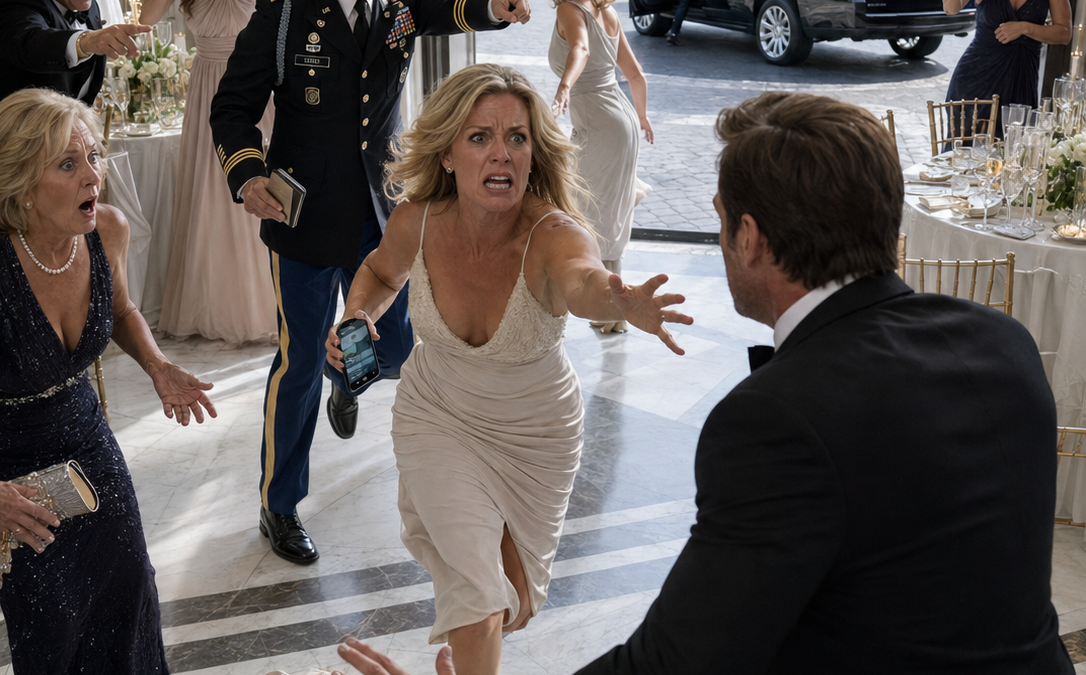
I Heard My Daughter Scream And The Ballroom Went Dead Silent. Hunter Had Her Wrist Like She Was Property And Blake Did Not Move. I Ran And He Stepped In Front Of Me Like “Calm Down” Was An Answer. The Black SUV Vanished And I Was Left Staring At An Empty Driveway. Then A Message Hit Us With “24 Hours” And My Heart Turned To Ice. Then Adrian Showed Up In His Ranger Uniform And Said “This Was Planned.” Then He Dropped The Bombshell “Blake Paid Hunter.” I Realized My Husband Did Not Just Betray Me. He Sold Our Child’s Safety For Control. “He Was Never Going To Save Her.”
### Part 1
My daughter’s scream did not sound like a child’s scream.
It ripped through the Langford charity ballroom with a raw, broken edge, sharp enough to cut through the string quartet, the champagne laughter, the soft clink of forks against gold-rimmed plates. One second, I was standing beside the dessert table pretending to understand Blake’s conversation about commercial zoning. The next, every hair on my arms stood up.
I turned and saw Hunter Langford dragging my five-year-old daughter toward the side doors.
His hand was wrapped around Emily’s tiny wrist. Her silver party shoe scraped across the marble floor, leaving a pale line through spilled champagne. The chandelier above them threw light onto her face, and I saw the terror there before I heard myself scream.
“Let her go!”
For half a second, nobody moved.
That was the thing about rich people at parties. They loved pretending ugly things were misunderstandings. A drunk uncle. A dramatic child. A private joke. They waited for someone important to laugh so they would know how to react.
Hunter did not laugh.
He looked over his shoulder at me with that lazy, bored smile he always wore, the one that made him look like rules were something poor people had invented to feel safe. Then he shoved through the side doors.
I ran.
My heels slipped on the polished floor. A waiter stumbled backward with a tray of oysters. Someone gasped my name, but nobody grabbed Hunter. Nobody even tried.
Blake moved then, finally.
Not toward Hunter.
Toward me.
He stepped into my path and lifted both hands like I was the problem. “Claire, calm down.”
I hit his chest with both palms. “Move.”
“Hunter’s drunk. He’s being stupid.”
“My child is outside!”
I shoved past him so hard he stumbled into the oyster waiter, and the tray went down with a wet metallic crash. I burst through the side doors into the valet drive.
Cold November air slapped me in the face. The smell of rain, exhaust, and wet pavement filled my lungs.
A black SUV was already rolling away.
Emily’s little hands slapped against the tinted rear window.
Once.
Twice.
Then the SUV turned past the iron hedges and disappeared down the private road.
For a moment, the whole world went silent.
No music. No voices. Just the soft hiss of tires on damp asphalt and the blood pounding in my ears.
Blake came out behind me, breathing hard. “We’ll call the police.”
We will.
Not, “I’m calling now.”
Not, “Give me your phone.”
We will.
I stared at him, and something cold crawled up my spine. “You know him well enough to say he’s just being stupid?”
Blake blinked. His face was smooth, handsome, controlled. Too controlled. “Everyone knows Hunter.”
“No,” I said. “You know him.”
He looked past me toward the road, not meeting my eyes. “He’s a spoiled idiot, Claire. He wouldn’t hurt her.”
That word stuck.
Spoiled.
Not dangerous. Not criminal. Not insane.
Spoiled.
Like a man dragging my daughter into a black SUV was a rich boy breaking a vase.
I called 911 with fingers that could barely press the screen. My voice came out thin and strange as I described the SUV, Hunter’s height, his dark jacket, Emily’s white dress with pearl buttons down the back. While I spoke, Blake kept pacing in small, tight lines beside me.
Inside, the ballroom had gone quiet except for whispers. Phones were out. Cameras glowed in the doorway. Guests watched me like I was suddenly part of the evening’s entertainment.
Then another SUV pulled into the drive.
Not black.
Dark green, matte, unmarked.
The passenger door opened, and Adrien Reed stepped out.
He was not supposed to be there. He had been out of state for weeks, working some private security contract he refused to explain over the phone. Former Army Ranger, billionaire defense-tech heir, and the only man I had ever known who could make a room feel safer just by entering it.
Also Emily’s father.
Not by paperwork. Not anymore.
By blood, by love, by the way she ran to him whenever she heard his boots on our porch.
Adrien took one look at my face and did not ask if I was overreacting.
“What happened?”
Before I could answer, Blake said, “There was a misunderstanding.”
Adrien’s eyes moved to him.
Slowly.
“A misunderstanding?”
I pushed between them. “Hunter took Emily. He dragged her out and drove off.”
Adrien did not look shocked. That scared me. His jaw tightened, but his eyes sharpened like he had just found the missing piece to a puzzle he already hated.
He turned to the officers arriving behind him. “Lock every road within ten miles. Pull traffic cameras. Call Langford estate security. Now.”
Blake folded his arms. “This is escalating unnecessarily.”
Adrien stepped closer to him. He did not raise his voice. He did not need to.
“You said you know Hunter.”
Blake’s mouth tightened. “Business acquaintance.”
“Then you know he doesn’t joke with things he can’t control.”
A siren wailed somewhere beyond the gate. Red and blue light flashed across the mansion windows, turning everyone’s faces into masks.
I looked at Blake. His skin had gone pale under his perfect tan.
That was when I realized my daughter had not just been taken.
Someone beside me had expected it.
Adrien’s phone buzzed. He glanced down, and whatever he saw made his expression go completely still.
He turned the screen toward me.
A message from an unknown number.
You have 24 hours. No cops, or she stays with us.
My knees weakened, but Adrien caught my elbow before I fell. Then a second message appeared, shorter than the first.
Ask Blake what he bought for $100,000.
I looked up at Blake, and he stopped breathing.
### Part 2
The police separated everyone, but rich people did not like being separated.
They stood in glittering clusters under the portico, smelling like perfume, wool coats, and panic disguised as irritation. Women clutched designer purses to their chests. Men argued quietly into phones. The valet boys hovered by the fountain, wide-eyed and pale.
I stood under a heat lamp that clicked every few seconds, holding my phone so tightly my knuckles hurt.
Blake kept saying he did not know what the message meant.
He said it to the first officer. He said it to Adrien. He said it to me three different ways, each version smoother than the last.
“It was an investment.”
“It was a short-term loan.”
“Hunter’s father had a deal coming through.”
I watched his mouth move and remembered every time he had told me I worried too much.
Hunter’s comments about Emily were “just awkward compliments.”
His habit of appearing at the same restaurants we visited was “coincidence.”
His hand lingering too long on my daughter’s shoulder at the museum fundraiser was “your trauma talking, Claire.”
Now my trauma had a black SUV and a ransom text.
Adrien pulled me aside near the stone fountain. Water splashed behind us in soft, fake serenity. “I need you to think carefully.”
“I am thinking.”
“I know.” His voice softened for half a second. “Has Blake had access to Emily’s trust documents?”
My stomach turned.
Emily had a trust from my grandmother, small compared with Adrien’s family money, but large enough to make greedy people creative. After my mother died, the trust became mine to manage until Emily turned eighteen. Blake had offered to help organize the paperwork after our engagement.
“He said he was simplifying things,” I whispered.
Adrien’s eyes darkened.
Before he could answer, an officer approached with a tablet. “We have traffic footage. The SUV switched plates two blocks east, then headed north.”
“Toward the Langford estate?” Adrien asked.
The officer hesitated. “Yes.”
Blake laughed once. It sounded wrong. Too dry. “That doesn’t prove anything. Hunter lives north.”
Adrien turned toward him. “You’re defending him very hard for a business acquaintance.”
“I’m defending common sense,” Blake snapped. “This is Hunter Langford, not some back-alley criminal.”
“No,” I said quietly. “He’s worse. He thinks consequences are optional.”
Blake looked at me then. Really looked. Not concerned. Not frightened.
Annoyed.
The realization landed in my chest like a stone.
Adrien’s phone rang. He answered, listened, and moved away with the officer. I could hear only pieces.
“Plate switch confirmed.”
“Security camera blind spots.”
“Financial transfer flagged.”
Blake stepped closer to me while Adrien’s back was turned. His voice dropped.
“Claire, you need to stop letting him drive this.”
My eyes stayed on the wet road where Emily had disappeared. “Our daughter is gone.”
“Our daughter?” His tone sharpened, then flattened. “You always do that when Adrien is around.”
I turned slowly. “Do what?”
“Forget who stayed. Forget who helped raise her while he played soldier.”
The heat lamp clicked above us. Somewhere inside, a woman began crying. I smelled rain again, heavier now.
“Blake,” I said, “this is not the night to be jealous.”
“I’m not jealous. I’m realistic.”
That word had always been his favorite weapon. Realistic meant accept less. Realistic meant don’t cause trouble. Realistic meant smile through discomfort because powerful men disliked consequences.
Adrien came back before I could respond.
“They found something,” he said.
He held out his phone. A short video filled the screen.
Emily sat on a velvet couch in a dim room. A chandelier glowed behind her, not bright enough to warm the shadows. She wore the same white dress. Her hair bow was crooked. Her face was dry, which scared me more than tears would have.
She looked slightly off camera and spoke in a small, careful voice.
“Mommy, I’m okay. Please do what Uncle Hunter says.”
I stopped breathing.
Uncle Hunter.
We had never called him that.
Blake made a sound beside me, barely audible, but I heard it. Not surprise.
Recognition.
Adrien replayed the video, freezing the frame behind Emily’s shoulder. The chandelier was shaped like a ring of glass antlers. I had seen it before in a glossy magazine spread about the Langford family’s renovated country estate.
Adrien pointed to the screen. “She’s there.”
An officer nodded. “Tactical team is staging.”
“I’m coming,” I said.
“No,” Blake and Adrien said at the same time.
I looked at both of them.
Blake’s refusal felt possessive. Adrien’s felt protective.
There was a difference, and for the first time all night, I trusted myself enough to see it.
“I am her mother,” I said. “I’m coming.”
Adrien studied me for one long second, then gave a sharp nod. “You stay behind me. You listen when I tell you to stop.”
Blake grabbed my arm. “Claire, think. If cameras catch you rushing some mansion with Adrien, that looks unstable.”
There it was again.
Looks.
Even now, while my daughter sat in some velvet room repeating lines forced into her mouth, Blake was thinking about optics.
I pulled my arm free. “Why are you more worried about how I look than where she is?”
He opened his mouth, then closed it.
Adrien’s gaze shifted from Blake’s hand to his face. “You should stay here for questioning.”
Blake stiffened. “I’m going with my family.”
“No,” Adrien said. “You’re going with that officer.”
Two officers moved toward Blake. He did not resist, but his eyes followed me as I walked to Adrien’s SUV.
Not pleading.
Warning.
As we pulled away, my phone buzzed again. I looked down expecting another threat.
Instead, it was a photo.
Emily’s pink backpack sitting beside an open folder.
Inside the folder, I could see my signature.
Only I had not signed anything.
And beneath it, in clean legal type, were the words Temporary Guardianship Transfer.
### Part 3
The ride to the Langford estate felt like driving through someone else’s nightmare.
The city thinned into old-money hills where every driveway had a gate and every gate had a camera. Rain slid across the windshield in silver lines. Adrien drove with both hands on the wheel, calm in a way that did not feel calm at all. His stillness had edges.
A police cruiser led us. Two more followed. Blue light pulsed across tree trunks and wet stone walls.
I kept staring at the photo on my phone until the words blurred.
Temporary Guardianship Transfer.
My signature sat at the bottom, pretty and false. Whoever copied it had studied the loops, the slight slant in the C, the way I dragged the last letter of my last name when I signed quickly. It was close enough to fool someone who wanted to be fooled.
“Blake had access to my files,” I said.
Adrien’s jaw flexed. “When?”
“Last month. He said the trust attorney needed updated scans. I gave him my passport, Emily’s birth certificate, old custody papers.” I swallowed. “Everything.”
Adrien said nothing.
That was worse than a curse.
The Langford estate rose out of the dark like a private museum. Black iron gates stood open, which made no sense. The house beyond was all limestone, glass, and arrogance, lit from below so every column looked theatrical. A fountain in the circular driveway spat water into the rain.
A black SUV sat crooked near the front steps.
Its license plate was missing.
Adrien stopped behind the cruiser. Before anyone could move, a man came out through the front doors wearing a silk robe over jeans. Hunter Langford. Barefoot, smiling, damp hair falling over his forehead.
He raised both hands lazily.
“Everybody relax,” he called. “She’s watching cartoons.”
An officer shouted for him to get on the ground.
Hunter rolled his eyes but knelt, still smiling. “This is insane. Her dad owes me money.”
My body went cold.
Her dad.
Not Blake’s name. Not Adrien’s. Just a hook thrown into dark water.
Adrien opened my door before I realized I was frozen. “Stay close.”
We crossed the driveway. Rain hit my face, cold and clean, and I tasted salt on my lip before I knew I was crying.
Inside, the estate smelled like lemon polish, expensive candles, and wet wool. Officers spread through the foyer. Somewhere deep in the house, cartoons played too loudly, bright little voices bouncing off marble.
Then I saw her.
Emily sat on a velvet couch in a small ballroom, wrapped in a cashmere blanket too large for her body. A half-eaten bowl of popcorn sat on the glass table. Her shoes were off. One white sock had a gray smudge on the toe.
She turned and saw me.
“Mom?”
That one word broke whatever was holding me upright.
I ran to her and dropped to my knees. I touched her face, her arms, her hair, checking for bruises, scratches, anything. She smelled like popcorn butter and unfamiliar detergent. Her skin was warm.
“Did he hurt you?”
She shook her head. “He said it was a game.”
“What game?”
Her eyes flicked toward Hunter, who was being cuffed in the hallway. “The brave game.”
Adrien crouched beside us, voice low. “Did anyone tell you what to say in the video?”
Emily nodded, then looked ashamed. “Uncle Hunter said Daddy wanted me to help.”
My heart cracked.
“Which daddy?” I asked gently.
She looked confused. “Blake.”
Adrien’s expression did not change, but something in the room seemed to lose oxygen.
An officer called from upstairs. “We found the office.”
Adrien stood. “Claire.”
I did not want to leave Emily for even one second, but a female officer stepped forward and promised to stay with her. Emily clung to my hand.
“I’ll be right back,” I whispered.
Her fingers loosened.
Upstairs, Hunter’s office looked like a rich boy’s idea of power. Leather chairs. Whiskey cart. Framed photos with senators, athletes, women who looked too young to be that tired. A cigar still smoldered in a crystal ashtray, filling the room with bitter smoke.
On the desk sat a folder.
Adrien opened it with gloved hands. Inside were bank transfers from Blake to Hunter. Not one payment.
Many.
$50,000.
$75,000.
$100,000.
Again and again across five months, totaling over $600,000.
Beside the transfers was the guardianship document from the photo. My forged signature. Blake’s signature already filled in. A blank line for a judge.
I heard a buzzing sound and realized it was inside my own skull.
An officer placed a tablet on the desk. “Security pulled the front gate feed from earlier tonight.”
The video showed the charity gala parking area before the event. Hunter leaned against the black SUV. Blake stood in front of him wearing the same tuxedo he wore in the ballroom.
Calm.
Not arguing.
Blake handed Hunter a thick envelope.
Hunter opened it, looked inside, and smiled.
Then Blake pointed toward the mansion entrance, like a man giving directions.
Minutes later, Hunter walked inside and took my daughter.
My stomach turned so hard I gripped the desk.
Adrien watched the video once. Then again. His voice, when it came, was quiet enough to scare me.
“Blake planned the timing.”
“No,” I whispered, but not because I believed it. Because I wanted one more second before the truth became real.
From downstairs, Hunter shouted something as officers moved him through the foyer.
“She was never in danger! Blake said she’d be fine!”
Every officer in the office stopped.
Hunter’s voice echoed up the staircase, panicked now.
“He said she’d be fine if Claire signed!”
The room tilted.
Adrien looked at me, and for the first time that night, I saw fury break through his control.
Then my phone vibrated in my hand.
A new message from Blake.
You’re making a mistake. Come home before this becomes permanent.
### Part 4
Home did not feel like home when we returned.
The porch light buzzed with that faint electric insect sound I had always meant to fix. Wet leaves stuck to the steps. Inside, the entryway smelled like lavender cleaner and the vanilla candle Blake used to light when he wanted the house to feel calm after we argued.
Now the smell made me sick.
Two officers stationed themselves downstairs. Adrien checked every window, every lock, every shadowed corner with the quiet efficiency of a man who had been trained to distrust empty rooms. Emily slept upstairs after a doctor examined her and confirmed what I already knew by touch: no physical injuries.
But emotional injuries did not bruise on schedule.
She had asked me three times if Blake was coming home.
Each time, I said, “Not tonight.”
Each time, she looked smaller.
At 2:13 a.m., I sat in the kitchen under the harsh stove light with Hunter’s files spread across the table. Adrien stood by the sink, sleeves rolled to his forearms, reading messages pulled from Hunter’s phone.
The house was quiet except for the refrigerator hum and rain tapping the windows.
Adrien handed me his tablet. “You need to see this.”
I almost said no. I had seen enough for one night. But motherhood did not let you look away just because your heart was tired.
The screen showed audio transcripts.
Blake: Claire panics under pressure.
Hunter: You sure she’ll sign?
Blake: If she thinks custody is slipping, yes. She’ll do anything to keep Emily.
Hunter: And the ranger?
Blake: I handled that.
I looked up. “Handled?”
Adrien’s eyes were fixed on the floor. “Keep reading.”
Blake: She doesn’t fully trust him anymore. I made sure of it.
The words landed slowly, then all at once.
Every argument Adrien and I had over the last two years came back in flashes. Blake telling me Adrien was too dangerous, too absent, too secretive. Blake mentioning women at Adrien’s company, military secrets, old lawsuits, rumors from people he refused to name. Blake comforting me after planting the fear himself.
I had called it concern.
It had been construction.
He had built a wall between me and the one person who would have believed me without asking for proof.
I pushed the tablet away. “He isolated me.”
Adrien nodded once. “Yes.”
“You knew?”
“I suspected. But suspicion without proof can look like jealousy.”
That hurt because it was true. Blake had made sure of that too.
My phone rang.
Blake.
Adrien looked at the screen. “Don’t.”
“I need to hear him.”
“Claire.”
“I’m not confronting. I’m collecting.”
I answered and put it on speaker.
Blake’s voice came soft, tired, intimate. The voice he used when he wanted me to remember Sunday mornings and coffee and Emily climbing into our bed with cold feet.
“Claire. Thank God. Are you okay?”
I stared at the mess of papers on the table. “Emily is home.”
“I know. Hunter went too far.”
Adrien’s eyes sharpened.
“Went too far?” I repeated.
Blake exhaled. “It was supposed to be controlled. A scare. That’s all.”
The kitchen seemed to freeze around me.
There it was.
Not a denial.
An edit.
“You planned a scare involving our daughter?”
“To protect our family.”
I laughed once. It sounded nothing like me. “From what?”
“From chaos. From Adrien. From your emotional decisions. From financial ruin.”
“Your financial ruin.”
Silence.
Rain tapped the glass.
Then Blake’s voice changed, the softness thinning into metal. “You went through private accounts.”
“The police did.”
“You don’t understand what Hunter was doing to me.”
“He kidnapped Emily.”
“He was pressuring me! He had information. He was going to expose debts, contracts, things that would destroy us. I was trying to buy time.”
“With my daughter.”
“With our future,” he snapped.
There it was again, that ugly little word hiding inside noble language.
Our.
As if he had not forged my name. As if he had not used Emily’s fear like a signature pad.
“Come home,” he said. “We can fix it before lawyers turn this into a war.”
“You already started a war.”
“No,” he said quietly. “I started a plan. You turned it into a war when you called Adrien.”
Adrien’s face did not move, but his hand closed around the edge of the counter.
I kept my voice steady. “Did you forge my signature?”
He sighed like I had asked why he forgot milk. “Temporary documents are reversible.”
“Did you forge it?”
“I did what I had to do.”
My anger went cold. It became clean.
“For money?”
“For stability.”
I looked at Adrien, and he mouthed one word.
Enough.
I ended the call.
For a moment, neither of us spoke. Then a floorboard creaked upstairs.
I moved before thinking.
Emily stood halfway down the staircase in her pajamas, clutching the rabbit Adrien had bought her when she was three. Her eyes were wide and wet.
“Mommy,” she whispered, “Daddy said you might stop being my mommy if I didn’t help him.”
The room became very still.
Adrien went pale.
I climbed the stairs slowly, each step feeling like glass under my feet. “What did he tell you?”
Emily swallowed. “He said families can be changed with papers.”
Something deep inside me went quiet.
Not broken.
Armed.
I carried her back to bed, but the words followed me down the hallway like smoke.
Families can be changed with papers.
By sunrise, I found the file Blake had hidden in a folder labeled Home Insurance.
Inside was an email draft to family court, already prepared.
And attached to it was a document titled DNA Results.
### Part 5
I did not open the DNA file right away.
I sat in the home office with my finger hovering over the trackpad while the sun came up behind the blinds in thin gray stripes. Dust floated in the light. Blake’s leather chair still held the faint dent of his body, and his expensive pen sat perfectly aligned with the edge of the desk.
He loved alignment.
Straight picture frames. Centered rugs. Matching towels. A wife who smiled when she was told to smile. A child who performed happiness on command.
Adrien stood behind me, not close enough to crowd me, not far enough to feel absent. “You don’t have to look at it alone.”
“I know.”
The file opened.
It looked official. Private lab logo. Case number. Collection date three weeks earlier. Emily’s name. Adrien’s name.
Probability of paternity: 0%.
The room did not spin. I expected it to, but it didn’t. Instead, my mind became strangely sharp.
Three weeks earlier, Blake had taken Emily to visit his parents in Connecticut. He had packed her unicorn suitcase, braided her hair badly, sent me pictures of pancakes and a pumpkin farm. I had thought it was sweet.
Now I remembered Emily telling me she had to spit in a tube for a “science game.”
My hands began shaking.
Adrien stepped closer. “That report could be altered.”
“Could be.”
“Claire.”
I looked at him. His face was tight, but not with fear. With restraint. “Did you ever test her?”
“No.”
The answer came so fast I believed it.
Then he added, “But Blake has been circling this for years.”
I frowned. “What does that mean?”
Adrien looked toward the window. Outside, two patrol cars sat at the curb under dripping maple branches. “When Emily was born, there was a hospital incident.”
The air changed.
“What incident?”
He rubbed the back of his neck, a rare nervous gesture. “Identification bands. Two newborns. The hospital said a nurse scanned the wrong bassinet during shift change. They corrected it within an hour.”
I stared at him. “And nobody told me?”
“You were hemorrhaging, Claire. You were in surgery. By the time you woke up, they told us it was a clerical error, resolved, no risk of a swap.”
I tried to remember that night. Pain. Bright lights. The smell of antiseptic. Blake in the doorway, though he had no reason to be there then. Adrien arriving late because we were separated and nobody had called him until after the emergency.
Emily’s first cry from somewhere behind a curtain.
My chest tightened.
“Blake knew?”
“He was there before me.”
Of course he was.
The man who had signed paperwork before anyone understood what was happening.
The man who had spent years quietly collecting documents.
The man who told my daughter families could be changed with papers.
My phone buzzed with an email notification.
Family Court Filing Received.
I opened it with numb fingers.
Blake had filed for emergency custody at 6:12 a.m.
His claims were arranged like a knife set. Emotional instability. Exposure to dangerous individuals. Questionable judgment. Uncertain paternity. Potential maternity irregularity connected to hospital incident.
Maternity.
I read the word three times.
Adrien leaned over my shoulder and went still.
“He’s not just trying to remove me,” he said. “He’s trying to remove you.”
A sound escaped my throat, small and ugly.
The filing claimed Blake had been Emily’s “consistent psychological parent,” while my “unresolved attachment to Adrien Reed” created instability. It included screenshots of my text messages cropped to look hysterical. It included photos from the night before: me screaming in the ballroom, me running into rain, me standing beside Adrien near police cars.
It did not include Hunter’s hand around Emily’s wrist.
Of course not.
Blake had built a version of reality where my fear was evidence against me and his cruelty was concern.
The hearing was set for forty-eight hours later.
I wanted to throw the laptop across the room. Instead, I closed my eyes and listened.
Downstairs, Emily laughed softly at some cartoon an officer had put on for her. The sound was fragile, but real. It reminded me what mattered.
I opened my eyes. “We need the lab. The hospital. The full records.”
Adrien nodded. “I’ll call counsel.”
“No,” I said. “We call everyone.”
By noon, we had a family law attorney, a criminal attorney, a forensic document examiner, and a lab director who sounded deeply uncomfortable when Adrien’s lawyer mentioned court subpoenas. By three, the lab confirmed the report Blake sent was not the report they issued.
The original said 99.98% probability of paternity.
Adrien was Emily’s biological father.
Blake had edited the final page.
I did not feel relief. Not first.
I felt rage.
Because Blake had not just lied to me. He had tried to make me grieve a truth that had never existed. He had tried to shake the floor under my child’s life so badly I would grab the nearest hand, even if it was the hand that pushed us.
That evening, Blake called again.
I let it ring until Adrien looked at me. “You don’t owe him access.”
“No,” I said. “But he owes me evidence.”
I answered.
Blake’s voice was calm. “You’ve been served.”
“I noticed.”
“I didn’t want it to come to this.”
“You filed before sunrise.”
“You left me no choice.”
I stared at the verified DNA report on the desk. “Why did you alter the lab results?”
Silence.
Then a soft chuckle. “Adrien got to you fast.”
My skin crawled. “The lab confirmed it.”
“Labs make mistakes.”
“You forged evidence.”
“I corrected uncertainty.”
There it was. His whole soul in two words.
Corrected uncertainty.
As if truth were an inconvenience wealthy men could revise.
“Withdraw the petition,” I said.
“I can’t do that.”
“You mean you won’t.”
His voice lowered. “Court favors stability, Claire. Remember that.”
He hung up.
Through the window, headlights swept across the street and slowed in front of my house. Not a police car.
A gray sedan.
The driver’s window rolled down just enough for me to see a phone pointed at my living room.
Someone was watching us.
### Part 6
Adrien saw the sedan at the same time I did.
He moved so fast the chair behind him rolled back and hit the wall. By the time I reached the window, he was already out the front door, raincoat half-on, one hand near his sidearm. The gray sedan jerked away from the curb.
It did not get far.
Adrien shouted something sharp, and one of the patrol cars pulled out sideways, blocking the street. The sedan’s brake lights flared. Tires squealed. The smell of burnt rubber drifted through the cracked office window.
I stood frozen with my hand on the curtain.
Emily called from downstairs, “Mom?”
“Stay with Officer Dana,” I called back, forcing my voice to sound normal.
Normal had become a costume I put on for my daughter.
Outside, Adrien and two officers approached the sedan. The driver stepped out with both hands raised. Young. Maybe twenty-two. Shivering in a thin black hoodie. Not Hunter. Not Blake. A stranger with a camera and the terrified posture of someone who had accepted money before considering prison.
Ten minutes later, Adrien came back inside carrying a plastic evidence bag with a phone inside.
“Private investigator,” he said.
“Blake hired him?”
Adrien shook his head. “Not officially. Paid through a consulting LLC tied to Hunter.”
Of course. Layers. Blake loved layers because layers made simple evil look complicated.
“What was he filming?”
“You. Me. The officers. Anything that could look bad in court.”
I sat down slowly. “He wants a movie.”
Adrien’s mouth tightened. “He wants clips.”
That was worse.
A whole life could defend itself. A clip could lie beautifully.
By the next morning, we understood how far Blake had gone.
He had hired the investigator two weeks before the charity gala. There were photos of Adrien’s truck outside my house. Photos of me crying in my car after an argument with Blake. Photos of Emily running into Adrien’s arms at the park, cropped so I was barely visible. A folder labeled “instability package.”
I read that phrase and felt something inside me harden.
Instability package.
My pain had been organized.
Our attorney, Marisol Grant, arrived at noon with a rolling briefcase and the energy of a woman who had eaten men like Blake for breakfast and found them bland. She was in her fifties, silver hair in a low bun, navy suit, no jewelry except a watch.
She placed documents across my dining table. “He will walk into court with a clean narrative. We will walk in with receipts.”
I looked at the stacks. “Will receipts be enough?”
Marisol met my eyes. “Judges dislike messy parents. They hate manufactured mess more.”
Adrien stood by the window, arms folded. “Hunter is talking.”
That was new.
Marisol glanced up. “How much?”
“He admitted the abduction was staged. He says Blake promised to make the debt disappear if Hunter helped pressure Claire into signing temporary guardianship.”
My breath caught. “He said that on record?”
“With counsel present.”
For the first time in two days, oxygen entered the room properly.
Then Marisol’s phone buzzed. She read the message and frowned.
“What?” I asked.
“Blake just posted a video.”
My stomach dropped.
We opened it on my laptop.
Blake appeared in his car, perfectly lit, suit jacket off, shirt sleeves rolled like a hardworking father. His eyes looked tired in the way people trusted. Behind him, soft rain dotted the window.
“I never wanted private pain to become public,” he began.
I hated how good he was.
He did not mention Hunter by name. He called it “an unfortunate misunderstanding at a crowded event.” He said Emily had been safe. He said I was “surrounded by people who benefit from escalation.” He said Adrien’s military background made him prone to “tactical overreaction.” He said he had filed for emergency custody with a heavy heart.
Then he looked straight into the camera.
“I will do whatever is necessary to protect my daughter from chaos.”
My daughter.
I tasted metal.
Comments flooded in.
Poor dad.
Mothers like this weaponize kids.
Why is a billionaire ranger involved?
Sounds like she’s unstable.
Blake had not gone to court yet, but he had already chosen a jury.
The video spread fast. By evening, strangers were dissecting my face in ballroom footage, calling my scream theatrical, my fear suspicious, my relationship with Adrien inappropriate. Someone posted my address before police got it taken down.
Emily could not go near a window.
I wanted to disappear. That was the trap. Blake knew shame made people hide, and hiding looked guilty.
Then, at 9:47 p.m., the narrative cracked.
An anonymous account posted the parking lot footage.
Blake handing Hunter the envelope.
Blake pointing toward the side entrance.
Hunter entering the gala minutes before Emily was taken.
No commentary. No music. Just time-stamped video.
The internet, cruel as it was, loved a reversal.
The comments changed within minutes.
Wait, why did he give him money?
That’s the kidnapper?
He lied.
Someone tag the court.
Blake deleted his video.
Too late.
My phone lit up with missed calls, messages, news alerts. Adrien stood beside me watching the footage replay on three different local sites.
“You didn’t leak it,” he said.
“No.”
“Marisol?”
“She wouldn’t.”
Hunter was in custody. Blake was hiding. The police had the footage but had not released it.
So who had?
At 10:03 p.m., a message came to my phone from an unknown number.
I know where Blake keeps the hospital settlement files.
Then a second message appeared.
Ask Ivy Langford what happened to her baby.
### Part 7
Ivy Langford had always looked like a woman painted into expensive rooms.
I had seen her at charity luncheons and museum openings, standing beside Hunter like a pale accessory in silk. She was not his mother. She was his stepmother, young enough that people whispered about it and old enough to pretend she did not hear. She had glossy black hair, a soft Southern accent, and eyes that never stayed in one place too long.
I never liked her, but I never knew why.
Now her name sat on my phone like a lit match.
Ask Ivy Langford what happened to her baby.
Adrien read the message twice. “Could be bait.”
“Everything is bait now.”
“That doesn’t mean we bite blindly.”
Marisol agreed. She called the district attorney. The district attorney called the hospital. By morning, we had a subpoena request moving, but subpoenas were slow and Blake was fast.
Court was the next day.
I could not wait for perfect proof.
So I called Ivy.
Her number was in an old gala contact sheet Blake had insisted we save for “networking.” She answered on the fourth ring.
“Claire.” Her voice was quiet. Not surprised. “I wondered when you’d call.”
My grip tightened. “Did you send the message?”
A pause. “No. But I know who did.”
“Who?”
“The girl Hunter paid to manage his security cameras. She’s scared. She should be.”
Rain tapped lightly against the kitchen skylight. Emily was upstairs with Officer Dana doing a puzzle. Adrien stood beside me, listening.
“Ivy,” I said, “what happened to your baby?”
Silence.
Then a small breath.
“You don’t know enough to ask that question safely.”
“Then make me safer.”
She laughed once, bitter and tired. “You sound like a mother.”
“I am one.”
“That’s what this is about.”
The line went quiet except for faint static.
Finally, Ivy said, “Years ago, at Westbridge Hospital, two identification bands were misplaced in maternity. Officially, it was corrected. Unofficially, some families paid very good money to make sure nobody looked too closely at old mistakes.”
My mouth went dry. “Was Emily switched?”
“No.”
The answer came fast, almost fierce.
“How do you know?”
“Because I checked after Blake started digging. Your daughter is yours. Adrien’s too.”
I closed my eyes.
Relief rushed in, then immediately collided with suspicion. “Why should I believe you?”
“You shouldn’t. Get the records.” Ivy’s voice sharpened. “But understand this. Blake found pieces. Not truth. Pieces. A settlement reference. My name. Hunter’s family. Westbridge. He built a theory because he needed leverage.”
“What theory?”
“That Emily might not be yours. Or Adrien’s. That she might be connected to Hunter’s family.”
Adrien’s face darkened.
I swallowed. “Was there a baby connected to Hunter?”
Ivy did not answer for so long I thought the call dropped.
Then she said, “I raised a daughter for eleven months before a private DNA test told me she wasn’t mine.”
The room vanished.
Only Ivy’s voice remained.
“Hunter was furious, but not because he loved her. Because scandal stains families like ours. His father paid the hospital. Paid the other family. Paid lawyers. The child stayed where she was by then because everyone agreed disruption would be cruel. I signed papers. Hunter signed papers. We smiled at fundraisers.”
I leaned against the counter. “And Blake found this?”
“Enough of it. He thought your hospital incident was part of the same cover-up. He came to Hunter desperate, talking about debt, trust funds, custody. Hunter panicked because if your case reopened Westbridge, his would too.”
“So Hunter helped kidnap Emily to keep an old secret buried.”
“To keep his money clean,” Ivy said. “Never confuse Hunter with someone sentimental.”
My skin prickled. “Why tell me?”
Her voice lowered. “Because Blake told your little girl you weren’t her mother. I know what that does to a child. I won’t help him do it.”
For the first time, I heard something human in her.
Not kindness exactly.
A scar recognizing another scar before it formed.
“Will you testify?”
A small, empty laugh. “If subpoenaed.”
“That’s not a yes.”
“It’s the safest yes I can give.”
She hung up.
For a while, none of us spoke.
The house smelled like coffee gone cold and the cinnamon toast Emily had abandoned on her plate. Morning light made the kitchen look too ordinary for what we had just heard.
Marisol arrived an hour later. We played her the call recording.
Her expression changed only once, when Ivy said Blake told Emily I was not her mother.
“That,” Marisol said, tapping the table, “is cruelty a judge will understand.”
By late afternoon, the lab confirmed again in writing that Blake’s submitted DNA report had been altered. The hospital, under pressure from the district attorney, released the incident summary. Two newborn bands misplaced. Corrected within forty-seven minutes. No evidence of swap. Emily’s blood type, cord sample, and later pediatric genetic marker all matched mine.
Facts began forming a wall.
Still, court frightened me.
Not because I thought Blake was innocent. Because I had learned innocent people could still lose when liars dressed better.
That night, I packed Emily’s small overnight bag in case the judge ordered something temporary and terrible. Pajamas. Bunny. Toothbrush. Purple socks. The sight of those tiny socks nearly broke me.
Emily watched from her doorway. “Am I going somewhere?”
“No, baby.”
“Then why are you packing?”
I knelt in front of her. I wanted to tell her nothing bad could happen. I wanted to lie like a mother in a movie.
Instead, I said, “Because grown-ups are sorting out grown-up lies, and I want to be ready for anything.”
She studied me, then touched my cheek. “I want to stay with you.”
My throat closed. “I know.”
At 11:18 p.m., Adrien got a call. He stepped onto the porch to answer, but I followed close enough to hear.
His face changed.
“What?” I whispered when he hung up.
He looked toward the dark street.
“Blake is missing.”
Before I could process that, his phone buzzed again.
A photo appeared.
Emily’s school playground.
Taken that afternoon.
### Part 8
We did not sleep.
Adrien had Emily moved before midnight to a secure guest house on his family’s property outside the city. I hated leaving our home, hated the way Emily clutched her rabbit and asked if we were hiding, hated the officers walking us through the garage like we were witnesses in our own lives.
But I hated the playground photo more.
It showed the red slide, the chain swings, the little painted hopscotch path near the kindergarten entrance. Emily was not in the photo. That was the point. It said: I know where she should have been.
Blake sent no message with it.
He did not need to.
Adrien’s family property looked nothing like the cartoon version of billionaire life. No gold gates. No fountains. Just a long gravel road through pine woods, a stone house with warm windows, and a security system so subtle I only noticed it when Adrien glanced at the tree line and a camera turned silently toward us.
The guest house smelled like cedar, clean sheets, and woodsmoke. Emily fell asleep on a leather couch before I could get her pajamas on.
Adrien covered her with a quilt.
Watching him tuck the blanket around her shoulders hurt in a way I did not expect. Not because it was painful, exactly. Because it was gentle, and I had been living without gentle for so long I barely recognized it.
He caught me looking. “What?”
“Nothing.”
“Claire.”
I shook my head. “Not tonight.”
He did not push.
That was another kind of gentleness.
At six in the morning, we drove to court through fog. Emily stayed behind with Adrien’s mother, a woman with silver hair and calm hands who had hugged me once and then immediately made pancakes shaped like hearts because she understood children better than speeches.
The courthouse smelled like floor wax and old paper.
Blake was already there.
He wore navy again, but he looked less polished. His jaw had stubble. His eyes were red. Still, when he saw me, he smiled like a man arriving early to a meeting he expected to win.
“You look tired,” he said as I passed.
Adrien stepped slightly forward.
I touched his arm. “Don’t.”
Blake noticed. His smile grew. “Careful, Claire. Judges notice who controls the room.”
I turned to him. “Then try not to embarrass yourself.”
For one second, his face changed. A flash of hatred, pure and hot.
Then the courtroom doors opened.
Emergency custody hearings were not like television. No dramatic pacing. No screaming objections. Just fluorescent lights, water pitchers, stacks of paper, and a judge with tired eyes who had probably seen every version of parents hurting children while calling it love.
Blake’s attorney went first.
She spoke beautifully. That was the worst part. She described a household “destabilized by unresolved romantic and financial entanglements.” She mentioned Adrien’s military service with careful sympathy that made danger sound implied. She showed screenshots of my texts, the cropped ones.
I had written: I can’t live like this anymore.
Blake’s attorney did not show the message before it, where Blake said Emily would be better off with a calmer mother.
She showed a photo of me screaming at the gala.
She did not show Hunter dragging Emily.
Then she submitted the DNA report.
Marisol stood. “Your Honor, we object to that document as fraudulent and submit the certified original from the laboratory, along with a statement from the lab director.”
The judge compared both documents.
The courtroom became so quiet I heard Blake’s attorney swallow.
“These differ,” the judge said.
“Yes, Your Honor,” Marisol replied. “The version submitted by petitioner was altered.”
The judge looked at Blake. “Mr. Hale, did you modify this document?”
Blake kept his face neutral. “I forwarded what I received.”
“From whom?”
Silence.
His attorney whispered urgently.
Blake said, “I don’t recall.”
That was the first crack.
Then came the parking lot footage. Blake handing Hunter the envelope. Blake pointing toward the entrance. Hunter checking his watch.
Blake’s attorney argued context. Marisol gave context: bank records totaling over $600,000, Hunter’s statement, audio of Blake saying I would panic and sign.
The audio played in the courtroom.
My own humiliation filled the air in Blake’s voice.
She’ll panic. She always panics. That’s when she signs.
Nobody looked at me. I was grateful.
The judge’s expression hardened. She asked for a recess.
In the hallway, Blake approached me despite his attorney grabbing his sleeve.
“You think this makes you look good?” he whispered. “Dragging private things into court?”
“You made our daughter a private thing to drag.”
His eyes narrowed. “You have no idea what I was protecting.”
“Yourself.”
He leaned closer. His cologne hit me, sharp and familiar. “Emily will hate you when she learns you destroyed her family.”
The old me would have flinched.
The new me studied him like evidence.
“No,” I said. “She’ll learn I saved her from one.”
Back inside, Marisol submitted the hospital report and requested court-ordered confirmation of maternity and paternity, not because we doubted it, but because Blake had made uncertainty his weapon and weapons had to be disarmed in public.
The judge granted it.
She denied Blake’s emergency petition.
She granted me temporary sole physical custody.
She ordered supervised visitation only for Blake.
She referred the altered DNA document and audio evidence to the district attorney.
Blake stood very still as the ruling came down. His face went blank. Not sad. Not ashamed.
Blank.
That frightened me more than rage.
Outside the courthouse, reporters waited because Blake had invited the world before realizing the world might not choose him. Questions flew. Did you fake DNA results? Did you pay Hunter Langford? Did you stage the abduction?
Blake walked through them like stone.
Adrien stayed beside me but let me speak.
“I will not discuss an ongoing case,” I said, my voice shaking only once. “But no child should ever be used as leverage.”
That night, Emily hugged me so hard my ribs hurt when I told her she was staying with me.
“Is Daddy Blake sorry?” she asked.
I thought about lying.
Then I thought about how lies had almost stolen her.
“I don’t know,” I said. “But sorry doesn’t fix everything.”
After she fell asleep, I stood outside her room in the guest house hallway. Pine trees tapped softly against the windows. Adrien came up beside me.
“We won today,” he said.
I looked at my sleeping daughter.
“No,” I whispered. “Today we stopped losing.”
My phone buzzed one more time.
Unknown number.
Your win won’t matter if the trust is already empty.
### Part 9
The trust was not empty.
Not yet.
That was the first thing the forensic accountant told us the next morning while I sat at Adrien’s oak dining table drinking coffee I could not taste. His name was Dennis Vale, and he looked exactly like a man who enjoyed finding hidden money: thin glasses, careful hands, no patience for dramatic explanations.
He had reviewed emergency access logs from the trust management platform. Blake had tried to initiate a liquidation request three times in the past month.
All three failed because my grandmother, bless her suspicious heart, had built the trust like a locked church.
Two signatures required.
Mine and an independent trustee’s.
Blake had my forged signature ready. He did not have the trustee’s.
“So he needed you declared unstable,” Dennis said, sliding papers toward me. “If a court appointed him temporary guardian or financial conservator, he could petition to replace trustee controls.”
My coffee went cold in my hand.
It had never been only custody.
It had never even been only debt.
Emily was the door. Her trust was the room behind it.
Adrien stood at the window, looking out toward the pines. “How much does he owe?”
Dennis took off his glasses. “That depends whether we count gambling debt, private loans, or money he promised to people who don’t use courts.”
That sentence sat heavily in the room.
Marisol arrived ten minutes later, followed by a federal investigator who introduced herself as Agent Ruiz. She had a calm face and a voice that made every word sound documented. She explained that Hunter’s financial transfers crossed state lines. So did Blake’s attempted trust manipulation. So did the forged lab documents.
“What does that mean?” I asked.
“It means Mr. Hale’s problem is no longer just family court.”
Good.
Then guilt punched me unexpectedly.
Emily was five. Her father figure might go to prison. One day she would ask why, and I would have to build an answer that did not poison her childhood.
Agent Ruiz must have seen my face. “Mrs. Morrison?”
“I’m not married to Blake.”
“Ms. Morrison,” she corrected gently. “Protecting your child from accountability does not protect her. It teaches her harm gets hidden.”
I held onto that.
By afternoon, the court-ordered DNA samples were collected under strict chain of custody. Mine. Emily’s. Adrien’s. Even Blake’s, after his attorney objected and lost.
Emily thought the cheek swab tickled. She laughed, and for a second the sterile collection room felt almost normal. Adrien made a face when his turn came, pretending the swab was torture. Emily giggled harder.
Blake watched from across the room during his collection. Supervised, silent, eyes fixed on Emily.
She did not run to him.
She leaned into my side.
He noticed.
So did I.
When we left, Blake followed as far as the hallway before an officer stopped him.
“Claire,” he called.
I turned.
His face was different now. Less controlled. More human, which somehow made me trust him less.
“I made mistakes,” he said.
Emily’s hand tightened around mine.
I looked at her, then back at him. “This is not the place.”
“I need to talk to my daughter.”
“Our daughter,” I said automatically, then stopped.
The word our tasted wrong now.
Blake heard the correction die in my throat. His expression tightened. “You’re cutting me out already.”
“You did that yourself.”
His eyes moved to Emily. “Sweetheart, tell Mommy you want to talk to me.”
Emily pressed her face into my coat.
Adrien stepped between them, not aggressively, just enough.
Blake smiled coldly. “Careful. You’re not as protected as you think, Ranger.”
Adrien did not react.
But Agent Ruiz, standing behind us, wrote something down.
Two days later, the DNA results came back.
Emily was mine.
Adrien was her biological father.
Blake was not.
That last part should not have mattered because Blake had never claimed blood. But it mattered to him. He had built his moral theater on being the stable father, the man who stayed, the man who belonged. The report stripped that down to the legal truth: he had rights only because I had trusted him near my child.
Trust could be revoked.
Marisol filed to terminate his custodial standing pending criminal proceedings.
Then Hunter broke.
Not politely. Not with dignity.
He gave prosecutors everything.
He admitted Blake had approached him after discovering sealed references to the old Westbridge hospital settlement involving Ivy’s child. Blake believed Emily might somehow be tied to the Langford mistake. Hunter panicked because reopening Westbridge could expose his family’s quiet payoff and destroy several investments tied to his father’s company.
So Blake and Hunter made a deal.
Blake would help Hunter keep the hospital scandal buried.
Hunter would help Blake create a custody crisis.
Emily would be scared just enough. I would be cornered just enough. Adrien would be framed as dangerous just enough. The judge would be rushed just enough.
A life ruined by inches.
The most terrifying part was how close it came to working.
That evening, Ivy Langford agreed to cooperate in exchange for immunity on old settlement concealment. Her statement confirmed Blake had contacted her twice, asking strange questions about maternity records, blood types, birth times, and whether “a mother ever gave up rights without knowing.”
I read that line until the words blurred.
A mother ever gave up rights without knowing.
That was what he wanted.
Not a partner. Not a family.
A signature.
The arrest happened at 7:31 p.m. outside Blake’s attorney’s office.
Local news showed him in handcuffs, head down, rain darkening his suit. He did not look at the cameras this time. He looked like a man who had rehearsed every speech except the one where nobody believed him.
Emily was coloring at the kitchen island when the alert flashed across my phone.
“Is that Daddy Blake?” she asked.
I turned the screen off. “Yes.”
“Is he in trouble?”
I sat beside her. Crayons rolled softly across the marble. “Yes.”
“Because he lied?”
“Because he hurt people.”
She considered that with the seriousness only children have. “Can he say sorry?”
“He can.”
“Does that make it better?”
I looked at her purple crayon, worn flat on one side.
“It can be a beginning,” I said. “But it does not erase what happened.”
That night, after she slept, Adrien and I sat on the back porch of the guest house. The pine woods smelled wet and clean. Somewhere far off, an owl called.
Adrien handed me a mug of tea. “Blake wants to see you.”
I laughed before I could stop myself. “Of course he does.”
“Through counsel. He says he’ll confess fully if you meet him once.”
The tea warmed my hands.
Old Claire would have gone because she believed closure was something other people gave you.
New Claire understood closure could be bait.
Still, one question had been burning inside me since the ballroom.
Why had he hated me enough to use Emily?
So the next morning, under attorney supervision, I agreed to meet Blake.
And when he walked into the interview room, he was carrying a photograph I had never seen.
### Part 10
The interview room smelled like stale coffee and bleach.
A square table sat between two plastic chairs. The walls were beige, but not warm beige. Institutional beige. The kind of color chosen by someone who believed human emotion could be discouraged through paint.
Marisol sat to my left. Agent Ruiz stood near the door. Adrien waited outside because Blake had requested to speak to me without him, and I had agreed only because there were cameras in every corner and my attorney’s shoe was three inches from mine under the table.
Blake entered in a gray detention sweatshirt.
For the first time since I had known him, he looked ordinary.
No tailored suit. No polished watch. No cologne. His hair was uncombed. His face had lost that expensive smoothness that money buys through sleep, skincare, and confidence.
In his hand was a photograph.
He placed it on the table.
It showed Emily at three years old, asleep on Blake’s chest on our old blue couch. Her hair was tangled, her mouth open, one fist gripping his shirt. Blake in the photo looked down at her with something that resembled love.
My throat tightened despite myself.
He saw it.
Of course he did.
“She loved me,” he said.
I kept my voice even. “Yes.”
“I loved her.”
I did not answer.
His eyes sharpened. “You don’t believe that.”
“I believe you loved how she made you feel.”
Pain flickered across his face, or maybe irritation pretending to be pain. “That’s cruel.”
“No,” I said. “Cruel is telling a five-year-old I might not be her mother.”
He looked away.
For the first time, shame touched him. Not enough. But enough to show he knew where the line had been before he stepped over it.
“I was desperate,” he said.
“That explains debt. Not cruelty.”
He rubbed both hands over his face. “Hunter had me cornered. The gambling started small. Sports books, private tables, stupid things. Then loans. Then interest. Then men waiting outside my office. I needed time.”
“You had options.”
“Not ones that kept me intact.”
There it was.
The center of him.
He did not need survival. He needed intactness. Reputation. Control. The appearance of being the man everyone admired.
“So you chose to break us instead,” I said.
His mouth trembled, but his eyes stayed calculating. “If I got temporary custody, I could restructure the trust, pay what needed paying, then put everything back. You never would have known.”
I stared at him.
He truly believed theft became less evil if the victim did not notice quickly.
“And Emily?”
“I was going to keep her safe.”
“You let Hunter drag her across a ballroom.”
“I didn’t know he’d do it like that.”
“But you knew he’d take her.”
Silence.
That was his confession, whether he meant it or not.
Marisol shifted slightly beside me. Agent Ruiz did not move, but I knew the cameras were recording every word.
Blake looked at the photograph. “You think Adrien is better because he has money and medals.”
“I think Adrien believed me when my child was taken.”
His jaw tightened. “He gets to be the hero because I made one mistake.”
“One?”
I leaned forward and counted softly, not on my fingers because he did not deserve theater.
“You forged my signature. You altered DNA. You hired an investigator. You paid Hunter. You coached my daughter. You filed false claims. You tried to empty her trust. You told her I might not be her mother. You planned to have a judge erase me.”
The room went quiet.
Blake’s eyes filled with tears. I hated that they still affected me for half a second. Memory is a cruel little animal. It runs toward familiar sounds even after the familiar hand has hit it.
“I can still help you,” he whispered.
I almost smiled. “There it is.”
“What?”
“The deal.”
He swallowed. “I give a full statement. I help recover everything. I testify against Hunter and anyone at Westbridge. In exchange, you support supervised reunification later. Not now. Later.”
I looked at the photograph again.
Emily asleep on his chest.
There had been real moments. I would not deny that. Denial was Blake’s habit, not mine. He had read bedtime stories. He had packed lunches. He had kissed scraped knees.
And then he had weaponized every ounce of trust those moments bought him.
Love that becomes leverage is not love you owe loyalty to.
“No,” I said.
His face changed. “Claire.”
“No.”
“You’re angry.”
“Yes.”
“You’ll regret making this permanent.”
I stood.
“No, Blake. You are the permanent thing. What you did is permanent. Emily may heal, but she will heal away from the person who taught her fear as obedience.”
His tears vanished like lights switched off.
There he was.
The real man beneath the apology.
“You’ll need me one day,” he said softly.
I picked up the photograph and slid it back to him. “That was your favorite lie.”
I left before he could answer.
In the hallway, Adrien stood from the bench. He searched my face but did not ask what happened. I liked that. He let me own the silence until I chose to break it.
“He wanted a deal.”
Adrien nodded. “And?”
“I said no.”
Something like relief crossed his face, but he hid it quickly. “Good.”
Outside, the morning was bright and cold. The sky looked rinsed clean after rain. For a few seconds, I breathed without feeling hunted.
Then Marisol’s phone rang behind us.
She answered, listened, and her expression tightened.
“What is it?” I asked.
She looked from me to Adrien.
“Westbridge Hospital just reported a fire in their archive room.”
### Part 11
The fire at Westbridge Hospital was small.
That was how the news reported it. Small electrical fire. Contained quickly. No injuries. Minor smoke damage. Archive room temporarily closed.
Small.
The word made me want to break something.
Because by then, I understood how powerful people described danger when they wanted everyone bored before anyone got curious.
Agent Ruiz did not look bored. She drove to Westbridge herself and took us with her as far as the lobby. The hospital smelled like disinfectant, coffee, and old fear. I had not been back since Emily’s birth. My body remembered before my mind did. The bright floors. The elevator ding. The maternity wing sign with pastel balloons.
My hand went cold.
Adrien noticed but did not touch me until I reached for him first.
The archive room was in the basement. We were not allowed inside, but from the hallway I could smell smoke and wet cardboard. Firefighters moved past with blackened gloves. A hospital administrator named Paulsen kept saying “accident” so many times the word lost shape.
Agent Ruiz asked, “Was the suppression system functional?”
Paulsen blinked. “I believe so.”
“You believe?”
He swallowed. “I’d have to check facilities.”
“Do that.”
It would have been satisfying if he had confessed then, but real cowards rarely collapsed on cue. They frayed.
By evening, investigators knew the fire had started in a storage shelf containing maternity incident reports from twelve years earlier. Emily was five. Ivy’s case was older. On paper, the destroyed shelf should not have mattered to us.
But Blake’s file had referenced older settlements. Hunter’s panic had referenced Westbridge. Ivy’s baby had been one piece of a bigger pattern.
Someone was cleaning history.
That night, I lay beside Emily in the guest room because she had started waking from nightmares. She slept with one hand on my sleeve as if I might evaporate. Her breath smelled like toothpaste and strawberry medicine. The bedside lamp made a soft golden pool over the quilt.
At 1:04 a.m., she whispered, “Mommy?”
“I’m here.”
“Did I help bad people?”
My heart broke in a fresh place.
“No.”
“But I said the video.”
“You were scared, and grown-ups tricked you. That is not helping bad people. That is surviving.”
She thought about that. “Are you mad?”
“At you? Never.”
“At Daddy Blake?”
I stared at the ceiling. The room was quiet except for the heater clicking on.
“Yes,” I said. “I am mad at him.”
“Forever?”
Children ask the cleanest questions.
“I don’t know if anger lasts forever,” I whispered. “But some choices do.”
She fell asleep again holding my sleeve.
I did not.
The next morning, Ivy Langford appeared at Adrien’s gate.
She arrived without makeup, wearing jeans, boots, and a camel coat too expensive to look casual. Security called the house first. Adrien did not want to let her in. I did.
We met her in the guest house kitchen. She refused coffee but held the mug anyway, both hands around it like warmth was a habit she had forgotten.
“I know who set the fire,” she said.
Nobody moved.
“My husband’s former counsel. Not directly. Through a maintenance contractor. Same man who handled our settlement years ago.”
Agent Ruiz, on speakerphone, asked, “Do you have proof?”
Ivy opened her handbag and removed a small black drive. “Emails. Payment authorizations. Scanned settlement pages. I kept copies.”
Adrien looked at her. “Why now?”
She smiled sadly. “Because men like Hunter think silence is loyalty. It isn’t. Sometimes silence is just fear with good manners.”
I looked at the drive. “Why didn’t you come forward before?”
Her eyes met mine. “Because I was ashamed.”
For once, nobody corrected her or comforted her. Some truths deserve room.
The files on Ivy’s drive revealed more than we expected. Westbridge had mishandled identification protocols more than once over a decade. Most incidents were corrected. A few were settled quietly. Wealthy families received private reassurances. Poor families received vague letters. The hospital’s legal team built a wall of confidentiality around mistakes that should have been transparent.
Blake had not invented the smoke.
He had simply used it to set fire to my life.
By afternoon, the district attorney expanded the investigation. Hunter’s father was named. Westbridge’s former counsel was named. A maintenance contractor was arrested trying to leave town with $40,000 in cash and a passport.
Blake, hearing the case had widened, offered a full confession.
Not to me this time.
To prosecutors.
He admitted the plan, the forged documents, the edited DNA, the staged abduction, the trust scheme. He claimed he never meant Emily harm. That phrase appeared six times in his statement.
Never meant harm.
As if harm required intention to count.
The plea negotiations took weeks. During that time, Emily began therapy. She drew pictures of houses with giant doors. She asked if judges lived at work. She stopped calling Blake Daddy and began calling him Blake on her own. The first time she did it, she looked at me like she expected punishment.
I simply said, “Okay.”
Adrien came every day but never stayed unless Emily asked. Sometimes she did. Sometimes she didn’t. He accepted both with the same calm, which was how I knew he understood what Blake never had: love is not a demand for access.
One evening, Emily fell asleep on the couch while Adrien washed dishes. I stood in the doorway watching him. Steam rose from the sink. His sleeves were rolled up. He looked nothing like the terrifying man people whispered about online.
“You don’t have to keep doing this,” I said.
He looked over. “Doing what?”
“Showing up.”
He dried a plate slowly. “I know.”
That answer undid me more than a promise would have.
Before I could respond, my phone buzzed.
Marisol.
Final custody hearing set. Blake wants to address the court and you directly.
My first instinct was no.
Then I looked at Emily sleeping safely under a quilt, and I realized Blake still had one last illusion to lose.
He thought being heard meant being forgiven.
### Part 12
The final custody hearing took place six months after the ballroom.
By then, winter had turned into a wet, green spring. Cherry blossoms lined the courthouse steps, dropping pale petals onto the concrete like confetti for a celebration nobody felt like having. I wore a gray dress, low heels, and the necklace Emily had made me from plastic beads and fierce concentration.
The beads did not match.
I wore it anyway.
Emily stayed with Adrien’s mother, who had become “Grandma June” without anyone formally deciding it. That was how healing seemed to work for children. Not in speeches, but in pancakes, safe rides to school, and adults who kept coming back.
Inside the courtroom, Blake sat at the respondent’s table in a dark suit that looked slightly loose on him. He had lost weight. His hair was shorter. He looked almost humble, which made me trust him not at all.
Hunter was not there. His case had moved federal. He had taken a plea involving conspiracy, financial crimes, and custodial interference. His father’s company was under investigation. Ivy had left the Langford estate and, according to Marisol, started a foundation for patient transparency at hospitals.
People loved redemption stories.
I was still deciding whether I believed in them.
The judge reviewed the agreements first. Blake would lose all custodial rights pending long-term psychological evaluation, restitution, and criminal sentencing. Any future contact with Emily would require therapist approval, court approval, and Emily’s consent when age appropriate. He would have no financial authority over her, ever. The trust would be moved to independent institutional management with dual legal oversight.
Then Blake asked to speak.
The judge allowed it.
He stood slowly, hands folded in front of him. For once, he did not look at the cameras. There were none. He looked at the judge, then at me.
“Claire,” he began.
My name sounded strange in his mouth now.
“I know apology is not enough.”
Good start, I thought. The courtroom was quiet.
“I was under pressure,” he continued. “But pressure does not excuse what I did. I lied. I forged documents. I manipulated evidence. I used Emily’s fear. I used your love for her against you.”
His voice broke slightly.
Six months earlier, that break would have pulled me forward.
Now I stayed still.
“I told myself I was protecting my family,” he said. “The truth is, I was protecting my image. My comfort. My control. I hurt a child who trusted me. I hurt the woman who gave me that trust. I don’t expect forgiveness.”
He looked at me then.
But he wanted it.
That was the thing about people who said they did not expect forgiveness. Sometimes they were simply trying to sound noble enough to receive it.
The judge asked if I wished to respond.
I stood.
My knees did not shake. That surprised me.
“For a long time,” I said, “I thought forgiveness was the door at the end of every painful hallway. I thought if I reached it, I would be healed.”
Blake watched me carefully.
“But some doors lead backward. I can acknowledge your confession. I can accept that you understand some of what you did. I can hope you become someone who never harms another child.”
I took one breath.
“But I do not forgive you.”
The room seemed to hold still.
“You don’t get to traumatize my daughter and then use regret as a bridge back to us. You don’t get access because you finally named the damage. Emily’s peace matters more than your redemption arc.”
Blake looked down.
I continued, voice steady.
“You once told her families can be changed with papers. Today, these papers will change ours. Not because you won. Because we survived you.”
I sat.
Marisol’s hand touched my wrist under the table, brief and grounding.
The judge signed the order.
Just like that, Blake’s legal place in Emily’s life ended.
No thunder. No dramatic collapse. A pen moved across paper, and a door closed.
After the hearing, Blake was taken back into custody pending sentencing. As he passed my table, he whispered, “I did love her.”
I looked up at him.
“Then live with what you did to someone you loved.”
He flinched.
That was the last private thing I ever said to him.
Outside, Adrien waited by the courthouse steps. He had not come inside because this part was mine. The spring air smelled like rain and hot pretzels from a cart on the corner. Traffic hissed along the street. Life, rude and ordinary, kept going.
“Well?” he asked.
“It’s done.”
He nodded. No smile. No victory dance. Just understanding.
We picked Emily up from Grandma June’s house. She ran across the porch in yellow rain boots, waving a drawing. It showed three people under a huge purple umbrella: me, her, and Adrien. Off to the side was a small brown rabbit labeled Bunny, because she believed in accurate family records now.
“Did the judge do the papers?” she asked.
“Yes.”
“Do I stay with you?”
“Yes.”
“With visits to Dad Adrien?”
Adrien crouched. “Only when you want them.”
She studied him, then threw her arms around his neck. “I want them on pancake days.”
He closed his eyes for half a second. “Then pancake days it is.”
That evening, we went home.
Our real home.
The porch light had finally been fixed. No buzzing. The entryway smelled like lemon soap instead of Blake’s vanilla candles. I had thrown them all away, along with his suits, his shaving cream, his perfect rows of files. What remained felt bare, but honest.
Emily ran upstairs to check her room. Adrien carried in groceries because he had bought too much, as usual.
I stood in the kitchen and listened.
Emily’s footsteps overhead.
Paper bags rustling.
The refrigerator hum.
No fear hiding under the sounds.
Adrien placed strawberries on the counter. “You okay?”
I looked at him. Six months of showing up. Six months of not rushing me. Six months of letting trust grow where it could, not where he demanded it.
“I’m getting there,” I said.
He nodded. “That counts.”
Later, after Emily fell asleep, I found Adrien on the porch. The air was cool and smelled like cut grass. Across the street, a neighbor’s dog barked twice and gave up.
“I don’t want to rush into anything,” I said.
Adrien leaned against the railing. “I didn’t ask you to.”
“I know.”
He smiled faintly. “That’s why you’re telling me.”
I laughed, and the sound surprised me. “Maybe.”
He looked out at the street. “I’m not going anywhere, Claire. But I’m also not standing in front of the door.”
That was the moment I knew love could feel different.
Not like a hand closing around your wrist.
Like a porch light left on.
### Part 13
A year after the ballroom, Emily asked if we could drive past the Langford mansion.
Not go in. Not stop. Just pass it.
I asked her why while we sat at the breakfast table, sunlight spilling over cereal bowls and a stack of library books.
She shrugged in that careful way children do when they are trying to sound casual about something enormous. “I want to see if it got smaller.”
So we went.
Adrien drove. I sat in the passenger seat. Emily sat in back with Bunny buckled beside her because safety rules applied to everyone. The road north curved through hills bright with summer leaves. The air smelled like sunscreen, warm leather, and the strawberry lip balm Emily had become obsessed with.
When the Langford estate appeared, it was still huge.
Tall gates. Long drive. Limestone house beyond the trees.
But the gates were chained now. The fountain was dry. One of the windows had plywood over it. Without lights and music and rich people pretending evil was taste, it looked less like a palace and more like a building trying very hard not to confess.
Emily leaned forward.
“That’s it?”
“That’s it,” I said.
She frowned. “It looked bigger when I was scared.”
Adrien’s eyes met mine briefly in the mirror.
“Yes,” I said softly. “Things do.”
Hunter was serving time by then. His family company had fractured under lawsuits and federal pressure. Ivy testified publicly about Westbridge, and the hospital settled with multiple families after an investigation found years of hidden reporting failures. Laws changed. Not enough to fix every past harm, but enough that no administrator could bury a newborn identification error under polite language again.
Blake went to prison for fraud, evidence tampering, conspiracy, and attempted financial exploitation. His sentence was not as long as I wanted on my worst days, and longer than I expected on my practical ones. He wrote three letters in the first year. I did not give them to Emily. Her therapist and the court agreed she was not ready.
I read the first one myself.
It began with I hope one day.
I stopped there.
Hope was not a password back into our lives.
Emily healed in ordinary pieces.
She stopped waking up to check if I was still in the house. She stopped asking whether papers could change mothers. She started kindergarten again at a different school where nobody knew her from the news, where her biggest problem became a boy named Mason who ate glue and said unicorns were fake.
Adrien became part of our rhythm slowly.
Pancake Saturdays. School pickups when I had late meetings. Building a crooked birdhouse in the backyard that no bird respected. He never tried to replace what had been lost. He simply helped build what came next.
One night, almost eighteen months after everything, Emily fell asleep during a movie with her head in Adrien’s lap and her feet on mine. The living room smelled like popcorn and the lavender detergent I had chosen myself. Rain tapped softly against the windows, but it no longer sounded like warning.
Adrien looked at me over her sleeping body.
“She’s okay,” he whispered.
I brushed a curl off Emily’s cheek. “She’s getting there.”
“So are you.”
I looked down at my daughter, at the steady rise and fall of her chest.
For a long time, I thought justice would feel like fire. Like shouting. Like someone finally hurting the way we had hurt.
But justice, the kind that lasted, was quieter.
It was Emily laughing without checking the door.
It was my name on every school form where it belonged.
It was a trust account Blake could never touch.
It was a judge’s order in a locked drawer, not because I needed to look at it every day, but because I could.
It was driving past the mansion and watching my daughter realize fear had made it taller than it was.
That night, after Adrien carried Emily to bed, I stood in her doorway for a long time. Her room glowed with a moon-shaped night-light. Bunny lay tucked under her arm. On her dresser sat the purple umbrella drawing, now framed.
Adrien came up behind me but stopped at a respectful distance.
I reached back without looking.
He took my hand.
No grabbing.
No pulling.
Just there.
“I used to think the worst part was the kidnapping,” I said quietly.
Adrien’s thumb moved once over my knuckles. “And now?”
“Now I think the worst part was how close I came to believing I was the problem.”
He did not answer immediately. Then he said, “You didn’t.”
“No,” I said, watching Emily sleep. “I didn’t.”
That was the truth I carried forward.
Blake had tried to rewrite motherhood into paperwork, love into leverage, fear into proof of instability. He had counted on my panic. He had counted on my shame. He had counted on me choosing silence so my daughter would not suffer publicly.
But silence would have been another locked room.
So I opened every door.
I exposed every lie.
I let the truth walk into court wearing plain shoes and no makeup, shaking but upright.
And when late love came from Blake dressed as regret, I left it where it belonged.
In the past.
Because some apologies arrive after the damage has learned your child’s name. Some men only cry when the cage closes on them. And some mothers, once they understand the difference between peace and surrender, never confuse them again.
Emily stirred in her sleep and murmured, “Mommy?”
“I’m here,” I whispered.
She smiled without waking.
That was my ending.
Not revenge loud enough to impress strangers.
Not forgiveness pretty enough to make villains comfortable.
Just my daughter safe in her bed, my hand held gently, and every paper in the world finally telling the truth.
THE END!
Disclaimer: Our stories are inspired by real-life events but are carefully rewritten for entertainment. Any resemblance to actual people or situations is purely coincidental.








