My Fiancé Missed Our Legal Wedding For The 3rd Time… So I Walked Away And Built My Own Empire
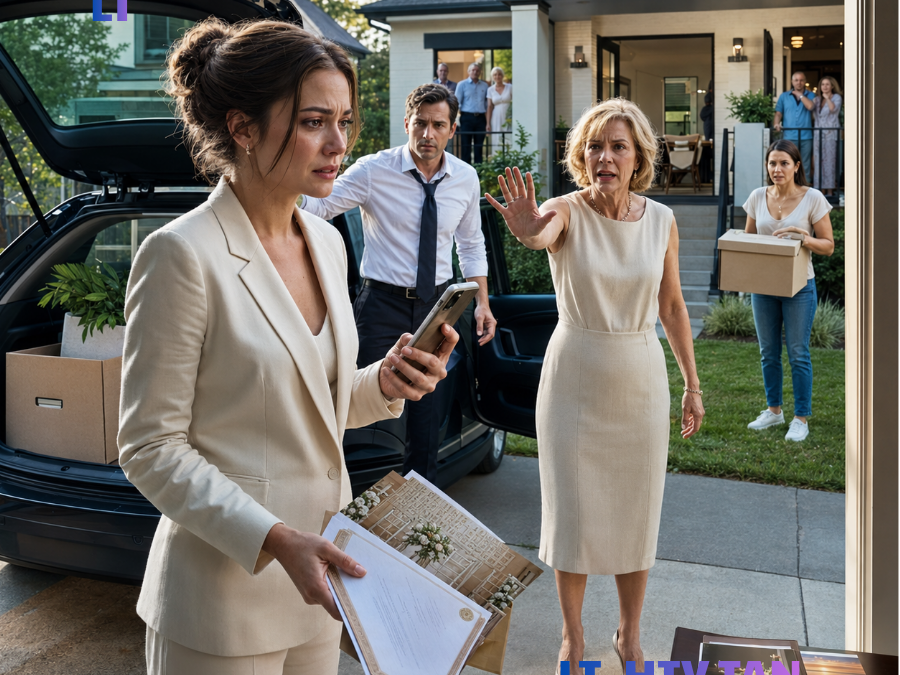

My Fiancé Missed Our Legal Wedding For The 3rd Time… So I Walked Away And Built My Own Empire
I thought the worst thing Graham Whitaker could do was leave me sitting alone outside a judge’s courtroom for the third time. I was wrong. Minutes after he canceled our legal ceremony, I opened an email that revealed our wedding was never simply a wedding. His family had turned my face, my work, and even my future marriage into assets for a multimillion-dollar hotel investment—and they planned to tell me only after the deal was closed. What happened next cost me my fiancé, my job, my home, and almost my reputation. But one year later, I would walk past that same courthouse and finally understand what his empty chair had really given me.
Part 1: Three missed ceremonies expose a betrayal hidden behind business promises.
“Miss Morgan, Judge Lennox can hold the ceremony for four more minutes.”
The assistant’s voice was gentle, which somehow made everything worse.
I pressed the phone against my ear. “Are you coming?”
“Not today,” Graham said. “The investors moved the meeting.”
The courthouse hallway smelled of floor wax, burned coffee, and old paper. I sat beneath the portrait of a retired judge in an ivory suit, holding a marriage license that expired in two days.
“This is the third time.”
Graham exhaled as though I had reminded him about a parking ticket.
“We have the real wedding in nine days, Talia. Why are you so obsessed with a piece of paper?”
Then I heard a woman behind him.
“Graham, Brooke and the attorneys are ready.”
Brooke Carile.
His former fiancée.
Now acquisitions director for the hospitality group considering a multimillion-dollar investment in Whitaker Hall, Graham’s family venue.
“I have to go,” Graham said.
“Tell me one thing first. Did you ever intend to show up?”
Silence.
Then the call ended.
I stared at the empty chair beside me.
The first courthouse appointment had disappeared because of a “surprise fire inspection.” I later learned the inspector left before ten that morning.
The second had been canceled because Graham claimed his mother, Victoria, was having chest pains. I sent flowers.
Three days later, Victoria casually mentioned spending that morning at a spa.
With Brooke.
Neither lie had seemed large enough by itself.
Together, they had begun forming a shape I no longer wanted to recognize.
The judge’s assistant approached again. “Would you like me to ask him to wait one more minute?”
I put the license on the empty chair.
“No. He has people who respected his time enough to appear.”
She nodded and disappeared through the courtroom doors.
My hands were shaking when I opened my email.
Two drafts waited there.
One was my resignation from Whitaker Hall.
The other canceled the wedding.
I had written both after the second missed appointment and hated myself for doing it.
That morning, I had still hoped they would remain drafts forever.
Then I saw a new message.
Forwarded by Theo Park, Whitaker Hall’s junior operations coordinator.
Subject: Revised Closing Notes.
Theo had written one sentence.
I think you were supposed to see this before Saturday.
My stomach tightened.
I opened the attachment.
Most of it concerned debt, renovation costs, investment control, and Whitaker Hall’s grand reopening.
Then I reached a section called Public Relaunch and Management Continuity.
The public wedding would proceed as scheduled.
Graham’s legal marital status would remain unchanged until the investment review ended.
A legal marriage would require financial disclosures to me.
Disclosures Graham apparently did not want me to see.
Whitaker Hall carried far more debt than I had been told. The family valuation had been reduced. Despite three years of rebuilding its vendor network, fixing unsafe procedures, and turning empty weekends into waiting lists, no ownership interest had ever been allocated to me.
There was more.
I would appear in promotional material as Whitaker Hall’s operations director.
After Brooke assumed management authority, my position would be “reconsidered.”
My employment contract ended two weeks after the wedding.
The final note contained six words.
Talia to be informed after closing.
For several seconds, I heard nothing except the fluorescent lights humming above me.
My marriage.
My job.
My face.
My future.
They had discussed all of them as business assets.
And no one had thought my consent belonged in the room.
I took screenshots, downloaded the document, and forwarded everything to my attorney.
Then I opened the first draft.
My resignation.
I pressed Send.
Then I opened the second.
There will be no wedding on Saturday.
My finger hovered only a second.
I pressed Send again.
Before I could close the phone, Graham’s name appeared on the screen.
Once.
Twice.
Three times.
By the time I stood up from that courthouse chair, he had called eleven times.
And for the first time in six years, I let him wait.
Part 2: Canceling the wedding forces Graham’s family to reveal their priorities.
I didn’t go to Whitaker Hall.
I called every vendor whose contract carried my personal signature.
The band. Transportation. Photographer. Caterer. Florist.
The florist had already ordered thousands of white garden roses.
“I’ll pay the non-refundable amount,” I said. “Can someone else use them?”
She knew a hospice fundraiser that weekend.
“Send them there.”
The caterer had food for 240 guests. We arranged to turn the reception into a community dinner through a church partner.
I used part of my remaining wedding savings to cover staff and transportation.
I didn’t want a spectacle.
I simply refused to let good food rot because Graham had lied.
My friend June met me at the house Graham and I rented in East Nashville.
“Questions or boxes?” she asked.
“Boxes.”
We packed my clothes, books, family photographs, kitchen equipment, and the desk chair my father had repaired.
On the dining table, I found a stack of glossy wedding programs.
Graham Whitaker & Talia Morgan.
Beneath our names was a gold drawing of Whitaker Hall.
I opened one.
The ceremony ended with a kiss and applause.
No legal pronouncement.
No license signing.
No instructions for filing documents.
The final page advertised private tours of Whitaker Hall.
I actually laughed.
Not because anything was funny.
Because sometimes your body makes strange choices when your heart finally understands what your mind has been avoiding.
I left one program beside my key.
Then Victoria Whitaker arrived.
She stepped from her car in pale linen, furious rather than confused.
“You canceled the wedding without speaking to us.”
“Graham missed our legal ceremony for the third time.”
“That courthouse appointment was administrative. Saturday is what matters.”
“Not to me.”
Her face hardened.
“Do you understand what you’ve done to the venue? Reporters are coming. Investors changed flights for this event.”
I looked at her.
“You just explained exactly why the wedding mattered to your family.”
Her expression changed.
Only slightly.
But I saw it.
“I read the closing notes,” I said.
The cicadas screamed from the trees.
Victoria lowered her voice.
“You were never supposed to receive those.”
There it was.
Not denial.
Admission.
That evening Graham came to June’s apartment.
I opened the door but kept the chain secured.
“You canceled a four-million-dollar wedding over paperwork.”
“No. I canceled a performance you planned to sell while keeping me outside the truth.”
“The investment protects Whitaker Hall.”
“You could have told me.”
“And you would have reacted exactly like this.”
I stared at him.
“You mean I would have refused.”
He pressed a hand against the doorframe.
“Come back Saturday. We can deal with the license later. Nobody needs to know.”
And suddenly I understood something that hurt more than the cheating I had once feared.
He wasn’t asking me to marry him.
He was asking me to look married long enough to save his deal.
“I know,” I whispered. “That’s why I left.”
I closed the door.
The next morning Whitaker Hall released a statement saying I had abandoned my position during a critical business transition.
Then Graham’s attorney sent a demand letter accusing me of interference and requesting access to my phone, personal email, and cloud storage.
I had lost my wedding, home, and job in less than forty-eight hours.
Now Graham wanted my private life too.
But this time, I wasn’t sitting alone in a courthouse hallway.
And I had kept the receipts.
Part 3: Losing everything pushes me toward the career they never expected.
My attorney, Simone Grant, read the demand letter twice.
“They’re asking for everything because they don’t know what you have.”
I told her exactly what I possessed.
My compensation records.
Approved portfolio files.
Expense reports.
My written bonus agreement.
And Theo’s forwarded document.
Nothing more.
Simone nodded. “Then that is exactly what they’ll get answers about. Nothing else.”
I left her office unemployed with less than twelve thousand dollars in savings.
My health insurance would disappear the following month.
Almost every impressive line on my résumé led back to Whitaker Hall.
Then June came home early.
“I have a problem,” she said. “You may not want it.”
Her nonprofit, Lantern Relief, had a benefit concert in ten days.
The original venue had suffered a roof failure.
The backup couldn’t handle the crowd.
Canceling could cost them a major matching grant.
“Are you offering me a job?”
“Ten days. Nothing guaranteed after that.”
“Does your board know what Whitaker Hall is saying about me?”
“They will before the interview.”
“Then tell them everything.”
The first replacement venue failed inspection.
The second was too expensive.
At a red light, I noticed a banner for a livestock exhibition at the state fairgrounds.
Four days later, that exhibition would be gone.
The hall was ugly.
The acoustics were terrible.
The lighting system couldn’t support the original concert design.
So I changed the design.
Smaller central stage.
Limited lighting.
Two performers live.
Others streamed.
Local college cameras.
Existing fairground seating.
Sponsors complained.
A singer’s manager called us amateurs.
One sponsor walked, leaving a $22,000 hole.
I negotiated until midnight.
We cut unnecessary rentals, reworked security, changed equipment suppliers, and reduced the gap to $6,000.
On concert day, thunderstorms hit Nashville.
Thirty minutes before the opening act, water began creeping under a loading door toward electrical equipment.
“Stack towels there,” the production manager said.
“No.”
I cleared the electrical run, moved the cases, called maintenance, and rerouted performers.
The show started six minutes late.
The livestream lost audio for forty-three seconds.
One volunteer fainted from heat and recovered with medical help.
It wasn’t flawless.
It was safe.
It happened.
And Lantern Relief exceeded its matching target by eleven percent.
After the final song, June found me sitting on an equipment case.
My trousers were wet at the knees. My hair had escaped its clip.
“You look terrible,” she said.
“Put that in the testimonial.”
She laughed.
“The executive director wants you for three more events.”
I closed my eyes.
“I want the scope in writing.”
“I knew you’d say that.”
Three months after the courthouse, I registered Northline Event Recovery.
One laptop.
One business account.
Liability insurance.
A desk in June’s guest room.
I took the jobs bigger companies avoided—fires, weather problems, accessibility failures, emergency relocations.
Then Theo called.
Whitaker Hall had fired him.
Graham wanted him to sign a statement claiming I had asked for confidential customer files.
Theo refused.
And he had preserved Graham’s messages.
One of them said I would remain long enough to teach Brooke’s team my systems.
Another said they could decide afterward whether I was still necessary.
Victoria had replied with one sentence.
She will stay if the wedding happens.
Five months after Graham left me waiting at the courthouse, Whitaker Hall finally agreed to mediation.
And Graham was about to ask me for something I never imagined hearing.
Part 4: At mediation, Graham finally discovers what my consent is worth.
Graham entered the mediation room wearing the watch I had given him.
For a second, I remembered Christmas morning, his arms around me, his voice promising that someday Whitaker Hall would belong to both of us.
Then the memory passed.
He looked polished.
Rested.
Almost unfamiliar.
Whitaker Hall initially demanded my devices and business records.
Simone refused.
We demanded my unpaid bonus, documented expenses, removal of my image from marketing, correction of statements made to vendors, and withdrawal of every claim.
By lunch, their demand for my phone disappeared.
Theo’s messages had changed the room.
At three o’clock, Graham requested a direct conversation with both attorneys present.
He sat opposite me.
“Carile reduced the offer,” he said. “My mother may lose control of the property.”
I waited.
“We need a strong spring season. Come back for six months. Name your salary.”
“No.”
“You built the system. Nobody understands it like you.”
“That’s why you shouldn’t have planned to replace me without asking.”
“I was buying time.”
I looked at him.
“You took mine.”
His jaw tightened.
“You canceled a major event nine days before it happened.”
“I canceled my wedding.”
“The sponsors wanted you there.”
“Then you shouldn’t have sold my presence without my consent.”
He leaned back.
“It was one missed appointment.”
“Three.”
“We could have signed later. The license was paperwork.”
That word.
Paperwork.
I had heard it so many times.
I finally understood why it bothered me.
“Marriage was only paperwork when the paperwork protected me,” I said. “My work became real the moment you needed to sell it.”
Nobody spoke.
Graham’s attorney stared at his legal pad.
Simone didn’t move.
Graham lowered his voice.
“Did you ever think about what would happen to my family if the investment failed?”
“Every day. That’s why I worked nights, missed holidays, and spent my savings on a wedding your family turned into advertising.”
His expression softened.
The old expression.
The one that once ended every argument.
“I loved you.”
My chest tightened.
“You may have. Love didn’t stop you from treating my consent like a problem to manage.”
He looked down.
“Is there any way to fix this?”
I remembered the first courthouse appointment.
Then the second.
Then the third.
“There’s a way to end it honestly,” I said. “That’s all I’m offering.”
Near sunset, we signed.
Whitaker Hall paid my full bonus and expenses.
They withdrew every claim.
They removed my image.
They corrected statements made to vendors.
No client restriction.
No admission of wrongdoing.
No staged apology.
Outside, cold rain darkened the sidewalk.
Simone opened her umbrella.
“Do you feel better?”
I considered it.
“I feel finished.”
Months later, Carile Hospitality bought a majority interest in Whitaker Hall at a lower valuation.
Victoria lost final control.
Graham resigned after the transition.
The venue survived.
Its employees kept their jobs.
And I was relieved.
I had never wanted to destroy Whitaker Hall.
I had only refused to let it destroy me.
Then, the following April, Northline received an emergency call.
A wedding venue had flooded.
Two hundred six guests.
Eighteen hours until the ceremony.
And when I opened the planning file, the first thing I saw was a courthouse-issued marriage license.
Part 5: Another bride’s wedding reveals what Graham’s betrayal truly taught me.
For several seconds, I couldn’t move.
The bride was Elena Price.
Her fiancé was Marcus Reed.
Their ceremony timeline had one detail circled in blue.
Marriage license.
Authorized officiant.
Legal signing.
Everything Graham had spent months avoiding.
Part of Cedar Hollow had flooded, removing two exits and cutting the building’s lawful capacity.
The venue wanted to uninvite sixty guests.
I found another option—a covered farmers market six miles away.
It wasn’t elegant.
But it was safe.
When I explained everything, Elena looked at Marcus.
“What do you want to do?”
He set down the boxes he was carrying.
“I want everyone safe. I want you there. The rest can change.”
No secret meeting.
No decision made for the other person.
No carefully managed ignorance.
They talked.
They chose together.
Something inside me loosened.
Northline worked through the night.
The florist put garden roses in wooden produce crates.
A rental van broke down with half the chairs.
We moved chairs from ceremony rows to dinner tables during cocktails.
Rain pounded the market roof as Elena walked down an aisle between mismatched seats.
Marcus waited beside the officiant.
The marriage license rested inside a clear plastic folder.
Visible.
Ready.
Honest.
I watched two people make promises neither had been tricked into giving.
Later, Elena found me near the loading entrance.
“This must have been difficult for you.”
“It was.”
She looked toward the ceremony.
I smiled.
“That doesn’t mean it was wrong to do.”
That wedding taught me something my contracts never had.
I didn’t hate marriage.
I didn’t hate promises.
I hated being asked to perform certainty while someone else withheld the truth.
A year after Graham’s third missed ceremony, Northline had its own office and its first full-time employee, Nia Caldwell.
I gave her written compensation terms, authority limits, and an emergency plan.
“You really put everything in writing,” she said.
“Good agreements protect good relationships.”
That summer, Northline managed a six-block arts festival.
Four stages.
Eighty vendors.
Thousands of people.
When a power failure darkened one stage, my team moved the crowd calmly while Nia restored the schedule.
For once, I wasn’t solving every problem alone.
Two weeks later Graham emailed.
I heard about the festival. You always were the best person in a crisis. I hope you are happy.
I read it once.
Then archived it.
I no longer needed Graham to confirm whether I was happy.
On the anniversary of that final courthouse appointment, I walked past the same building.
A bride in a blue dress stood outside holding grocery-store flowers.
Her groom checked his pocket three times for the marriage license.
When the courthouse doors opened, they entered together.
I stopped.
For months, I had believed that hallway was where Graham rejected me.
But standing there one year later, I understood.
His absence had never measured my value.
It had exposed his choices.
The first missed ceremony gave him the benefit of my doubt.
The second taught me to prepare.
The third gave me enough truth to leave.
My phone vibrated.
Nia.
A sprinkler malfunction had flooded part of a conference center.
Our client needed options before three.
I smiled and started walking toward my office.
This crisis belonged to someone who had hired me, respected my terms, and intended to pay for my work.
I no longer waited in empty hallways for another person to decide whether my future mattered.
I had appointments of my own.
THE END.
All the characters and events in this story are fictional and created for the purpose of storytelling and entertainment.
If this story brought you a moment of reflection, comfort, or curiosity, then it has truly fulfilled its purpose.
Thank you sincerely for reading. Your feedback and support are always appreciated and inspire me to keep sharing more stories with you.








