My Husband Took His Parents and His Mistress to My Maui Home – Then My Caretaker Changed Every Lock

My Husband Took His Parents and His Mistress to My Maui Home – Then My Caretaker Changed Every Lock
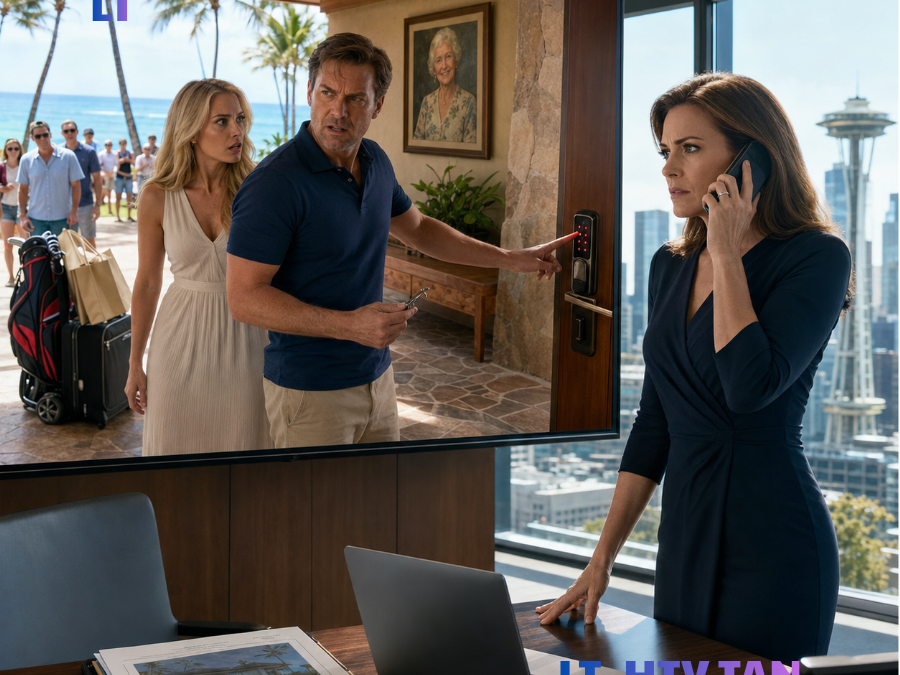
The first thing I saw on the security camera wasn’t my husband—it was a young blonde woman walking onto the lanai of the Maui home my grandmother had spent forty years protecting, followed by my husband Ryan, his parents, champagne, golf clubs, and one devastating lie after another; within hours, I would learn he had brought his mistress into my inheritance, told her the house belonged to him, used our marital money to finance their secret relationship, and convinced his own family that I was the problem, but none of them understood one crucial fact: every door they had confidently walked through still belonged to me, and before sunset, every one of those doors would be locked.
Part 1: A security camera exposes my husband’s affair inside my inheritance.
The first thing I saw wasn’t my husband. It was her.
A young blonde woman stepped onto the lanai of my family’s oceanfront vacation home in Maui, stretched her arms toward the Pacific, and laughed as though she’d just arrived in paradise. Then Ryan walked behind her and wrapped an arm around her waist.
Behind them, my mother-in-law Linda popped open a bottle of champagne. My father-in-law Gary carried expensive golf clubs toward the house.
Ryan looked directly toward the security camera above the front door and grinned.
“Welcome to our Maui house.”
Our.
I sat frozen in my office in downtown Seattle.
Not his house. Not his parents’ house. Not even our house.
Mine.
My grandmother Margaret had purchased that oceanfront cottage decades earlier, when Maui was still affordable to ordinary families. She spent nearly forty years paying it off. Every summer of my childhood lived inside those walls—fresh pineapple on the kitchen table, salt in the curtains, her rocking chair facing the ocean.
“Houses don’t make families, Emily,” she used to tell me. “But they hold their memories.”
When she died six years earlier, she left the house entirely to me.
Ryan knew that.
Apparently, he had only remembered its market value.
I enlarged the camera feed.
The woman stopped in front of Grandma Margaret’s photograph.
“Who’s that?”
Ryan barely glanced at it. “My wife’s grandmother.”
“We should replace it with something more modern,” she said.
Linda laughed. “I’ve been saying that for years.”
Something inside me cracked.
Quietly.
I called Ryan.
“Hey, Em.”
His voice was relaxed.
“Where are you?”
“Chicago.”
No hesitation.
I watched him open my wine cabinet as he lied directly into my ear.
“You’re still in Chicago?”
“Yeah. Why?”
I looked at the Pacific Ocean behind him.
“I was just wondering how Chicago suddenly started looking exactly like Maui.”
Silence.
I could hear waves through his phone.
Finally, he sighed.
“I was going to tell you.”
“When?”
“When the timing felt better.”
I almost laughed.
“Who is she?”
“It’s complicated.”
“No. It isn’t.”
He sounded annoyed now.
“You weren’t even using the place, Emily.”
I stared at him.
“My grandmother’s home?”
“Our vacation home.”
“My vacation home.”
“We’re only staying two weeks.”
Two weeks.
My husband had planned a two-week Hawaiian vacation with another woman in the house my grandmother left me.
Then he said the sentence that ended our marriage.
“You have plenty of money, Emily.”
As if money erased betrayal.
“Did you seriously bring your mistress into my grandmother’s house?”
“Don’t call her that.”
“So she is.”
Another silence.
“Let’s talk when I get back.”
He hung up.
I didn’t cry.
I simply stared at the disconnected call and realized Ryan expected me to do what I’d always done.
Keep the peace.
So I made another call.
Tom Alvarez had cared for Grandma Margaret’s property for nearly twenty-five years.
“Aloha, Emily.”
“Hi, Tom. I need a favor.”
“Anything.”
I looked at the camera. Ryan was carrying the woman’s suitcase upstairs.
“I need every lock changed today.”
Tom became quiet.
“Everything okay?”
“No.”
That was enough.
“Keypads?”
“Reset them.”
“Garage?”
“Change it.”
“Back gate?”
“Done.”
“Guest codes?”
“Deleted.”
“Spare keys?”
“I’ll collect them.”
Two hours later, Tom called back.
“Every single lock is changed.”
I transferred him a generous bonus.
Then I told him to take the rest of the week off.
He laughed. “Your grandmother would’ve approved.”
“I hope so.”
Before hanging up, he said, “Protecting something doesn’t always mean standing in front of it, Emily.”
“What does it mean?”
“Sometimes you step aside and let people face the consequences of disrespecting it.”
At four that afternoon, Ryan, Vanessa—as I would later learn her name was—and his parents drove away for shopping, golf, and the beach.
Five hours later, they returned.
Ryan walked confidently toward the front door.
He entered the old code.
Red light.
Access denied.
He tried again.
Nothing.
Then he pulled out his key.
It didn’t fit.
His smile disappeared.
And from three thousand miles away, I watched my husband realize that paradise no longer had a door he could open.
Part 2: Locked outside, Ryan’s carefully constructed lies begin collapsing publicly.
Ryan tried the garage remote.
Nothing.
The back gate.
Locked.
The patio doors.
Locked.
Every entrance rejected him.
Linda crossed her arms. “Call the caretaker.”
Ryan called Tom.
Voicemail.
Again.
Voicemail.
Tom was probably relaxing somewhere with his phone turned off.
Gary suggested a locksmith. The first company couldn’t come for hours. Another explained that they needed authorization from the property’s legal owner.
The legal owner.
Me.
Finally, Ryan called.
“What the hell did you do?”
“I was wondering when you’d call.”
“The locks don’t work!”
“I know.”
“You changed them?”
“I did.”
“You can’t do that!”
I smiled.
“I can’t?”
“We’re standing outside!”
“I can see that.”
Linda shouted in the background, “Tell her to stop acting childish!”
Ryan lowered his voice.
“Emily, we’ve got nowhere to stay.”
“Maui has hotels.”
“They’re expensive.”
“I imagine they are.”
“Open the house.”
“No.”
Then he snapped.
“You cannot lock me out of my own house.”
I waited just long enough for everyone beside him to hear.
“Actually, Ryan… it’s mine.”
I hung up.
The following morning, they returned.
The locks hadn’t magically changed overnight.
Ryan punched random codes into the keypad while Vanessa leaned against the railing.
“This is ridiculous,” she said.
“You think I don’t know that?”
“No, Ryan. I think you lied.”
He froze.
“You told me you owned this place.”
“I practically do.”
“You said your name was on everything.”
“It basically is.”
She stared at him.
“You also told me the divorce was already filed.”
Linda slowly turned toward her son.
“What divorce?”
Vanessa looked confused.
“You didn’t tell them?”
Gary finally spoke. “Tell us what?”
Nobody answered.
“He told me he and Emily were separated,” Vanessa said.
Linda’s face changed.
Ryan rubbed his forehead.
Vanessa continued.
“You said she moved out months ago. You said she hated Hawaii. You said this house was your family inheritance.”
Every lie collided with another.
Later that afternoon, I called Rachel Morrison, my attorney.
After I explained everything, she asked one question.
“Are you calling me as your estate attorney?”
I looked at our wedding photograph.
“No.”
My voice stayed steady.
“I’m calling because I need a divorce lawyer.”
Rachel told me to save every security recording, message, bank statement and travel record.
While reviewing our finances, I found luxury hotels, jewelry, business-class flights, spa packages and private dinners hidden inside accounts I’d assumed were covering Ryan’s work travel.
Months of it.
That evening, an unknown number called.
“Emily?”
A woman’s voice.
“Yes?”
“It’s Vanessa.”
I said nothing.
She sounded as though she’d been crying.
“I know you probably hate me.”
“I don’t know you well enough to hate you.”
Silence.
Then she whispered the sentence that would change the divorce completely.
“Ryan lied to both of us.”
Part 3: Vanessa’s evidence reveals months of deception, money and manipulation.
Vanessa told me everything.
Ryan had met her at a charity golf tournament eight months earlier. He wasn’t wearing his wedding ring.
He told her we were emotionally divorced.
He said we only shared an address because lawyers had advised us to wait until the end of the tax year.
He claimed I’d already started dating someone else.
“He said the Maui house belonged to his family,” Vanessa whispered.
“It doesn’t.”
“I know that now.”
“He said you hated Hawaii.”
“My grandmother practically raised me there.”
“I know.”
For twenty minutes, I listened to the imaginary life my husband had created.
In Ryan’s version, I was cold, wealthy, distracted and controlling.
He was the lonely husband waiting for freedom.
Then Vanessa said, “I can prove it.”
“What?”
“I saved everything.”
Within an hour, my inbox filled with screenshots, hotel confirmations, photographs, receipts and hundreds of messages.
One read: The Maui house will be ours after everything is settled.
Another: My parents already think of you as family.
Then I opened a voice recording.
Ryan’s voice filled my office.
“Emily only cares about money. She barely notices whether I’m home anymore.”
I stopped the recording.
That hurt differently.
I had rearranged business trips for our anniversaries. Reminded him to call his parents. Planned weekends when he claimed he was too busy.
Trust had made me explain every warning sign innocently.
Now there were no innocent explanations left.
Rachel reviewed Vanessa’s files.
“This is substantial,” she said. “There’s evidence supporting the timeline, the deception and the misuse of marital funds.”
“What do I do?”
“Stay calm.”
“Easy for you to say.”
“Angry people make expensive mistakes.”
Three days later, Ryan flew home alone.
Vanessa booked another flight.
His parents traveled separately.
No one left Maui together.
Ryan reached our Seattle house just after sunset.
He unlocked the front door and stopped.
Half the furniture was gone.
Our photographs were gone.
My clothes were gone.
Charlie’s dog bed was gone.
On the kitchen counter sat one envelope.
Divorce papers.
I had moved to our cabin near Leavenworth, where pine trees replaced palm trees and every room felt honest.
The Maui house remained completely separate property because Grandma Margaret had structured her estate carefully.
As Rachel reviewed our finances, we discovered tens of thousands of dollars in affair-related spending.
Then another part of Ryan’s life began collapsing.
His employer discovered that several “business conferences” overlapped with mandatory meetings he had skipped. Expense reports didn’t match travel records. Vacation days had been reported as client visits.
I hadn’t contacted his company.
I didn’t need to.
Ryan had left evidence everywhere.
Weeks later, Gary called me.
“I owe you an apology,” he said.
“For Maui?”
“For staying silent long before Maui.”
He paused.
“I spent forty-two years keeping peace in my marriage. Somewhere along the way, I confused keeping peace with doing the right thing.”
Then he told me something I hadn’t expected.
Linda had finally started learning where the family’s money had really come from.
And Ryan’s biggest lie hadn’t only fooled Vanessa.
It had fooled his own mother for years.
Part 4: The divorce ends, but unexpected apologies expose deeper family truths.
Linda had spent years believing Ryan funded the vacations, dinners and comfortable family lifestyle everyone enjoyed.
Much of it had actually been paid for by me.
I had never corrected anyone because I didn’t believe marriage was supposed to be a scoreboard.
Ryan apparently had.
When Linda learned the truth, Gary said she cried for nearly an hour.
Two months after the divorce filing, I received a handwritten letter from Vanessa.
Emily,
You were right. I ignored warning signs because I wanted the life Ryan promised me. That was my responsibility. I am sorry for my part in hurting you. I hope one day you find someone who tells you the truth the first time.
Vanessa.
I kept the letter.
Not for court.
For perspective.
People can choose accountability.
Autumn arrived.
Our mediation lasted less than a day.
Ryan looked thinner. Quieter. The confidence that once filled every room had disappeared.
Afterward, he approached me.
“I don’t expect you to forgive me.”
“I know.”
“I’ve started therapy.”
“I’m glad.”
He looked down.
“I kept thinking if I apologized enough…”
“Everything would go back to normal?”
He nodded.
“Trust doesn’t die in one moment, Ryan.”
His eyes lifted toward mine.
“It dies one decision at a time.”
The divorce became final the following spring.
Outside the courthouse, Rachel asked, “You okay?”
“I think so.”
She smiled.
“You never confused justice with revenge.”
Months later, I returned to Maui.
I worried the house would feel contaminated by what happened.
It didn’t.
The ocean still moved beyond the windows. Grandma Margaret’s rocking chair still faced the Pacific. Her photograph still rested above the fireplace.
Nothing important had been taken from me.
Tom arrived carrying pineapple and banana bread.
“Welcome home.”
We sat on the lanai in silence.
Finally, he asked, “Any regrets about changing those locks?”
“No.”
Then I smiled.
“Actually, I regret not changing them sooner.”
He laughed.
“I don’t mean the physical locks.”
“I know.”
“Boundaries,” I said.
Tom nodded.
For years, I’d believed love meant keeping every door open.
Now I understood that kindness without boundaries eventually becomes permission.
Later that year, I made a decision about Grandma Margaret’s home.
I wouldn’t turn it into another luxury rental.
Twice each season, families going through difficult times would stay there free—military families reuniting after deployment, parents whose children were recovering from illness, widows facing painful anniversaries.
One condition.
Leave the house with more love than you found inside it.
The first family arrived in August.
Watching two little girls build sand castles where I’d once played with Grandma made my eyes fill with tears.
That was when I finally understood what my grandmother had actually left me.
It was never just a house.
But one last person still needed to understand that.
Linda called and asked to see me.
Part 5: One final reckoning transforms betrayal into boundaries, forgiveness and legacy.
I met Linda and Gary at a small café overlooking Elliott Bay.
Linda held her cup with both hands.
“Emily, I owe you more apologies than I can count.”
I waited.
“For years, I convinced myself that because you earned more, you somehow owed all of us.”
Her eyes filled.
“I forgot gratitude.”
“I appreciate you saying that.”
She looked surprised.
“That’s it?”
“What else should there be?”
“Aren’t you angry?”
I thought carefully.
“I was.”
Not anymore.
Linda wiped her eyes.
“I mistook your kindness for weakness.”
Gary looked at me.
“So did Ryan.”
Several weeks later, Ryan asked to meet one final time.
We sat in a quiet park outside Seattle. Charlie lay beside my bench while autumn leaves moved across the path.
Ryan looked healthier.
“I’ve rewritten this conversation a hundred times,” he said.
“I figured.”
“I kept trying to explain why I did everything.”
He looked at his hands.
“My therapist asked me something.”
“What?”
“What if there isn’t a reason that makes it acceptable?”
For the first time, Ryan wasn’t giving me an excuse.
“I betrayed the person who loved me most.”
“Yes.”
“I lost my marriage.”
“Yes.”
“I embarrassed my parents.”
“Yes.”
“I became someone I never thought I’d become.”
This time, I believed him.
Not because his words were better.
Because he wasn’t asking me to rescue him from them.
“I’m sorry, Emily.”
“I know.”
“You don’t have to forgive me.”
I looked at him.
“I already have.”
His eyes filled.
Then I added, “But forgiveness isn’t reconciliation.”
He nodded slowly.
“I understand that now.”
“I hope someday you forgive yourself for the right reason.”
“What reason?”
“Not because you want the pain to disappear. Because you’ve become the kind of man who would never make those choices again.”
“I’m trying.”
“I believe you.”
Those were the last words we ever spoke.
A few days later, I stood barefoot behind Grandma Margaret’s Maui house.
The Pacific turned orange and gold beneath the setting sun. Charlie chased the edge of the waves. Behind me, another family laughed on the lanai.
For the first time, the story felt complete.
A year earlier, I had watched Ryan stand on that same porch and call it “our Maui house.”
At the time, I thought changing the locks was my revenge.
I had been wrong.
The locks were never the revenge.
They were the boundary.
The real victory wasn’t seeing Ryan lose his marriage, his reputation, or the fantasy he’d built from lies.
It was realizing I had never lost myself.
Grandma Margaret once told me houses hold memories.
She was right.
But I think she left out one thing.
Sometimes a house also teaches you which doors deserve to remain open—and which ones must finally close.
That was the last twist Ryan never understood when he stood outside that locked door.
I hadn’t locked him out of paradise.
I had finally let myself back in.
THE END.
All the characters and events in this story are fictional and created for the purpose of storytelling and entertainment.
If this story brought you a moment of reflection, comfort, or curiosity, then it has truly fulfilled its purpose.
Thank you sincerely for reading. Your feedback and support are always appreciated and inspire me to keep sharing more stories with you.








